
What is the Pax Silica declaration and why New Delhi’s entry into the U.S.-led alliance matters
ADVERTISEMENT
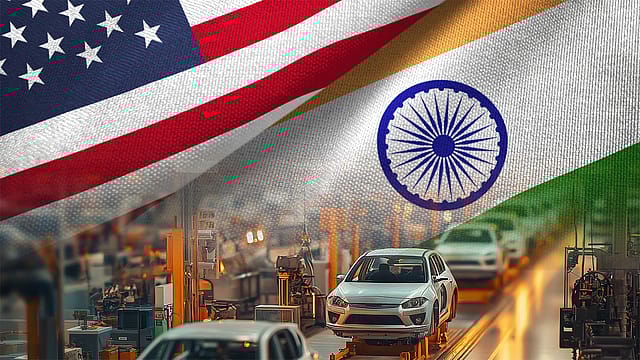
As India signs on to Pax Silica declaration at the India AI Impact Summit in New Delhi on Friday, the move signals more than symbolic alignment with Washington. It places New Delhi inside a new technology and supply chain framework that is fast becoming central to the global AI and semiconductor economy.
Describing it as a key pillar in strengthening the technology backbone between India and US, Google and Alphabet CEO Sundar Pichai said, “Pax Silica focusses on making sure that the supply chains are safe and secure and encourages greater commercial partnerships across key technologies.”
What is Pax Silica?
Pax Silica is a US-led strategic alliance launched in December 2025 at a summit in Washington. It was conceived to secure the global supply chain for critical minerals, semiconductors and artificial intelligence infrastructure, while reducing overdependence on non-aligned nations.
The grouping includes the United States, Japan, South Korea and a cluster of trusted partners such as Australia, Greece, Israel, Qatar, Singapore, the United Arab Emirates and the United Kingdom. The idea behind is to create a secure, resilient and innovation-driven ecosystem that spans everything from raw material extraction to chip fabrication and AI systems.
At the heart of the initiative is the Pax Silica Declaration, which lays out a shared vision of deep economic and technology cooperation. It recognises that “a reliable supply chain is indispensable to our mutual economic security” and that AI is a “transformative force” requiring trustworthy systems to safeguard long-term prosperity.
Why critical minerals and AI together?
The alliance links two sectors that are increasingly inseparable. Advanced AI systems rely on massive computing infrastructure. That, in turn, depends on semiconductors. And semiconductor manufacturing depends on a steady supply of critical minerals such as lithium, cobalt, rare earth elements and silicon-based materials.
Pax Silica aims to coordinate policy, investment and standards across this entire chain. The declaration notes that economic value will flow “through and across all levels of the global AI supply chain”, creating demand for energy, minerals, manufacturing, hardware and new digital markets.
In other words, it is an attempt to design the next phase of globalisation around trusted partners in high-technology sectors.
What does India gain?
India’s formal entry gives it a seat at the table in shaping the future economic and technology architecture tied to AI and semiconductors. With a large technology talent pool, expanding semiconductor ambitions and a strategic geographic position, India brings scale and credibility to the alliance.
For New Delhi, the benefits are threefold. First, it strengthens access to secure supply chains for critical minerals and advanced chips. Second, it aligns India with leading AI economies at a time when technology is central to sovereignty. Third, it complements ongoing efforts to deepen economic ties with Washington, including negotiations around a proposed trade deal.
US Ambassador Sergio Gor had earlier described a reliable supply chain as essential to “mutual economic security”, underlining the strategic nature of the initiative.