
Explained| Tata Steel's ₹28,000-crore APL Apollo deal: What are the assets really worth, and what is APL paying for?
ADVERTISEMENT
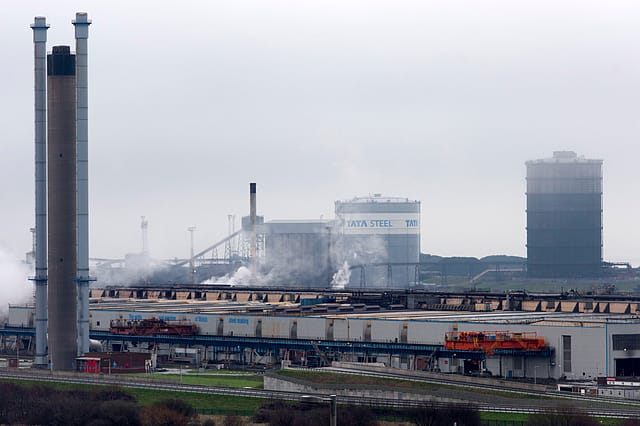
APL Apollo Tubes is buying two downstream steel businesses from Tata Steel for ₹28,000 crore. But the valuation is drawing scrutiny because the price attached to the assets is substantially higher than their recorded net block, while the expected earnings and cash flows must justify a sizeable premium.
The transaction comprises ₹11,700 crore for Tata Steel's tubes business and ₹16,300 crore for 100% of Tata Steel Colors. Their financial profiles, however, are markedly different.
What the two businesses bring to the table
Tata Steel's tubes business reported FY26 turnover of approximately ₹11,375 crore and net worth of ₹3,274 crore. The turnover figure is based on Tata Steel's allocation of internal financial records and has not been separately audited. At ₹11,700 crore, the transaction value is roughly equivalent to 1.03 times its FY26 revenue.
Tata Steel Colors, which manufactures colour-coated steel products and building solutions, reported FY26 turnover of ₹4,680 crore, net worth of ₹1,016 crore and profit after tax of just ₹85 crore. Its ₹16,300-crore valuation works out to around 3.5 times revenue and 192 times FY26 profit. The business accounts for nearly 58% of the total deal value despite contributing less than 30% of the combined reported turnover.
Its revenue has also grown relatively modestly, from ₹4,240 crore in FY24 to ₹4,234 crore in FY25 and ₹4,680 crore in FY26. This makes the growth assumptions beneath the valuation particularly important.
What do the valuation multiples mean?
APL Apollo's investor presentation puts the combined transaction at 24.8 times estimated FY27 enterprise value to EBITDA. In simple terms, enterprise value represents the value of the business, including debt, while EBITDA measures operating earnings before interest, tax, depreciation and amortisation. The multiple means the implied business valuation is nearly 25 times its projected annual operating earnings. It implies FY27 EBITDA of roughly ₹1,130 crore.
The company also disclosed a net block of ₹2,623 crore for the transferred assets. Net block is the accounting value of factories, machinery and other fixed assets after depreciation, not the business's revenue or profit. The gap between this figure and the ₹28,000-crore transaction value highlights the premium being paid, but does not by itself establish that the assets are overpriced.
APL Apollo said an independent valuer used reproduction cost, discounted cash flow and market-price methods. The detailed assumptions behind the valuation, including projected margins and cash flows, remain important for investors to assess.
What is APL Apollo paying the premium for?
Tata Steel's defence rests on the value beyond physical assets: established brands, distribution networks, customers and the time required to build such a market independently. Management has argued that these advantages, along with operating synergies, support the transaction.
APL Apollo is targeting a downstream platform with 15.5 million tonnes of annual capacity by 2035 and an eventual ₹10,000-crore EBITDA. However, the capacity plan includes 5 million tonnes of contract manufacturing through promoter-linked SG Spectra, rather than entirely APL-owned facilities.
Proxy advisory firm InGovern has described the 24.8-times multiple as demanding for a steel-processing and coating business, particularly when the acquisition is initially debt-funded. It has called for more disclosure on segment-wise earnings, capital expenditure, working capital and valuation assumptions.
Tata Steel, meanwhile, has said it is open to restructuring the deal to address shareholder concerns, but is not looking to call it off.
Ultimately, the question is whether the brands, distribution reach and additional scale can generate enough incremental earnings and cash flows to justify the premium. That will determine whether the ₹28,000-crore investment creates value or leaves APL Apollo's shareholders carrying a costly acquisition.