
Govt plans ₹5,000-cr Viksit Bharat Ispat scheme for small steel producers
ADVERTISEMENT
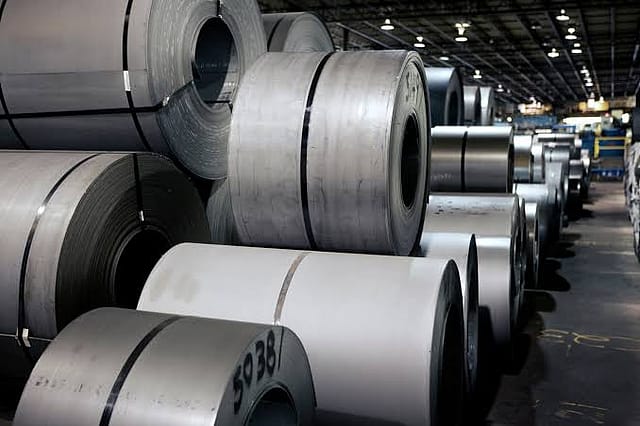
The government is proposing a ₹5,000-crore scheme aimed at helping small steel producers reduce carbon emissions and improve their competitiveness, Steel Secretary Sandeep Poundrik said on Tuesday.
The proposed Viksit Bharat Ispat scheme will provide incentives linked to production, with the quantum of incentive dependent on the reduction in carbon emissions achieved by steel producers.
“We are proposing a scheme which is called Viksit Bharat Ispat which is only targeted at small steel producers where they will be given incentive linked to their production, which will be dependent on reduction of carbon emission,” Poundrik said while speaking to the media at the Manufacturing Confluence 2026 organised by the Confederation of Indian Industry (CII).
Incentive to promote green steel
Poundrik said reducing carbon emissions would require steelmakers to adopt cleaner technologies, improve the quality of raw materials and increase the use of renewable energy.
“Reduction of carbon emissions can only be done by using better technology, by using better raw material and more use of renewable energy,” he said.
The scheme, which has an outlay of ₹5,000 crore, is likely to be approved by the competent authority “in the near future”, the Secretary said.
He also said the initiative would help small steel producers move towards greener production. “We are bringing Viksit Bharat Ispat which will incentivise them to produce green steel,” Poundrik said.
According to the Secretary, small steel producers account for about half of India's steel production, making their transition towards lower-carbon production important for the sector's broader decarbonisation efforts.
New steel policy roadmap till 2047
Separately, the government is preparing a new National Steel Policy, which is expected to be placed in the public domain for stakeholder consultation in about a week.
“This National Steel Policy is being formulated with a vision to bring India to Viksit Bharat target in 2047,” Poundrik said.
The new policy will provide a roadmap for the Indian steel industry for the next two decades, while also addressing issues around imports, capacity, consumption, technology and sustainability.
“As far as imports are concerned, the policy also gives measures to discourage cheap substandard imports including safeguard measures like safeguard duty, anti-dumping duty, etc., as well as to make Indian steel industry and specially the small steel players competitive in terms of technology and price point,” he said.
The government had introduced the National Steel Policy in 2017 with a target of taking India's steel manufacturing capacity to 300 million tonnes by 2030. Poundrik said the policy now needs to be revisited as the industry and its priorities have changed.
“The basic idea is that 2017 policy which is up to 2030... there are two, three things which are important so that we should have a relook,” he said.
He pointed to emerging areas such as artificial intelligence, machine learning and technology upgrades, alongside India's rising importance in the global steel industry.
“There are certain new issues and then course correction for specially in terms of capacity, consumption, etc. So that's why we are bringing a new policy so that we have a roadmap for the next two decades up to 2047,” Poundrik said.