
India’s energy trilemma: Growth, security and sustainability amid global supply risks, says WEF’s Roberto Bocca
ADVERTISEMENT
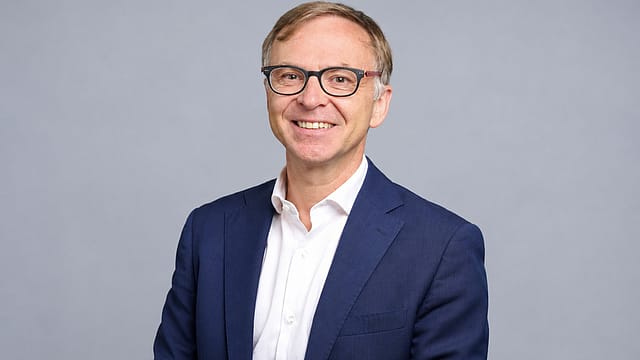
Roberto Bocca, Head of Energy and Materials at the World Economic Forum, discusses India’s energy transition challenges in an exclusive interview with Fortune India. He addresses balancing growth and security, critical minerals supply risks, policy effectiveness, job creation potential, and the Forum’s role in fostering global collaboration amid geopolitical tensions.
Ashutosh Kumar: India has set ambitious targets, including 500 GW of non-fossil capacity by 2030 and net-zero by 2070, while still relying heavily on coal for baseload power and industrial growth. From the World Economic Forum’s perspective, what are the most critical enablers — and the biggest near-term risks — for India to execute this transition without compromising economic growth and energy security?
Roberto Bocca: India’s transition can be guided or understood by what we call “the energy trilemma”: balancing sustainability, security and affordability.
The World Economic Forum’s 2026 Energy Transition Index shows encouraging momentum. India ranked 70th, with its overall score improving by 1.9%, driven particularly by gains in infrastructure, human capital and investment. The priority now is to match India’s exceptional capacity deployment rate with investment in grid modernisation, storage and market reform — the system integration bottlenecks that ETI 2026 identifies as the binding constraint on durable progress.
The greatest near-term risk is that renewable deployment outpaces the infrastructure and financing needed to integrate it reliably. India also remains exposed to fossil-fuel volatility, concentrated clean-technology supply chains and rising capital costs.
Regarding the reliance on coal, this is not an India-specific question. Coal-fired power generation continues to play a major role in electricity markets around the world, and the challenge is particularly profound for many emerging and developing economies (EMDEs). That said, retiring coal is a strategic asset, not a liability. In India, we have recently launched the Coal to Clean Deep Dive with the Centre for Energy and Cyber Resilience of Andhra Pradesh. Through a series of technical workshop and building a community of purpose, the deep dive will support Andhra Pradesh’s planned 2030-35 thermal retirements into a catalyst for renewable integration, and the State's energy and AI-hub ambitions.
Q. Critical minerals and rare earth elements are foundational to solar, wind, electric mobility, battery storage and green hydrogen. How significant is India’s current dependence on concentrated global supply chains (particularly for rare earth), and what strategies should New Delhi prioritise to build resilient domestic and diversified international supply chains?
India’s exposure reflects a broader structural vulnerability in the global economy: critical-mineral supply chains are concentrated not only in mining, but also in processing, refining and component manufacturing.
Rare earths are a particularly important example. In 2024, China accounted for approximately 60% of mined rare earths and 91% of refined output, with an even higher share for the heavy rare earths used in high-performance magnets.
Our Making Critical Minerals Bankable report also highlights that rare earths are not a conventional commodity market. Unlike copper, they lack deep exchange trading and widely used standardised futures markets. Prices are often established through bilateral contracts, with limited transparency and liquidity. This makes revenue forecasting and debt financing more difficult for new projects outside incumbent supply chains. New entrants must also compete with vertically integrated producers that have scale, processing know-how and long-established commercial relationships.
Q. What does this mean for India?
This means that building resilience will require more than access to mineral deposits. It will involve either developing capabilities or finding reliable partners across separation, refining, metals, alloys, and permanent magnets.
Resilience should not be confused with independence. At the international level, India can contribute to a broader diversification effort through partnerships with resource-rich countries, by seeking long-term offtake arrangements, technology cooperation and shared investment in new capacity.
The wider lesson is that rare-earth diversification is not simply a mining challenge. It is a coordination and bankability challenge. Alternative supply will require demand anchors, risk-sharing mechanisms, and, where appropriate, targeted public support. India’s role should therefore be understood as part of a wider effort to build open, resilient and geographically diverse mineral value chains.
Q. The Indian government has launched initiatives such as the National Critical Minerals Mission and incentives under the PLI schemes for advanced chemistry cells and renewable manufacturing. In your view, how effective are these measures so far, and where do the largest gaps remain in technology, processing capacity, skilled workforce and capital mobilisation?
Initiatives such as the National Critical Minerals Mission and the PLI schemes reflect an important shift in the policy landscape. Governments are increasingly recognising that mineral security, industrial competitiveness and economic security cannot be addressed separately.
The central question is whether these measures can help move projects from strategic announcements to operating capacity. Across the global market, the main constraint is not a lack of ambition, nor a lack of capital, but the difficulty of financing projects with long lead times, high upfront costs, uncertain prices and strong competition from established producers.
Gaps in these value chains are global and systemic. They concern technology, infrastructure, skills, project execution, and customer commitments. This is why no single incentive scheme can solve the problem in its entirety. Public policy needs to create the conditions for collaboration across the value chain, including between governments, development-finance institutions, industry, investors and technology providers. Progress will ultimately be measured by whether new capacity is built, whether supply becomes more diversified, and whether broader industrial capabilities are created.
Q. Energy transition is not only an environmental imperative but a major industrial and employment opportunity for India. How can the shift toward clean energy and materials create high-value manufacturing jobs and strengthen India’s position in global value chains, and what policy or investment levers does the WEF see as most decisive in the next five years?
India’s energy transition is already generating industrial scale. The renewable energy sector employed 1.28 million people in 2024 — hydropower the largest employer at 503,000 jobs, followed by solar PV at 385,000 and wind at 67,000, the latter up 29% year-on-year. Solar module manufacturing capacity has reached 144 GW, among the largest globally, driven by domestic incentive programmes. What makes India’s position distinctive is timing: it is building clean-technology manufacturing capability while global supply chains are actively diversifying away from concentrated sources — creating an opening to embed Indian industry in value chains for solar, batteries and EVs that advanced economies are keen to develop.
Q. Geopolitical tensions and export controls around rare earths and other critical materials have intensified. What practical roles can platforms such as the World Economic Forum play in facilitating dialogue, standards, and collaborative frameworks between India, resource-rich countries, and technology leaders to de-risk supply chains?
At a time of rising geopolitical tension, the role of platforms such as the World Economic Forum is to keep channels of dialogue open and make them practical. Critical minerals are increasingly viewed through the lens of national security and strategic competition, but their supply chains will remain deeply interdependent in the near term.
The Forum can help create spaces where producer countries, consumer countries, companies, investors and technology leaders discuss areas of mutual interest.