
MHA orders GitHub to take down Bitchat repositories, sparking debate over privacy and public safety
ADVERTISEMENT
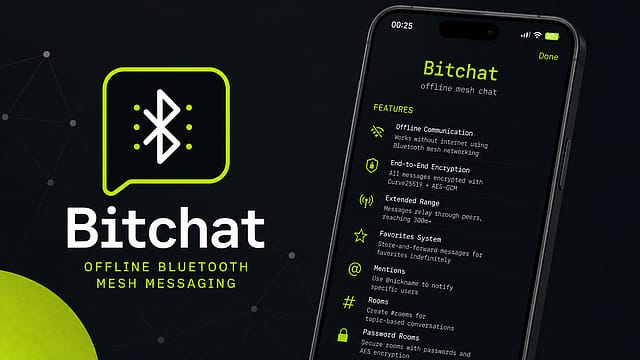
The Ministry of Home Affairs (MHA) has directed GitHub to remove repositories hosting Bitchat, the decentralised Bluetooth mesh messaging application created by Twitter co-founder Jack Dorsey, citing concerns that the technology could be misused by terrorists, organised crime groups and other unlawful actors. GitHub has since complied with the order by removing the repositories.
The takedown order, issued by the Indian Cyber Crime Coordination Centre (I4C) under the MHA, invokes Section 79(3)(b) of the Information Technology Act, 2000, read with Rule 3(1)(d) of the Information Technology (Intermediary Guidelines and Digital Media Ethics Code) Rules, 2021.
The order states that Bitchat enables anonymous, decentralised communication over Bluetooth mesh networks without relying on mobile networks, internet connectivity or centralised servers. According to the government, the application's architecture makes lawful interception, attribution and investigation difficult and could potentially be misused during situations involving riots, terrorism, organised crime, internet shutdowns and other activities prejudicial to public order and national security.
Unlike conventional messaging platforms, Bitchat allows messages to travel directly between nearby devices through Bluetooth without requiring user registration, phone numbers or central servers.
Experts call for balanced approach
Technology and legal experts, however, cautioned against treating privacy-preserving technology as inherently unlawful simply because it limits surveillance.
Speaking to Fortune India, Nikhil Naren, Chevening Scholar, assistant director at the Cyril Shroff Centre for AI, Law and Regulation, and assistant professor at Jindal Global Law School, said: "The government's security concerns about Bitchat cannot be dismissed, as its decentralised, Bluetooth-based architecture may make attribution and lawful interception difficult,"
"However, the larger concern is whether the State is regulating demonstrably unlawful conduct or treating a privacy-preserving technological design as inherently illegal merely because it limits surveillance."
Naren said any takedown should satisfy the principles of legality, necessity and proportionality, and be linked to specific unlawful conduct rather than the mere possibility of misuse. He also pointed to the Supreme Court's Shreya Singhal judgment, which stressed that restrictions on online content must be based on legally identifiable unlawful material and comply with constitutional free speech protections.
He further warned that removing the source code from GitHub could have unintended consequences.
"The software may continue circulating through less transparent channels, while public scrutiny and independent security testing are weakened. The more proportionate approach would be to target proven illegal activity or specific offending material, rather than criminalising the architecture itself," he said.
Code removal won't disable the app
Echoing similar concerns, Deepak Gupta, AI architect and technology expert, said the takedown is unlikely to eliminate the application itself.
"Blocking Bitchat's GitHub repositories may restrict easy access to its source code, but it will not automatically disable apps already installed or copies hosted elsewhere," Gupta told Fortune India.
He noted that decentralised Bluetooth mesh applications do not depend on central servers, making traditional internet blocking or surveillance significantly less effective.
At the same time, Gupta said that the government's concerns around criminal misuse and public safety are legitimate.
"The technology also has valid applications during natural disasters, network failures and emergencies. The real challenge is to create a proportionate regulatory framework that targets unlawful conduct without treating privacy-preserving technology itself as unlawful," he said.
Gupta added that the development highlights a broader technological shift, with communication increasingly moving towards decentralised, device-to-device networks that are less dependent on conventional internet infrastructure.
The Bitchat takedown is likely to renew debate over how governments should regulate emerging decentralised communication technologies, balancing national security considerations with privacy, innovation and legitimate civilian use cases.