
Rising IPO pipeline, sector diversity signal structural shift in Indian markets: NSE CEO Ashishkumar Chauhan
ADVERTISEMENT
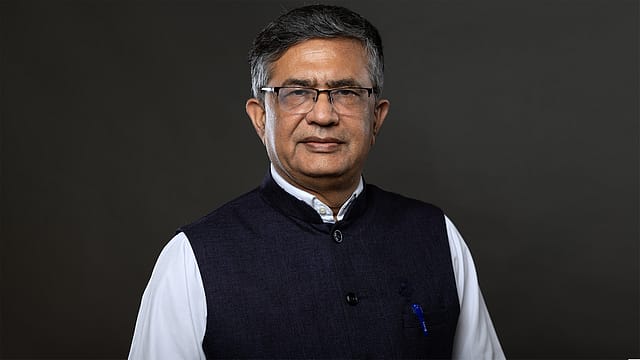
India’s capital markets are scaling rapidly and playing a central role in household wealth creation and economic growth, with the country increasingly producing “listable companies” rather than just startups, Ashishkumar Chauhan, Managing Director and CEO of the National Stock Exchange (NSE), said on Thursday.
Speaking at the Association of Investment Bankers of India’s (AIBI) 14th Annual Convention, Chauhan said India’s markets now stand among the most vibrant globally, backed by rising investor participation, strong fund mobilisation and a maturing primary market ecosystem.
Total market capitalisation of listed companies
The total market capitalisation of listed companies stands at about ₹466 lakh crore, or $5.2 trillion, making India the world’s fourth-largest equity market. The market capitalisation-to-GDP ratio has risen to around 130.5%, indicating that valuations and liquidity are growing faster than physical output—a sign of financial maturity, Chauhan said.
“Over the last few years, liquidity-led fund mobilisation has outpaced economic growth, with equity fund mobilisation rising from about ₹2.4 lakh crore in FY22 to nearly ₹4.2 lakh crore in FY25, translating into a compound annual growth rate (CAGR) of around 21%,” NSE MD said while speaking at the event.
He added that more than 12.5 crore unique investors participate in Indian equities through nearly 25 crore client accounts on NSE alone, covering over 99.8% of India’s districts, he said. Since April 2020, over a quarter of Indian households have entered the equity market, contributing to cumulative household wealth creation of around ₹53 lakh crore.
Since FY22, NSE has enabled fund mobilisation of about ₹76 lakh crore across equity and debt markets. In 2025 alone, market-based fundraising stood at around ₹20 lakh crore, including ₹4.2 lakh crore in equities and about ₹15 lakh crore through bonds and debt instruments, surpassing incremental bank credit to industry and services during the year.
On the primary market front, India remained one of the world’s leading IPO destinations in 2025. NSE hosted 220 IPOs that together raised ₹1.78 lakh crore, including 103 mainboard issues raising ₹1.72 lakh crore and 117 SME IPOs raising about ₹5,784 crore. India ranked among the top global IPO markets by number of listings, even as several international markets remained subdued.
Public markets are emerging as a key funding avenue, says Chauhan
Chauhan said public markets are emerging as a key funding avenue for new-age businesses. In 2025, startups raised about ₹41,000 crore through mainboard IPOs on NSE, compared with roughly ₹29,000 crore raised through debt in 2024, underscoring growing confidence in transparent, market-led capital raising.
He highlighted the growing maturity of the SME segment, noting that average issue sizes have increased to about ₹49 crore, with several SME IPOs crossing the ₹100-crore mark. Strengthened eligibility norms, including the introduction of a free cash flow to equity criterion, have helped improve listing quality and reduce downside risks for investors.
According to NSE data, after the implementation of the free cash flow-based screening in September 2024, the share of SME stocks trading more than 60% below their issue price fell sharply from 10.6% to just 2%. Institutional participation has also improved, with nearly 39% of SME issue sizes allocated to qualified institutional buyers in recent offerings.
While exchanges can set frameworks, Chauhan said the ultimate responsibility for quality execution lies with merchant bankers and intermediaries. He called for continued capacity building, rigorous due diligence and higher standards of governance to sustain investor confidence as India’s capital markets continue to deepen.