
NSE IPO: How SBI, IFCI, GIC Re, Bank of Baroda shares reacted after Sebi approval
ADVERTISEMENT
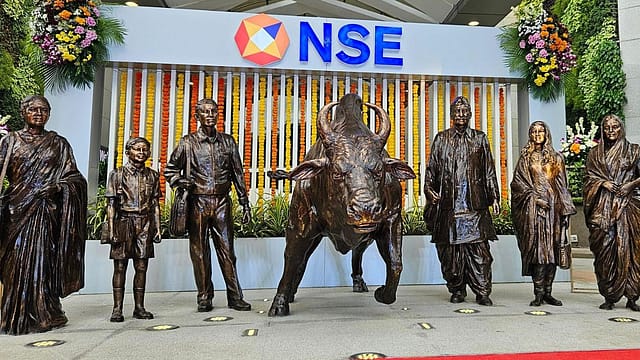
The Securities and Exchange Board of India’s (Sebi) approval for the National Stock Exchange’s (NSE) long-awaited initial public offering (IPO) has put the spotlight on companies that are set to monetise part of their holdings in the exchange.
Shares of key selling shareholders, including State Bank of India (SBI), IFCI, General Insurance Corporation of India (GIC Re) and Bank of Baroda, remained in focus today as investors assessed the potential impact of the IPO on their holdings.
Reacting to the development, SBI shares declined 1.09% to ₹1,005 apiece, while GIC Re fell 1.65% to ₹352.55. Bank of Baroda was also trading lower, down 0.75% at ₹237.20. In contrast, IFCI shares gained 4.34% to ₹105.78.
The broader market was also under pressure, with a spike in oil prices adding to concerns over the inflation outlook amid heightened tensions between the US and Iran. The BSE Sensex was down around 250 points at 76,260, while the Nifty50 fell 78 points to around 23,825.
On September 4, NSE received Sebi’s approval to launch its IPO, clearing a key regulatory hurdle for the exchange’s long-awaited listing. NSE is targeting a September launch, with the issue size expected to be around ₹30,000 crore and the exchange valued at more than ₹5 lakh crore, according to industry sources.
NSE IPO GMP surges on listing buzz
The approval has also fuelled investor interest in the proposed IPO, with NSE’s grey market premium (GMP) surging to ₹285 on Monday. The unofficial premium reflects expectations around the valuation and strong investor demand for the country’s largest stock exchange.
The proposed IPO will be entirely an offer for sale (OFS), meaning NSE itself will not receive any proceeds from the issue. According to the exchange’s draft red herring prospectus (DRHP) filed in June, existing shareholders will collectively sell 14.89 crore equity shares, representing nearly 6% of NSE’s equity. The exchange has around 1.8 lakh shareholders.
Who stands to gain from NSE IPO?
Several prominent institutional investors are looking to monetise part of their holdings through the OFS. However, Life Insurance Corporation of India (LIC), one of NSE’s largest shareholders, has opted not to participate in the issue.
SBI remains one of the largest selling shareholders. Following a recent revision to the shareholding structure, SBI Capital Markets (SBICAPS), a wholly owned subsidiary of SBI, has been separately included as a selling shareholder.
Under the revised structure, SBI will offer up to 1.59 crore NSE shares, while SBICAPS will sell up to 87.80 lakh shares. Together, the two SBI group entities will offer around 2.47 crore shares.
Among other major shareholders, Mauritius-based MS Strategic plans to sell around 1.6 crore shares, while Canada Pension Plan Investment Board (CPPIB) is looking to offload nearly 1.19 crore shares. Aranda Investments (Mauritius) will divest about 1.12 crore shares.
Bank of Baroda and Stock Holding Corporation of India will each sell around 1.1 crore NSE shares. Public-sector insurers are also participating in the OFS, with GIC Re and New India Assurance each offering more than one crore shares. National Insurance Company and United India Insurance Company will each sell around 60 lakh shares.
(DISCLAIMER: The views and opinions expressed by investment experts on fortuneindia.com are either their own or of their organisations, but not necessarily that of fortuneindia.com and its editorial team. Readers are advised to consult certified experts before taking investment decisions.)