
UPI MDR row: Finance Ministry rejects US pressure charge, says RuPay has no unfair advantage
ADVERTISEMENT
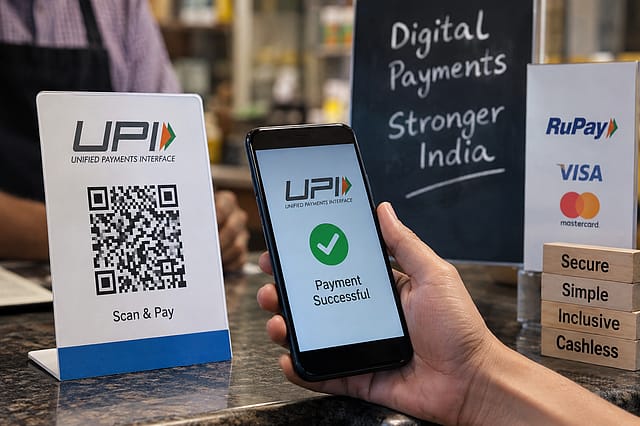
The Finance Ministry on Thursday rejected allegations that US pressure played a role in the decision to introduce a 0.4% Merchant Discount Rate (MDR) on select UPI transactions, saying the latest NPCI rules do not provide international credit cards any advantage over RuPay.
The Department of Financial Services (DFS) issued the clarification after the US Trade Representative’s 2026 report flagged concerns over the inability of US electronic payment service providers to participate in India’s UPI ecosystem, including credit transactions, on what it described as a level playing field with RuPay.
"The NPCI circular of September 15, 2026, does not allow credit transactions on UPI by any other credit card other than the RuPay credit card. There is a clear policy of only allowing RuPay credit card on UPI to enable RuPay credit card to become the preferred choice of credit card amongst users in India," the DFS said in a post on X.
"The allegation that MDR has been introduced under any external influence is patently false and misleading," it added.
MDR to kick in from October 15
The clarification comes amid allegations from some Opposition parties, including the Congress, that the government introduced the levy under US pressure. Under the new framework, a 0.4% MDR will apply from October 15 to person-to-merchant UPI payments above ₹2,000.
The charge will be borne by merchants rather than consumers and will be capped at ₹300 for transactions of ₹75,000 or more. Person-to-person payments and most routine merchant transactions will continue to remain free.
The Finance Ministry does not expect the change to result in a significant shift towards cash. According to sources, only around 4% of total UPI transaction volume is expected to be affected by the levy.
Government moves to prevent pass-through to consumers
Sources said the ministry is also working on a monitoring mechanism to ensure that merchants do not pass the MDR burden on to customers. Discussions have already begun with payment aggregators and other stakeholders in the UPI ecosystem to sensitise them about the new framework.
Concerns over a possible rise in prices of goods and services have also been played down, with sources saying the measure is unlikely to have an inflationary impact.
The government has also pointed to RuPay debit cards, where transactions remain free regardless of the amount, as an alternative that could limit any shift towards cash.
The NPCI, which operates UPI, issued the September 15 circular as part of efforts to establish a sustainable revenue framework for the digital payments ecosystem. NPCI’s existing framework permits RuPay credit cards to be linked to UPI for credit transactions.
The USTR report, meanwhile, had raised concerns over policies that it said appeared to favour domestic electronic payment providers over foreign suppliers, including in the UPI credit ecosystem. (With inputs from PTI)