
Infosys sees ‘once-in-a-generation’ semiconductor demand window; urges shift to ‘Invent in India
ADVERTISEMENT
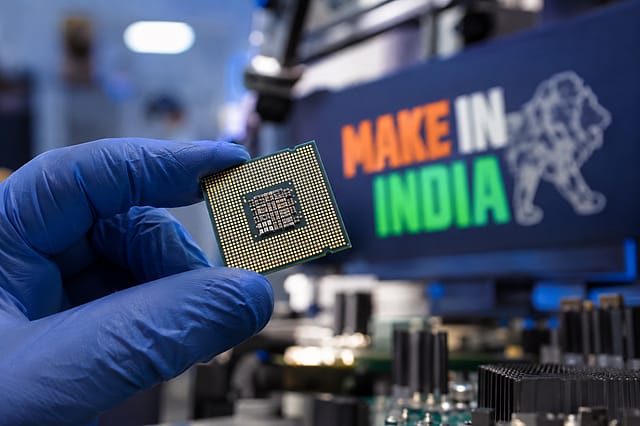
India is witnessing a “once-in-a-generation demand window” in the semiconductor market and needs to move from “Engineered in India” to “Invent in India” by taking ownership of complete systems and products, Infosys Senior Vice President Vikram Meghal said on Friday.
Speaking at SEMICON India 2026, Meghal said the traditional semiconductor pipeline is undergoing a structural shift, driven by the rapid adoption of artificial intelligence (AI), geopolitical risks to supply chains and the industry's transition from Moore's Law towards system-level scaling.
“AI data centre spend is projected to reach $6.7 trillion in the next few years, and 50% of that spend is going to compute, memory, and networking chips,” Meghal said. He added that the industry is increasingly moving towards a model where workloads determine how chips are designed, rather than chip capabilities determining the workload.
Three fronts of semiconductor opportunity
Meghal outlined three major demand opportunities for India — “Made for India”, “Engineered in India” and “Invent in India”.
Under “Made for India”, he said localisation in mobile phones has started, but domestic content remains at only 23%. The market, he added, is expected to expand multifold over the next four to five years, leaving significant room for deeper localisation across the value chain.
The second opportunity is “Engineered in India”, where India's established engineering and research capabilities could support further growth in engineering, research and development (ER&D) spending. Meghal expects ER&D spending to rise 1.8 times from current levels in the coming years, building on the country's ability to deliver engineering services at scale.
Custom chips could drive higher value capture
However, Meghal said the larger opportunity for India lies in moving towards “Invent in India”, particularly as demand for custom chips increases globally. Companies are increasingly designing application-specific silicon to meet the requirements of individual workloads and systems.
“So far, we have just been capturing the engineered-in-India value. Now, there is a potential for global products to capture the innovation value and start looking at inventing in India itself. That's really where we will do justice to the decades of investment that we have done in building this ecosystem,” he said.
Meghal also called for “strategic patience” within the industry to enable large, long-term investments. He said companies need to develop a product mindset, strengthen their focus on regulatory compliance and work towards owning the entire technology stack rather than concentrating only on semiconductor silicon.