
Samsung Unpacked 2026: AI-powered Galaxy smart glasses unveiled, enters race against Meta
ADVERTISEMENT
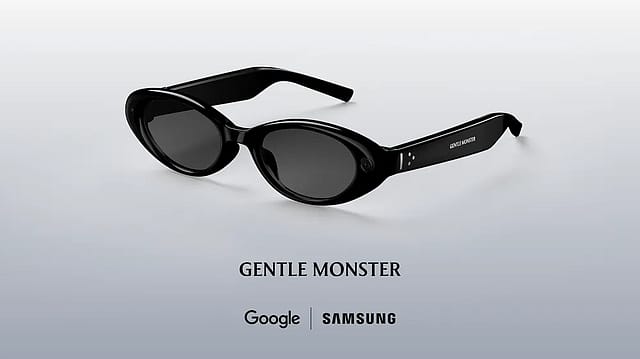
Samsung Electronics on Tuesday entered the AI smart glasses market with the launch of its first Galaxy intelligent eyewear, expanding its device ecosystem beyond smartphones, watches and earbuds. Developed with Google and eyewear brands Warby Parker and Gentle Monster, the glasses are designed to work alongside a smartphone, giving users hands-free access to Gemini AI and other Galaxy services.
The announcement comes as competition in AI wearables intensifies, with Meta already in the market through its Ray-Ban and Oakley smart glasses, while also introducing its own range last month, and Google pushing Android XR as the software platform for a new generation of AI-powered eyewear. Samsung's entry signals its intent to compete in what is emerging as the next major hardware category after smartphones.
Unlike augmented reality headsets, Samsung's glasses are designed to function as an extension of a connected Galaxy smartphone. Users can ask Gemini for directions, send messages, receive notification summaries, translate conversations in real time, capture photos and manage everyday tasks without reaching for their phone. The glasses also integrate with the broader Galaxy ecosystem, allowing users to move between compatible devices while continuing AI-assisted workflows.
"This intelligent eyewear marks an important step in Samsung's vision for AI," said Jay Kim, Executive Vice President and Head of the Customer Experience Office, Mobile eXperience (MX) Business at Samsung Electronics. "With this new AI form factor, we are further expanding the Galaxy device ecosystem, where each device is optimised to deliver unique AI experiences that best fit each form."
Gemini at the centre
Samsung said the glasses are built on Google's Android XR platform, with Gemini acting as the primary AI assistant. Users can ask contextual questions about what they are seeing, receive navigation guidance, translate menus or signs, summarise notifications, add calendar events and capture photos, all through voice interactions while remaining connected to their smartphone.
Google's Shahram Izadi, Vice President and General Manager of Android XR, said the partnership aims to make AI "more helpful and accessible in everyday life" by combining Google's AI models with Samsung's hardware expertise and premium eyewear designs from Warby Parker and Gentle Monster.
Samsung has not disclosed pricing for the glasses. The first collection is scheduled to launch in select markets later this year, with the company expected to announce availability and market-specific details closer to launch.
Rather than designing the frames on its own, Samsung has partnered with eyewear makers Warby Parker and Gentle Monster, each contributing its own design language. While Warby Parker's version focuses on a classic everyday look, Gentle Monster offers a more fashion-forward aesthetic, giving consumers a choice beyond a single hardware design.
Dave Gilboa, Co-Founder and Co-CEO of Warby Parker, said, "Eyewear is deeply personal, which is why every detail matters when integrating advanced technology into frames people wear every day. Our Intelligent Eyewear is designed to feel intuitive, combining Warby Parker's signature design with precision optics and exceptional comfort to help people stay focused on the moments in front of them."
Hankook Kim, Founder and CEO of Gentle Monster, added, "Intelligent eyewear should feel as emotionally expressive as it is technologically advanced. Our vision was to merge fashion and technology in a way that feels bold, beautiful and human."
Privacy at core
Samsung said privacy has been built into the product through visible recording indicators, user-controlled AI settings and on-device protections integrated with Samsung Knox. The company said users will have greater transparency over when the camera is active and how AI processes their data.
What the Galaxy intelligent eyewear offers
Samsung's first AI-powered glasses are designed to work as a companion to a Galaxy smartphone rather than as a standalone device. Built on Google's Android XR platform, the eyewear is powered by Gemini AI and is designed to let users complete everyday tasks without pulling out their phones.
The glasses support hands-free voice interactions for sending messages, checking schedules, setting reminders, getting turn-by-turn navigation, translating conversations and answering contextual questions about the user's surroundings. Users can also capture photos through the built-in camera and receive AI-generated responses based on what they are looking at.
Samsung said the eyewear integrates with the wider Galaxy ecosystem, allowing users to continue tasks across Galaxy smartphones, smartwatches and other connected devices. The company added that AI experiences are designed to be contextual, enabling users to move between devices without interrupting their workflow.