
Samsung’s Perplexity integration signals a shift in how AI will work on smartphones
ADVERTISEMENT
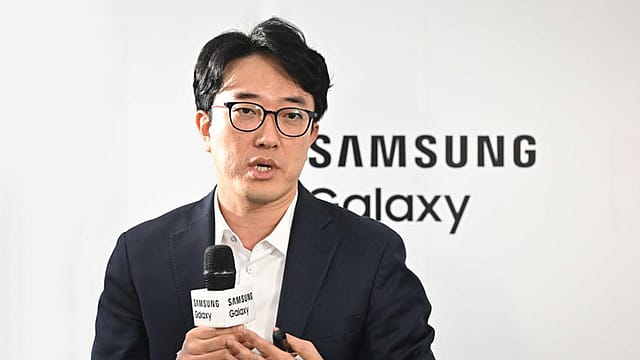
At its latest Unpacked event, Samsung outlined a deeper rethinking of how artificial intelligence should function on smartphones. With the Galaxy S26 series, the company confirmed that Perplexity will power core AI experiences at the system level, marking one of the most substantial third-party AI integrations ever attempted on a flagship mobile operating system.
Unlike traditional partnerships that involve preloaded applications or surface-level features, Perplexity’s technology is embedded into the Galaxy S26’s framework. Its Sonar API underpins real-time web intelligence across the device, including a revamped Bixby, dedicated wake-word access, hardware button triggers, and read and write capabilities across native apps such as Notes, Calendar, Gallery, Clock, and Reminders.
The announcement reflects a strategic decision by Samsung to move towards a multi-agent AI architecture rather than centring all intelligence around a single in-house assistant. As Generative AI reshapes consumer expectations, Samsung appears to be betting that flexibility and openness will define the next phase of mobile computing.
For much of the past decade, smartphone AI has revolved around a default assistant tightly integrated into the operating system. That model prioritised consistency, security, and control. However, user behaviour has evolved. Consumers now routinely interact with multiple AI systems across search, productivity, creative tools, and enterprise software. The assistant has become plural.
“We’ve been committed to building an open and inclusive integrated AI ecosystem that gives users more choice, flexibility and control to get complex tasks done quickly and easily,” said Won-Joon Choi, President, Chief Operating Officer (COO) and Head of the R&D Office, Mobile experience (MX) Business at Samsung Electronics. “Galaxy AI acts as an orchestrator, bringing together different forms of AI into a single, natural, cohesive experience.”
Samsung’s approach attempts to align the operating system with that reality. By giving Perplexity system-level access traditionally reserved for first-party services, Samsung is enabling an external AI engine to operate alongside its own tools rather than beneath them.
This stands in contrast to Apple’s AI strategy. Apple Intelligence is designed around vertical integration, with Siri positioned as the central interface through which generative capabilities are delivered. That model allows Apple to tightly manage privacy, performance, and data flows across hardware and software. It also limits how deeply third-party AI systems can integrate at the operating system layer.
Samsung’s decision does not directly reject that philosophy, but it does explore an alternative. Rather than relying on a single assistant to mediate all intelligence, Samsung is positioning the operating system as a platform for multiple AI agents that can operate contextually within native workflows.
“By integrating Perplexity at the framework level, Samsung isn’t just pre-loading an app; it’s upgrading the phone’s nervous system. This setup allows Bixby to act as the hands, handling system tasks, and device control, while Perplexity serves as the specialised brain for high-level search and reasoning,” AI expert Yogesh Brar told Fortune India.
“For the Galaxy users, this means AI is woven directly into native apps, eliminating the need to jump between different tools. Instead of trying to build a ‘walled garden’ of its own AI, Samsung is positioning the Galaxy ecosystem as an open switchboard. They are essentially ‘outsourcing’ the intelligence layer to best-in-class partners, ensuring that Galaxy AI remains agile and modular. It’s a pragmatic shift from a closed loop to a versatile, multi-expert platform,” Brar added.
For Samsung, the move has competitive implications. Hardware differentiation in the premium smartphone market has narrowed significantly. Camera improvements and chip upgrades are increasingly incremental. AI experiences are becoming the primary battleground, particularly in the ₹70,000 and above segment, where users expect productivity and context awareness, not just features.
India is a key market in that equation. Samsung holds a strong position in the premium Android category, while Apple continues to expand its footprint through financing and local manufacturing. AI capabilities could influence upgrade decisions among urban professionals who already rely on generative tools for research, writing, and task management.
Prabhu Ram, VP-Industry Research Group, CyberMedia Research (CMR) said, “With framework-level integration of Perplexity AI into the Galaxy S26 series, Samsung Electronics is pivoting toward a more open, multi-agent AI ecosystem. This enables tighter coordination between Bixby’s device-level controls and Perplexity’s advanced query capabilities across apps. By leveraging third-party AI infrastructure, Samsung is aligning with the growing consumer preference for using multiple AI agents depending on the task, while reducing reliance on proprietary models and improving long-term adaptability. Sustained success, however, will depend on strong agent interoperability and standardised APIs to prevent fragmentation within the Galaxy AI ecosystem.”
Users can invoke Perplexity using a dedicated wake phrase, “Hey Plex,” or through quick-access controls such as pressing and holding the side button, ensuring contextual assistance is readily available when needed.
Tarun Pathak, Research Director at Counterpoint Research said, “Samsung’s latest strategic move reflects a broader industry shift toward a multi-agent ecosystem in the coming years, with Galaxy AI positioned as the central orchestrator. This marks a meaningful step forward. While the approach unlocks new use cases, the real competitive advantage will hinge on how seamlessly these agents communicate and how deeply they are integrated at the OS level. Samsung has an early lead and strong consumer mindshare in this space.”
“At Counterpoint Research, we believe the majority of users will eventually rely on multiple AI agents, likely without needing to understand the underlying backend complexities. Although AI capabilities are not yet the primary driver of device upgrades, increasingly sophisticated, agentic experiences have the potential to shift that dynamic over time,” Pathak added.
For Perplexity, the partnership represents a shift from application to infrastructure. Most AI startups operate at the app layer, dependent on platform policies for distribution and access. Achieving framework-level integration within a flagship device places Perplexity closer to the platform itself, influencing how users search, retrieve information and complete tasks.
Dmitry Shevelenko, Chief Business Officer at Perplexity, described the collaboration as a response to changing user behaviour. “We built Perplexity into the Galaxy S26 from the ground up with Samsung’s team, and our Sonar API powers the AI experience across the device, including Bixby. This is what an open AI ecosystem actually looks like,” he told Fortune India. “The era of the single walled-garden assistant is over.”
The strategy also raises questions around governance and execution. Deep system access requires robust safeguards around privacy, security, and reliability. Consumers expect assistants to be instant and dependable. Any latency or inconsistency could undermine confidence in a multi-agent model.
Developers will also be watching closely. If third-party AI systems can gain deeper operating system access through OEM partnerships, it could open new paths beyond app stores and subscription-only models. That may encourage tighter collaboration between hardware makers and AI startups, reshaping how intelligence is distributed on devices.
At the same time, Apple’s integrated model continues to offer clear advantages. Tight control over hardware, silicon and software allows it to optimise AI performance while maintaining strict privacy guarantees. For users who value predictability and ecosystem cohesion, that approach remains compelling.
The divergence highlights a broader industry debate. Should AI on personal devices be tightly controlled and vertically integrated, or should it function as an open layer that allows specialised systems to coexist? Samsung’s Galaxy S26 does not resolve that question, but it demonstrates that major OEMs are willing to experiment with new architectures.
As artificial intelligence becomes the defining layer of consumer technology, decisions about platform structure may prove as important as model performance. Samsung’s integration of Perplexity suggests that the future of mobile AI may be shaped less by a single assistant and more by how seamlessly multiple intelligences can work together within the operating system itself.