
‘This is the time we can’: Pratyush Kumar, Vijay Shekhar Sharma back India’s sovereign AI push at summit
ADVERTISEMENT
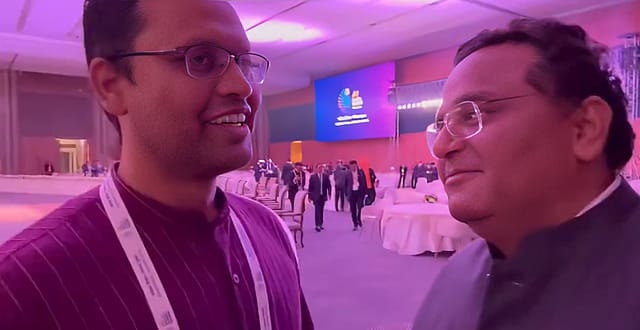
India’s push to build homegrown artificial intelligence systems received strong endorsement from industry voices at the India AI Summit, as Paytm CEO Vijay Shekhar Sharma praised the launch of Sarvam, domestic foundation AI model and called it a sign that Indian innovators can compete globally in the emerging AI era.
In a friendly exchange with Sarvam co-founder Pratyush Kumar on the sidelines of the summit, Sharma described the launch of an Indian-built AI foundation model as a powerful signal to entrepreneurs and innovators across the country.
“People said it was so costly… but the best part was that it showed we can,” Sharma said, framing the development as a message to entrepreneurs and builders across the country.
Building with talent, not just capital
Kumar explained that the company’s approach relied more on engineering focus than massive spending. He noted that around 50 researchers and engineers worked directly on the model, pushing through intense development cycles lasting weeks at a time.
The relatively lean team size prompted Sharma to remark that Sarvam appeared to have solved the challenge not by “throwing a lot of money” at it, but by applying intelligence and efficient use of compute resources such as GPUs.
Kumar described the project as part of a broader national journey of tackling difficult technological challenges, adding that building a foundation model is not a one-time effort but a continuing process with multiple releases and improvements.
For context, Sarvam AI is supported under the government of India’s IndiaAI Mission, which provides selected developers with subsidised access to national GPU compute infrastructure and programme support for building sovereign AI models.
Why a sovereign AI model matters
Asked about the rationale for launching a sovereign AI model, Kumar said the world has already entered a “post-AI” phase where artificial intelligence underpins the next wave of technological and economic transformation.
In such a scenario, he argued, India cannot afford to rely solely on external platforms during the early stages of what could be the most important technology cycle in decades. Developing indigenous AI capabilities, he said, will enable the country to shape its own digital future while collaborating with partners across industry.
Prime Minister’s interest boosts morale
Kumar also recounted demonstrating Sarvam’s technology to Prime Minister Narendra Modi, calling the experience deeply motivating for the team.
He said the Prime Minister showed strong curiosity, stepping closer during the demo to observe the product firsthand — an interaction Kumar described as energising and symbolic of top-level support for India’s AI ambitions.
Sharma said such engagement from the country’s leadership gives entrepreneurs confidence and pride, adding that Sarvam had “stolen the show” at the summit.
“This is the time we can,” Sharma said, expressing confidence that Indian companies could emerge as global leaders in AI by the time the next summit is held.