EV fleets deliver ₹15.7 crore annual fuel savings as corporates hedge against oil volatility
EV fleets deliver ₹15.7 crore annual fuel savings as corporates hedge against oil volatility
Corporate adoption of electric vehicle (EV) fleets is proving financially beneficial, with Routematic's data showing annual fuel savings of ₹15.7 crore. This shift not only reduces fuel consumption but also offers a strategic hedge against volatile oil prices, making EVs a compelling choice for enterprises seeking cost efficiency and sustainability.
The data shows electrification is emerging as a cost-stability lever, not just a sustainability play
Rising global oil volatility is accelerating the business case for electric vehicle (EV) fleets, with fresh operational data indicating that corporate mobility electrification can deliver substantial cost efficiencies alongside sustainability gains.
According to a research report by corporate mobility platform Routematic, its deployed EV fleet is currently helping enterprises avoid fuel consumption of over 65,400 litres every 15 days. At prevailing fuel prices of around ₹100 per litre, this translates into savings of nearly ₹65 lakh over the same period—highlighting the immediate financial upside of transitioning away from internal combustion engine (ICE) vehicles.
₹15.7 crore annual savings signal strong ROI for enterprises
On an annualised basis, the savings potential becomes even more compelling. The company estimates that its existing EV deployments could help avoid over 15.7 lakh litres of fuel consumption per year, resulting in projected cost savings of approximately ₹15.7 crore. These figures are based on current fleet size and fuel prices, suggesting even greater upside if electrification is scaled across entire corporate fleets.
The findings come at a time when geopolitical tensions continue to disrupt global energy markets, increasing fuel price unpredictability. For enterprises operating large employee transportation networks, this volatility is translating into higher and less predictable operating costs—making EV adoption a strategic hedge rather than just an environmental initiative.
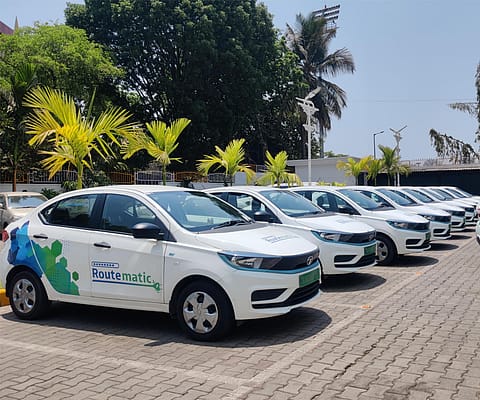
Routematic, which operates across more than two dozen Indian cities and manages over 15,000 employee trips daily, has deployed over 400 company-owned EVs in key markets such as Bengaluru and Pune. These vehicles typically operate across fixed routes, covering 100–150 kilometres daily, a usage pattern that makes them particularly well-suited for electrification due to predictable demand and high utilisation.
Adoption gaps persist despite clear economic advantage
Beyond fuel savings, the report underscores the role of intelligent fleet management in maximising EV efficiency. AI-led routing, scheduling, and battery optimisation are enabling higher utilisation rates while ensuring operational reliability—critical for enterprises running round-the-clock transportation services.
However, despite the strong economic rationale, adoption remains uneven. The report notes that over 60% of Global Capability Centres (GCCs) in India still lack integrated commute systems, pointing to a significant gap in structured corporate mobility planning