Government shrugs off e20 adverse impact on vehicles
/ 2 min read
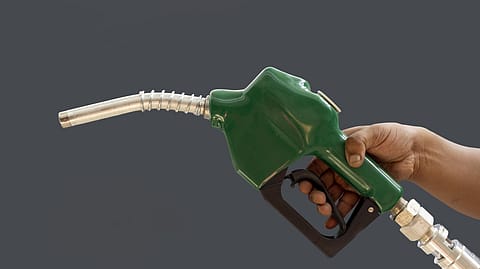
Oil marketing companies in India have achieved 19.97% ethanol blending as of October this year | Credits: Narendra Bisht
Government shrugs off e20 adverse impact on vehicles
The Indian government has dismissed concerns over the adverse impact of E20 ethanol blending on vehicles, attributing performance issues to factors beyond fuel type. Despite social media backlash, studies by IOCL, ARAI, and SIAM show no significant compatibility issues, except for minor replacements in older vehicles, which are manageable during routine servicing.
This summary is AI-generated, and Fortune India is not responsible for its content or any associated copyright issues.
Both ministry of road, transport and highways and ministry of petroleum & natural gas have stated in Parliament that no major issues have been found, except for some older vehicles
Oil marketing companies in India have achieved 19.97% ethanol blending as of October this year | Credits: Narendra Bisht
From 1.53% in 2014, oil marketing companies in India have achieved 19.97% ethanol blending as of October this year, according to the government. However, this more recently also caused severe backlash on social media with people reporting performance and maintenance issues attributing it to the blending.
In response to questions by Derek O’Brien in the RajyaSabha over complaints of engine damage, mileage loss, warranty refusals and insurance denials, the Ministry of Road, Transport and Highways attributed vehicle mileage being influenced by a variety of factors beyond just fuel type.
“These include driving habits, maintenance practices such as oil changes and air filter cleanliness, tyre pressure and alignment, and even air conditioning load. Parameters, such as driveability, startability, and metal compatibility, have not shown any issues,” the response stated.
On the impact of Ethanol Blending Program(EBP), Minister of State Petroleum and Natural Gas of India Suresh Gopi said that During Ethanol Supply Year (ESY) 2024-25, more than 1000 crore litres of ethanol were blended, which led to achieving an average blending of 19.24% ethanol in Petrol.
“In the month of October 2025, ethanol blending of 19.97% has been achieved. The EBP Programme has resulted in expeditious payment to farmers to the tune of over Rs. 1,36,300 crores from Ethanol Supply Year (ESY) 2014-15 up to October 2025, besides savings of more than Rs. 1,55,000 crores of foreign exchange, net CO2 reduction of approximately 790 lakh metric tonne and substitution of more than 260 lakh metric tonnes of crude oil,” the response stated.
Responding to queries raised by Leader of Opposition Rajya Sabha, Mallikarjun Kharge, over the prices of average procurement cost of ethanol, the government has stated that for the Ethanol Supply Year 2024-25, the average procurement cost of ethanol was Rs. 71.55 per litre (inclusive of transportation and GST), which is higher than the cost of refined petrol.
Again, on the concerns around performance of vehicle, the Ministry pointed out t the field studies done in conjuncture with Indian Oil Corporation Limited (IOCL), the Automotive Research Association of India (ARAI), and the Society of Indian Automobile Manufacturers (SIAM) has not indicated any compatibility issues or any negative effect of E20.
“Only in the case of certain older vehicles, some rubber parts and gaskets may require replacement earlier than in case non-blended fuel was used. This replacement is inexpensive and can be easily managed during routine servicing. It may need to be done once in the lifetime of the vehicle and is a simple process to be carried out at any authorized workshop,” the response stated.
Follow Fortune India
NEXT STORY