Highway awards hit the brakes in FY26, but ₹1-lakh crore private pipeline could reignite growth: SBI Caps
/ 2 min read
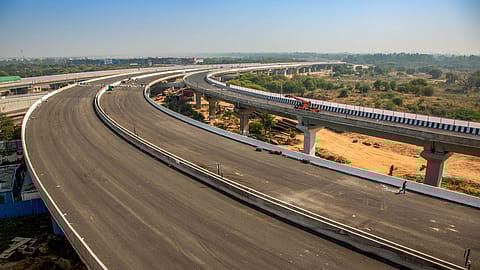
The report notes that highway activity has moderated after hitting record levels during FY22 and FY23 | Credits: Sanjay Rawat
Highway awards hit the brakes in FY26, but ₹1-lakh crore private pipeline could reignite growth: SBI Caps
India's highway sector faces a temporary slowdown in project awards, but a new ₹1-lakh crore private pipeline could reignite growth by FY27, according to SBI Capital Markets. Despite fewer new tenders and land acquisition issues, steady capital expenditure and rising toll collections suggest the slowdown is a pause, not a decline, with long-term growth prospects.
This summary is AI-generated, and Fortune India is not responsible for its content or any associated copyright issues.
Highway project awards may have slowed after the Bharatmala surge, but steady government capex, rising toll collections, and a potential ₹1-lakh crore private sector pipeline could drive the next phase of growth in India’s roads and highways sector
The report notes that highway activity has moderated after hitting record levels during FY22 and FY23 | Credits: Sanjay Rawat
India’s roads and highways sector may be navigating a temporary slowdown in project awards and construction, but structural demand and a fresh pipeline of projects could set the stage for renewed momentum by FY27, according to a new report by SBI Capital Markets.
Project awards slow after Bharatmala momentum
The report notes that highway activity has moderated after hitting record levels during FY22 and FY23. Fresh project awards declined as bidding under Bharatmala Pariyojana Phase I slowed significantly from late 2023, leaving only about 4,500 km of the previously awarded 26,000-plus km yet to be completed.
A combination of factors—including tighter eligibility norms for developers, land acquisition bottlenecks in several states, and fewer new tenders—has dampened the pace of awards. The knock-on effect has been visible in construction activity through FY25 and FY26, with fewer open bids intensifying competition and reducing bid premiums for developers.
Capex trends signal continued construction activity
Despite the moderation in headline construction figures, capital expenditure by the Ministry of Road Transport and Highways has remained steady during the first ten months of FY26. Consumption trends for key inputs such as bitumen, cement, and steel also suggest continued activity on the ground.
Bitumen consumption in calendar year 2025 is hovering near a five-year high, indicating sustained road-building work despite slower new awards.
SBI Caps believes the sector could regain traction as more expressways near completion. Over 650 km of expressway projects are expected to be commissioned in the next 12 months, which could help accelerate construction activity and traffic growth while improving logistics efficiency across key freight corridors.
Augmentation of private sector participation, toll collection
Another potential catalyst is the government’s renewed push to bring private capital into road infrastructure. A fresh framework for projects worth nearly ₹1 lakh crore could be awarded to private developers in FY27, the report notes, potentially reviving bidding activity and improving order book visibility for infrastructure developers.
Meanwhile, toll collections continue to expand, supported by rising traffic and digital payments through FASTag. Collections could eventually approach the ₹1-lakh crore mark in the medium term, although recent regulatory changes in toll calculation norms by the National Highways Authority of India may slightly moderate tariff growth.
Overall, the report suggests the sector’s near-term slowdown may be more of a pause than a structural decline, with policy support, monetisation initiatives, and expressway expansion likely to sustain long-term growth in India’s highway network.
NEXT STORY