The FAQs are AI-generated, and Fortune India is not responsible for its content or any associated copyright issues.
How Tata Motors’ Kaushalya programme is bringing more women onto the shop floor
/ 2 min read
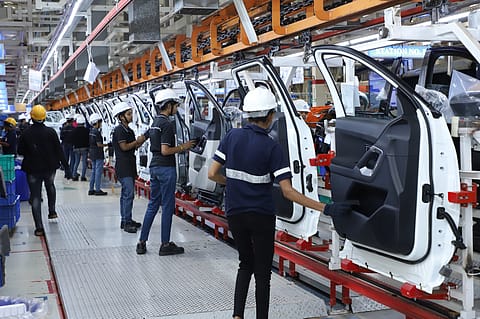
The all-women run TCF-2 plant in Pune | Credits: Tata Motors
How Tata Motors’ Kaushalya programme is bringing more women onto the shop floor
Tata Motors' Kaushalya programme is empowering women by integrating them into the workforce at its Pune plant. The initiative allows young women like Pratiksha Pawar to gain practical experience while pursuing education, fostering industry readiness. With over 20,000 students enrolled, the programme is creating leadership roles and opening opportunities for women in manufacturing.
This summary is AI-generated, and Fortune India is not responsible for its content or any associated copyright issues.
The programme is open to ITI graduates and 12th-pass students and combines shop-floor work with classroom learning through partner institutes
The all-women run TCF-2 plant in Pune | Credits: Tata Motors
At Tata Motors’ TCF-2 plant in Pune, many of the operators assembling the Tata Harrier and Safari are young women who joined the workforce through the company’s training initiative.
“It makes me proud to be working here,” says Pratiksha Pawar, a 21-year-old operator from Maharashtra who works on the assembly line. Pawar is among the trainees who entered the company through Tata Motors’ Kaushalya Learn and Earn programme, which allows students to work while pursuing a diploma.
The programme is open to ITI graduates and 12th-pass students and combines shop-floor work with classroom learning through partner institutes such as the Nettur Technical Training Foundation (NTTF).
“Students work, earn their livelihood, and at the same time pursue higher education,” says Neeraj Agarwal, plant head, Pune, Tata Motors Passenger Vehicles Ltd. The idea, he says, is to make young workers industry-ready by combining practical exposure with technical education.
Across Tata Motors, more than 20,000 students are currently enrolled in the programme. Over the past three years, around 4,600 students have been placed across Tata Motors, its suppliers, dealers and other companies in the ecosystem. While the programme is open to both men and women, women currently account for about 21% of the trainees.
How the programme boosts work experience
For Pawar, the programme offered a way to start working early while continuing her education.
“My parents wanted me to take up a government job,” she says. “But I convinced them that I wanted to do this job. It is better than doing a plain BTech degree because I get work experience, which is more important than just a degree.”
Recommended Stories
Agarwal says the initiative is also opening up opportunities for young women from smaller towns around the plant. Most of the women working at the facility come from within 100–150 km of Pune, largely from across Maharashtra. “Parents are still not very open to sending their daughters to distant places,” he says. “But initiatives like this are helping women from nearby villages and towns see what kind of opportunities exist for them in manufacturing.”
The initiative is also beginning to create leadership roles for women inside the plant. Agarwal says 69 women from the first batch are currently working as team leaders on the shop floor, and some have applied for roles within Tata Motors where they could move into engineering or managerial positions.
Agarwal notes the programme also runs on a continuous cycle as workers move on to other opportunities. “There is always some attrition, so there is continuous intake,” he says. Trainees typically spend about three years gaining experience while completing their diploma, after which they may continue with the company or take up roles elsewhere in the automotive ecosystem.
The company states that it provides 100% placement assistance to all its students irrespective of gender after they complete their diploma.
RANK
COMPANY NAME
REVENUE
(INR CR)
(INR CR)
{{#current-rank}} {{current-rank}} {{/current-rank}} {{^current-rank}} {{rank}} {{/current-rank}} {{name}} {{#revenue}} {{revenue}} {{/revenue}} {{^revenue}} {{noi}} {{/revenue}}