Mahindra has no plans to demerge core auto, tractor businesses, says ED and CEO Rajesh Jejurikar
/ 3 min read
Jejurikar doubles down on unified auto–tractor structure even as rivals pursue demergers, betting on synergies within M&M’s core operations
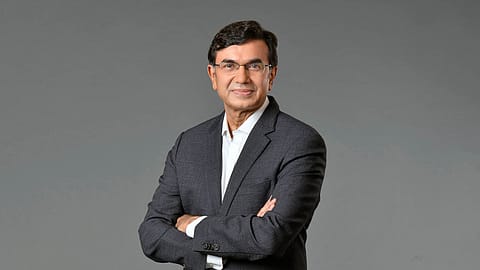
Rajesh Jejurikar, executive director and CEO (Auto and Farm Sector), M&M.
Mahindra & Mahindra has no plans to demerge its core automotive and farm-equipment businesses, Rajesh Jejurikar, Executive Director and CEO, Auto and Farm Sectors, said, reiterating the company’s position even as a broader restructuring trend sweeps India’s automobile industry.
“There is no plan to separate out the core auto and tractor business, with all assets in M&M Limited,” Jejurikar said in Fortune India’s Unscripted podcast.
His comments come after speculation fuelled around other large auto groups could pursue the Tata Motors route of demerging their commercial vehicle and passenger vehicle business. For Tata Motors, which listed TML Commercial Vehicles on Indian stock exchanges in November 2025, the separation was aimed at giving the businesses greater strategic autonomy, given their different technologies, business models, platforms, customers, dealer partners and investors.
Mahindra itself became the subject of such speculation in October 2025, when media reports suggested that the group was evaluating a restructuring that could potentially separate its tractor, passenger-vehicle and truck businesses into independent entities.
Mahindra subsequently rejected the speculation in a stock-exchange filing, saying there was “no plan for a demerger of the Auto and Tractor businesses” and that it saw “much greater value from synergies by keeping these businesses within the M&M entity.”
Separate entities as a ‘strategic rationale’
Jejurikar’s latest comments reaffirm that position, while also highlighting that Mahindra is comfortable operating certain businesses through separate entities where it sees a strategic rationale.
The company’s trucks and buses business, for instance, is being consolidated with SML Isuzu following Mahindra’s acquisition of the commercial-vehicle maker. Jejurikar said Mahindra had been subscale in trucks and buses, with around 3% market share, and that the combination could take the business to around 6% market share and roughly ₹6,000 crore in revenue. “Now, that’s a reasonable level at which you can kind of play [with],” he said.
Mahindra’s electric three-wheeler business is another example of a business being built and operated separately. Jejurikar said the company had developed the business organically over the past four to five years, taking monthly electric three-wheeler volumes from around 300–400 units in 2021 to more than 10,000 currently.
The company has also separately structured Mahindra Electric, which Jejurikar said is now producing around 4,000–5,000 units a month.
Is Mahindra open to acquisitions?
“The way we look at acquisitions is, is there a strategic fit and an opportunity to build up on something,” Jejurikar said, describing the same strategic approach to portfolio decisions. He also said Mahindra remains open to acquisitions, although there are limited opportunities in passenger SUVs because significant consolidation has already taken place.
That position is also reflected in how the company is approaching its future product portfolio. Jejurikar said Mahindra is increasingly designing platforms that can support multiple powertrains, including both internal-combustion engines and electric vehicles, rather than treating the businesses as entirely separate bets.
{{#most-powerful-women-snapshot-individual.slug}} {{/most-powerful-women-snapshot-individual.slug}} {{^most-powerful-women-snapshot-individual.slug}} {{/most-powerful-women-snapshot-individual.slug}} {{#showRanking}} {{current-rank}} {{/showRanking}} {{#photo.0.url}}
{{name}}
“Fortunately, for us, right now, in businesses where our returns are high, we don’t have a problem with capital,” Jejurikar said. “It’s less a capital issue, more of a resourcing issue.” He said Mahindra is now running eight product programmes simultaneously, compared with one programme five years ago.
For now, therefore, Mahindra’s restructuring strategy appears to be one of selective separation rather than a wholesale break-up--specialised or newer businesses can be housed separately where scale and strategic focus justify it, while the core automotive and tractor operations remain within M&M because the company believes the combination creates greater value.
Follow Fortune India
NEXT STORY