Tata Motors to supply 70,000 commercial vehicles for deployment in Indonesia
Tata Motors to supply 70,000 commercial vehicles for deployment in Indonesia
Tata Motors has secured a major deal to supply 70,000 commercial vehicles to Indonesia, marking its largest supply agreement in Southeast Asia. The vehicles, including Yodha pick-ups and Ultra T.7 trucks, will support agricultural logistics and rural transportation, enhancing supply-chain efficiency and connectivity in remote regions through government-backed programs.
The vehicles will be supplied through Tata Motors’ Indonesian subsidiary for use in agricultural logistics and rural transport, with deliveries planned on a phased basis
Tata Motors has entered into an agreement to supply 70,000 commercial vehicles for deployment in Indonesia through its wholly owned indirect subsidiary, PT Tata Motors Distribusi Indonesia, marking the company’s largest vehicle supply arrangement in the Southeast Asian market.
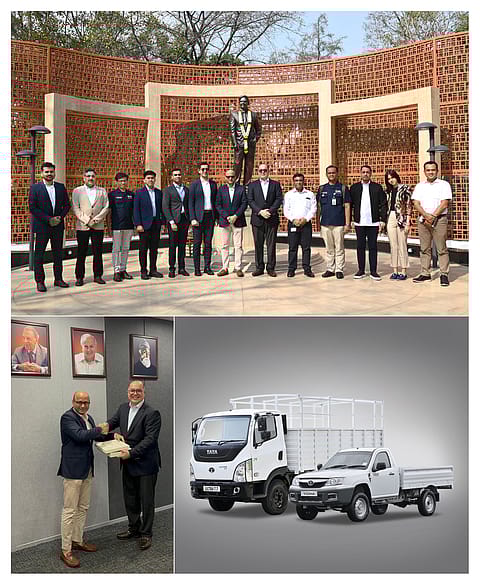
Under the agreement, Tata Motors will supply 35,000 units each of the Yodha pick-up and the Ultra T.7 truck. The vehicles will be delivered to PT Agrinas Pangan Nusantara, an Indonesian state-owned enterprise, for use in agricultural logistics and rural transportation. The company did not disclose the value of the contract or the delivery timeline, noting that execution will be phased.
Focus on agricultural and rural logistics
According to the press release, the vehicles will be deployed to support farm-to-market transport and regional goods movement across Indonesia. Distribution will be routed through agricultural cooperatives under government-backed rural development programmes aimed at improving supply-chain efficiency and connectivity in remote regions.
PT Tata Motors Distribusi Indonesia serves as Tata Motors’ distribution and operations arm in the country. The order expands Tata Motors’ commercial vehicle footprint in a market where infrastructure investment and logistics demand continue to rise.
Yodha and Ultra T.7 form core of deployment
The Yodha pick-up is positioned for last-mile and rural mobility applications, while the Ultra T.7 addresses light and intermediate commercial transport needs, including short- and medium-haul freight movement. Both models are designed for operation in mixed terrain and high-utilisation environments typical of emerging markets.
“This order reflects growing acceptance of Indian commercial vehicles in overseas markets,” said Asif Shamim, Director, PT Tata Motors Distribusi Indonesia.
Indonesia, Southeast Asia’s largest economy, has prioritised agricultural supply-chain modernisation and rural connectivity, creating sustained demand for cost-efficient transport solutions.