Volvo Auto India weighs sourcing flexibility as India–EU FTA reshapes supply-chain calculus
/ 3 min read
FTA-led tariff shifts may redraw sourcing lines for Volvo Cars in India, even as local assembly remains core to its premium strategy
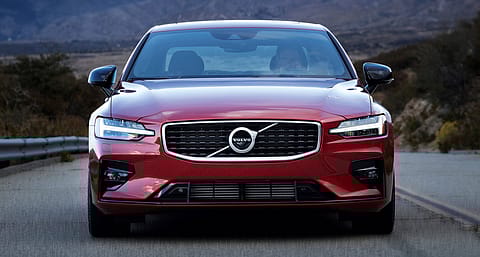
Volvo already operates a completely knocked down (CKD) assembly facility at Hoskote near Bengaluru, where it assembles several models sold in India. | Credits: Courtesy Volvo
Volvo Auto India is reassessing its sourcing strategy for the domestic market amid shifting global supply chains and the recently concluded India–European Union (EU) Free Trade Agreement (FTA), even as the company maintains that no firm decision has been taken to move sourcing away from China.
People familiar with the matter said the Swedish carmaker is keen to leverage its manufacturing facilities in Europe following the inking of the FTA.
“While Volvo has so far been shipping vehicles and kits from its plants in China, plans have now been firmed up to import models and kits from Europe,” the source said, adding that the move is expected to help the company expand the range of petrol and hybrid models offered in India at more competitive price points. The source, however, clarified that Volvo’s Indian facility will continue to assemble vehicles, including battery-driven ones, locally.
It may be recalled that Volvo Cars is owned by China’s Zhejiang Geely Holding Group, which acquired the Swedish automaker from Ford Motor Company in 2010. Since then, Geely has supported Volvo’s global expansion, electrification strategy and product development, while allowing it to operate with significant strategic and operational independence.
Local assembly remains central to India strategy
Volvo already operates a completely knocked down (CKD) assembly facility at Hoskote near Bengaluru, where it assembles several models sold in India. Currently, the company assembles the XC40, XC60, XC90 and S90 mild-hybrid models at the Bengaluru plant using imported CKD kits. In recent years, electric models such as the XC40 Recharge and C40 Recharge have also moved to local assembly, following earlier imports from China.
According to the company, sourcing decisions for both existing and upcoming models remain under evaluation, shaped by prevailing market conditions and broader supply-chain considerations.
“Regarding future sourcing, we remain open to all options and are continuously evaluating the most viable routes,” said Jyoti Malhotra, Managing Director, Volvo Car India, adding that the company’s approach is guided by efficiency, sustainability and evolving global supply-chain dynamics.
Prices for Volvo’s India lineup range from about ₹46 lakh for the XC40 mild hybrid to nearly ₹99 lakh for the flagship XC90 (ex-showroom), positioning the brand firmly in the premium segment.
FTA could tilt sourcing economics away from China
China has historically been a key manufacturing base for Volvo globally, particularly for electric vehicles. However, industry sources said the India–EU FTA could gradually tilt sourcing economics in favour of Europe, where Volvo has major manufacturing facilities in Sweden and Belgium. The agreement is expected to bring phased tariff reductions over time, potentially lowering the landed cost of European-origin vehicles and components.
Malhotra described the FTA as a “landmark development” that creates a strategic framework for Volvo’s longer-term plans, strengthening cooperation with its European plants while supporting its electrification roadmap.
Pricing to stay stable in near term
At the same time, the company cautioned against expectations of immediate price cuts. Vehicle prices are expected to remain largely stable in the near term, with inflationary pressures, currency movements and forex-related challenges continuing to influence pricing decisions. Prices, Malhotra said, could see a modest increase in the short term due to currency-related headwinds.
In India’s luxury car market, Volvo competes with Mercedes-Benz, BMW, Audi and Jaguar Land Rover, all of which rely heavily on CKD assembly to manage import duties and pricing pressures.
{{#most-powerful-women-snapshot-individual.slug}} {{/most-powerful-women-snapshot-individual.slug}} {{^most-powerful-women-snapshot-individual.slug}} {{/most-powerful-women-snapshot-individual.slug}} {{#showRanking}} {{current-rank}} {{/showRanking}} {{#photo.0.url}}
{{name}}
Analyst view: FTA offers optionality, not instant gains
An industry analyst said Volvo’s focus on sourcing flexibility mirrors a broader trend among global automakers.
“Given the complexity and growing uncertainties with the China-centric supply chain, aligning sourcing with European facilities could help Volvo manage tariffs and inventory more effectively over the medium term,” said Puneet Gupta, Director, S&P Global Mobility, adding that FTA-related duty reductions could make niche low-volume models more viable and attractive for Indian customers .
Follow Fortune India
NEXT STORY