₹10,000-crore fuel stabilisation fund to cushion airlines from crude shocks, support fare stability: Crisil
/ 3 min read
Fuel remains the single-largest operating expense for airlines, historically accounting for 35-50% of total operating costs.
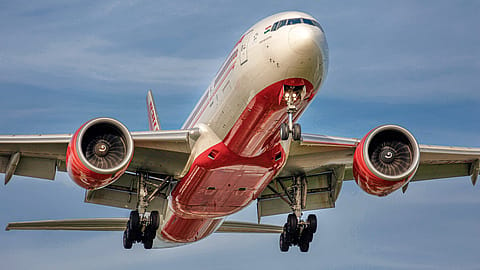
Under the government's mechanism, ATF prices for domestic carriers have been capped at ₹75.6 per litre, providing timely relief to airlines grappling with disruptions arising from the ongoing West Asia crisis. | Credits: Alamy
The recently approved ₹10,000-crore Price Stabilisation Fund (PSF) for oil marketing companies (OMCs) is expected to help absorb a portion of higher fuel procurement costs during periods of crude oil price spikes, thereby shielding the aviation sector from sharp increases in fuel expenses, according to a report by Crisil Intelligence.
The fund is expected to support stable aviation turbine fuel (ATF) prices for Indian airlines by mitigating the impact of global crude oil volatility. Under the government's mechanism, ATF prices for domestic carriers have been capped at ₹75.6 per litre, providing timely relief to airlines grappling with disruptions arising from the ongoing West Asia crisis.
Fuel remains the single-largest operating expense for airlines, historically accounting for 35-50% of total operating costs. The share had risen to 50-51% during fiscals 2012-2014 when Brent crude averaged above $100 per barrel. More recently, fuel costs surged to nearly 48% of total operating expenses in fiscal 2023 following the conflict in Eastern Europe and the resulting global energy crisis, highlighting the industry's vulnerability to oil price movements.
Historically, elevated crude prices have affected airlines through both direct and indirect channels. Higher ATF prices increase operating costs, while the resulting fare hikes tend to weaken demand, particularly in price-sensitive markets such as India. During fiscals 2012-2014, when Brent crude traded between $100 and $110 per barrel, domestic passenger traffic growth slowed to low single digits and even turned negative in fiscal 2013.
A similar trend is expected to emerge amid the ongoing West Asia conflict. Crisil estimates Brent crude prices could remain around $90-95 per barrel this fiscal, potentially moderating passenger traffic growth to 4-6%, compared with the double-digit growth recorded in recent years.
The impact of the conflict has already become visible. International and domestic passenger traffic witnessed year-on-year declines in March and April, immediately after the conflict escalated, owing to higher ATF prices, airspace restrictions and operational disruptions. Crisil noted that the decline could have been steeper had domestic ATF prices not been capped by OMCs. While ATF prices in India have risen about 15% from pre-conflict levels, international ATF prices have doubled during the same period.
The report also highlighted the significant effect of fuel costs on airline profitability. In fiscal 2023, surging fuel prices compressed margins and reduced airline operating profitability to around 9%, despite a recovery in passenger traffic. While profitability depends on several factors, fuel costs have historically remained a major driver of margin pressure.
Escalating fuel prices have also contributed to airline failures, with 11 Indian carriers shutting down over the past decade. Against this backdrop, the government has increasingly intervened to protect airlines and passengers from fuel price volatility linked to geopolitical events.
According to Crisil, the PSF represents a more structured approach to cushioning OMCs against crude price shocks and reducing the likelihood of abrupt ATF price increases. Based on prevailing ATF prices of around Rs 105 per litre in India and Rs 142 per litre internationally, the fixed-price mechanism provides support of approximately Rs 45 per litre. Using average monthly ATF consumption estimates for fiscal 2026, the fund is expected to last about 2.3 months under current conditions.
The mechanism could indirectly support airlines by reducing fuel price volatility, improving earnings visibility and easing pressure on operating margins.
However, Crisil cautioned that the ATF price cap may also limit the benefits airlines receive when global oil prices decline. Under the scheme, the arrangement will continue until the support extended to OMCs is fully recovered. As a result, if international ATF prices fall below the benchmark used for the scheme, airlines may not immediately benefit from lower fuel prices because a portion of the gains would be used to recoup the support provided to OMCs.
{{#most-powerful-women-snapshot-individual.slug}} {{/most-powerful-women-snapshot-individual.slug}} {{^most-powerful-women-snapshot-individual.slug}} {{/most-powerful-women-snapshot-individual.slug}} {{#showRanking}} {{current-rank}} {{/showRanking}} {{#photo.0.url}}
{{name}}
Consequently, ATF prices are expected to remain fixed at Rs 75.6 per litre until the government recovers the amount extended under the scheme, delaying the transmission of lower crude oil prices to airlines.
Passengers are also expected to benefit indirectly. Airlines typically respond to rising fuel costs through higher fares, fuel surcharges or reduced promotional discounts. By helping stabilise fuel prices, the fund could moderate airfare inflation and support travel demand, especially among price-sensitive leisure travellers.
NEXT STORY