AI spending surge is necessary, not a bubble: BlackRock CEO
/ 3 min read
“AI is among the most topical conversations we’re having now because it is disruptive,” Larry Fink says.
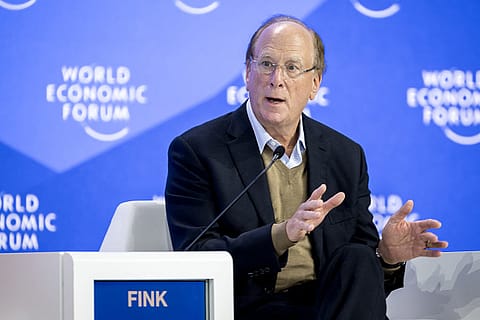
BlackRock CEO Larry Fink | Credits: Getty Images
Larry Fink, Chairman and CEO of BlackRock, said the rapid rise in spending on artificial intelligence should not be seen as a bubble, even as companies invest billions of dollars into building technology infrastructure.
Speaking alongside Mukesh Ambani, Chairman, Reliance Industries, at a Jio-BlackRock event titled “Investing for a New Era”, Fink said fears of excessive investment are misplaced. “I don’t believe there is an AI bubble. Not at all,” he said. He added that slowing investments could create larger risks, particularly in the global technological race. “I believe the greatest risk we have is if we don’t invest and continue to invest, China will win.”
Fink acknowledged that the growth of AI will not benefit every company equally. He said business failures are likely as industries adjust to new technologies. “That doesn’t mean we’re not going to have some bankruptcies or some failures. That’s capitalism. You’re going to have some big successes and big failures,” he said.
He pointed to recent developments, including new tools launched by Anthropic, as examples of how emerging technologies can create both threats and opportunities for businesses. “AI is among the most topical conversations we’re having now because it is disruptive. It’s going to be disruptive for some industries, but it’s also going to be very advancing,” he said.
Fink also highlighted the potential for technology to change sectors such as healthcare and energy. “The future of AI in terms of drug discovery, in terms of humanity, is real,” he said. He added that new technological tools could help develop cheaper and more efficient energy sources, though such outcomes may take time.
At the same time, Fink said one of the biggest challenges will be ensuring the benefits of new technology are widely shared. “The key for AI to be really successful in every society is to make sure that AI broadens economic success, and it doesn’t narrow economic success,” he said. He noted that in the early stages, some countries may benefit more than others. “In the early part of AI, you’re going to see countries that are huge winners and some countries that are going to be left behind.”
Fink said that over time, technology could become more accessible across economies. “In the long run, I think it’s going to be more democratising, but in the first few parts of AI, it’s going to be more limiting,” he said.
“Through AI, you have better understanding of your clients, better understanding of your inventory controls. You have so many advantages by the application of AI and technology,” Fink said, reasoning why BlackRock has to use advanced technologies to manage nearly $14 trillion in assets.
Fink also said technology could help countries facing ageing populations maintain economic growth. He cited nations such as South Korea, Japan and Italy, where declining populations are raising concerns about future productivity. “Can AI increase productivity? And if so, can we increase GDP with a diminishing population? I believe the answer is going to be profoundly yes,” he said.
India adopts technology faster
He described India as being well placed to benefit from technological shifts due to its large population and openness to adopting new systems. “India is at the nexus of it,” he said. “India is more accepting of technologies than many developed countries.” Fink pointed to India’s rapid adoption of digital payment systems as an example of how quickly the country can adapt to change. He said such adaptability could help India manage both job creation and disruption caused by new technologies.
Fink said technological change will bring disruption in the short term but could support global growth over time. “To me, AI is going to be a powerful growth engine in the world, but we need to make sure it’s a growth engine for more,” he said.
Follow Fortune India
NEXT STORY