Air India merged four airlines into two. Does it make sense to merge the two now?
/ 4 min read
A fresh merger push revives an old playbook as Air India, reeling from mounting losses and brand crises, tests whether one unified airline can deliver the efficiency, bargaining power and clarity its ambitious growth plan demands.
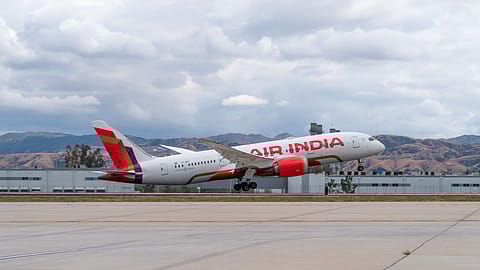
Can it take off finally? | Credits: Air India
Air India’s new CEO, Tewolde Gebremariam, is reportedly planning another merger.
This time, the airline is reportedly considering a proposal to merge its low-cost arm, Air India Express, into its full-service brand, Air India. Currently, Air India Express and Air India operate as two airlines with their own operating permits, management structure, and supporting functions.
Gebremariam is considering reducing regulatory requirements and the need for two separate workforces, and, in the process, cutting losses that have plagued the carrier for too long. Air India’s mounting losses have even caused serious unrest at the Tata Group, the airline's owners. If the airline's supervisory board approves the plan, Air India Express and Air India would retain their individual brands but operate under a common operating permit.
The merger would also mean restarting a process the group had put to an end a few years ago, when it merged four airlines into two afterAir India returned to the Tata Group. It also comes as the airline grapples with serious losses and a brand crisis. In FY26, the airline posted a combined net loss of ₹22,238 crore, more than double the ₹10,859 crore loss in the previous fiscal, despite pulling in ₹71,870 crore in total revenue.
Add to it the repeated strikes on the brand value, including a pilot being sacked after a positive drug test after the airline ran into severe turbulence, injuring passengers, and the airline's inability to explain the London-bound AI-171 aircraft’s crash last year that killed 260 people; the much-touted turnaround plan proposed by the Tata Group seems to be in jeopardy. It also poses serious challenges for the new CEO, chosen after Campbell Wilson's four-year tenure.
“Taken on its own merit, it is logical to merge to cut losses,” Shukor Yusuf, the Founder & Analyst at Singapore-based Endau Analytics, says. “However, what will the merged entity be—full-service airline or low-cost carrier? There will be logistical issues, too, with IT, check-in, scheduling, etc.”
“Merging AI and AIX under a single AOC brings pilots, crew, and maintenance engineers under a single entity that are available to be utilized in a more streamlined and efficient manner and would ensure the adequate/the actual number required in terms of workforce from the ground to the management, as all duplication of roles is removed,” says Amit Mittal, Director, AeroIntellect Aviation, an aviation consulting firm. “The route optimisation can only happen if Air India and Air India Express fly under a single AOC as one entity; right now, they are cutting each other’s passenger load by having departures spaced 10-15 minutes to similar destinations.”
Gebremariam comes to Air India after many years at the helm of Ethiopian Airlines — where he joined as a traffic officer in 1985 and climbed the ranks to become CEO — the 61-year-old grew the carrier’s annual revenues from $1 billion to $5 billion, with a net profit of $1 billion in 2022 when he stepped down. Passenger traffic grew from 3 million to 12 million, and cargo tonnage rose from 160 tonnes to 760 tonnes. Foreign destinations doubled to 128, and the workforce grew from 6,300 to 17,000 employees. Gebremariam also led the company through the nasty Boeing 737 MAX crash, killing all 157 people on board.
Air India desperately needs these credentials now. Consider this: In January 2022, at the time of the Tata merger, it held a 22.3% share in the domestic market and 25.26% share in the and international market, through airlines such as AirAsia India, Vistara, Air India, and Air India Express. By September 2022, Air India put in place a turnaround plan called Vihaan.AI (vihaan in Sanskrit means “the dawn of a new era”) to focus on network and fleet growth, develop a fully revamped customer proposition, improve reliability and on-time performance, and assume the numero uno position. The company set a target: increase domestic market share to 30% and significantly expand international operations.
It also merged four airlines into two: AirAsia India merged with Air India Express to become low-cost carrier; and Vistara merged with Air India to form a full-service carrier. The merger also meant Singapore Airlines took a 25.1% stake in Air India, with Air India Express being its fully owned subsidiary.
“The merger could lead to better fleet flexibility, more headroom for the single entity to negotiate aircraft financing and leasing contracts with global aircraft lessors due to a combined bigger fleet,” Mittal adds. However, key cautions to be taken are Integration complexity and execution risk; strategic clarity will have to be exercised for brand and network positioning, and crew seniority and HR issues will have to be taken care of.”
{{#most-powerful-women-snapshot-individual.slug}} {{/most-powerful-women-snapshot-individual.slug}} {{^most-powerful-women-snapshot-individual.slug}} {{/most-powerful-women-snapshot-individual.slug}} {{#showRanking}} {{current-rank}} {{/showRanking}} {{#photo.0.url}}
{{name}}
India is the world’s third-largest aviation market, and its airports have grown from 74 in 2014 to 163 in 2025. The government wants to raise that to 350-400 by 2047. By 2040, passenger traffic is expected to grow sixfold to around 1.1 billion. India’s commercial airline fleet is predicted to grow from 400 in 2014 to around 2,359 in March 2040. Total employment in the aviation sector is expected to reach around 25 million in 2040.
The group signed a deal to acquire as many as 470 aircraft — 34 A350-1000, six A350-900, 20 Boeing 787 Dreamliners, 10 Boeing 777X widebody, 140 Airbus A320neo, 70 Airbus A321neo, and 190 Boeing 737MAX narrowbody — worth $70 billion, even as it brought AirAsia India, Vistara, and Air India Express under the Air India umbrella. Last month, the Tata Group had approved a fresh capital infusion of more than ₹10,000 crore, or about $1.1 billion, into Air India, marking one of the group’s biggest financial commitments to the airline since its ₹18,000-crore acquisition in 2021.
Follow Fortune India
NEXT STORY