
Why the Singapore government is staying out of Singapore Airlines’ Air India investment
ADVERTISEMENT
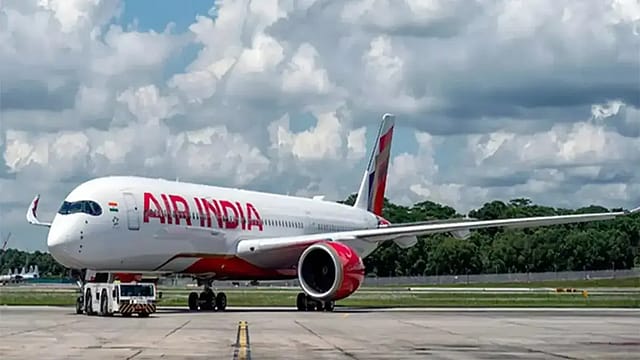
The Singapore government sees no reason to intervene in Singapore Airlines’ investment in Air India, as questions about Air India’s revival and additional funding requirements come under scrutiny in the island country.
Air India, in which Singapore Airlines owns 25%, is in the midst of raising additional capital worth $1.1 billion, of which Singapore Airlines is likely to provide $250 million. Mounting losses and a longer-than-expected turnaround have raised questions about the airline's viability, in a market where leader IndiGo has been busy upping the ante recently. Tata and SIA had reportedly paused funding into the airline last year.
“SIA is a listed company. SIA has to decide what investments it wants to make, and SIA answers to its shareholders,” K. Shanmugam, Senior Minister and the Minister for Home Affairs for the Singapore Government told reporters on September 5. “SIA has declared that it has more than S$10 billion in cash reserves and over S$3 billion in undrawn credit facilities. It is the responsibility of SIA to assess its investments in Air India in relation to the resources it has for the long-term growth and profitability of the company.”
Last week, Singapore Airlines' investment in Air India drew public attention in Singapore when Kenneth Tiong, a member of parliament, said in a social media post that Temasek, the state-owned investment fund of the Government of Singapore, must not be putting money into Air India. “I will not support, nor expect, any future use of Temasek’s funds to prop up Air India via Singapore Airlines. If Singapore Airlines wants to continue its bet on Air India, it should do so on its own two feet, and not on Temasek’s,” he said. “Whichever of the two writes the cheque, it will have a significant impact on Temasek,” he added.
The Singapore government, meanwhile, said in its response that Singapore Airlines remains the shareholder in Air India, and Temasek doesn’t intervene in any decision-making of its portfolio companies.
“Any decision to invest in Air India lies with SIA, and Temasek as a shareholder in SIA, along with other shareholders, will expect SIA to make its investment decisions responsibly,” Shanmugam said. “Temasek is accountable to the Government for its overall portfolio and its overall long-term performance. Temasek does not account to the Government for its individual investments, nor does it account for individual investment decisions of its portfolio companies. Temasek and its subsidiaries decide how to invest across a wide portfolio with investments of varied risks and varied time horizons.”
Years of underinvestment, a botched merger, and bureaucratic highhandedness had turned Air India into something of a wreck before the Tata Group decided to back it five years ago. It was a homecoming of sorts for the airline, started by JRD Tata, the former head of the Tata Group before the Indian government took it over in 1953.
But now with Noel Tata—who has been questioning the strategy of the airline—in the driver’s seat at the Tata Group, Air India will have a hard task at hand and an urgency to show results. A five-year turnaround hasn’t really yielded results, and a crash, among the largest in India last year, has definitely dented the brand. Losses have spiralled, and so has market share, raising questions about the airline's viability.
Last month, the airline appointed Tewolde Gebremariam, the longest-serving former chairman of Ethiopian Airlines, after Campbell Wilson, the first CEO appointed by the Tata Group, resigned.
Concerns such as the one raised by Tiong, though, can’t be brushed off that easily, especially since the Tata Group itself reckons the turnaround could take a decade. “Air India’s transformation must be seen as a five- to 10-year journey, considering the years-long supply chain disruptions in key components, the need to overhaul legacy systems, culture and fleet, and the creation of a large cadre of technical and airline professionals,” N. Chandrasekaran, the chairman of the Tata Group, said on July 28.
Last year, the airline posted a combined net loss of ₹22,238 crore for FY26, more than double its loss of ₹10,859 crore from the previous fiscal, despite pulling in ₹71,870 crore in total revenues. Adding to all those woes have been the repeated strikes on the brand value, with instances such as a passenger urinating on another passenger in business class, and a pilot being sacked after a positive drug test last month.
Then, even as it has been attempting a turnaround, neither the airline nor the Indian government has been able to explain the cause of an accident last year, when the London-bound AI-171 crashed soon after take-off. Over 260 people died in the crash, the first of its kind involving a Boeing Dreamliner.
SIA first invested in India's aviation sector in 2013, when it set up a joint venture with Tata Sons in Vistara. Air India and Vistara merged in 2024 as part of the Tata Group’s plan to operate only two airlines, Air India and Air India Express. “We should leave it to SIA to decide what it does with its investments,” Shanmugam added. “Of course, SIA shareholders, as well as the broader public, have a right to expect that SIA will be accountable and transparent. The Government is likewise entitled to expect that there will be proper, rigorous decision-making in Temasek, and that Temasek will ensure the same with TPCs.”
India is one of the largest investment markets for Temasek, with a 7% exposure to investments in the country. “Last year, Temasek sold its stake in an Indian joint venture to its partner, Schneider Electric, for more than S$8 billion — that was almost ten times what Temasek had initially paid for the shares,” the minister added. “Manipal Health Enterprises, IPO last month, is now said to be valued at more than S$11 billion. The National Stock Exchange of India is going to IPO soon, in the next few months.”
The reprieve might have come for now, but Air India can never really be off the hook—at least until it can truly show a turnaround.