The FAQs are AI-generated, and Fortune India is not responsible for its content or any associated copyright issues.
Air India, Tata Digital, and Tata Electronics CEOs present capex, loss-funding requirements to Tata Sons board
/ 3 min read
The quickly convened board meeting on Tuesday took place against the backdrop of a growing debate over the listing of Tata Sons.
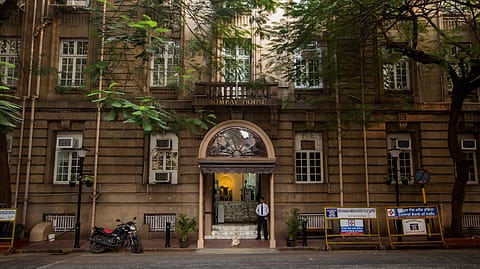
Bombay House, the headquarters of the Tata Group. | Credits: Fortune India Archives
Under the guidance of Tata Sons Chairman N. Chandrasekaran, the chief executives of Air India, Tata Digital, and Tata Electronics presented the capital expenditure and the loss-funding requirements of their respective businesses to the Tata Sons board on Tuesday. The presentations largely focussed on equity infusion and loss-funding requirements, according to sources familiar with the developments.
Air India CEO Campbell Wilson, Tata Electronics CEO & MD Randhir Thakur, and Tata Digital CEO & MD Sajith Sivanandan made detailed presentations, followed by discussions on the capital requirements of their businesses.
The quickly convened board meeting took place against the backdrop of a growing debate over the listing of Tata Sons. At the February meeting, Tata Trusts chairman Noel Tata, who opposed a listing, had cautioned that losses could force companies to undertake additional borrowing and that Tata Sons could eventually be compelled to pursue an initial public offering under Reserve Bank of India guidelines applicable to upper-layer non-banking financial companies.
"The board has not taken any decision on allocating funds," said a source.
Tata Sons' unlisted ventures together posted net losses of more than ₹10,900 crore in FY25, significantly higher than about ₹1,557 crore in FY20. According to early estimates, the combined losses rose to nearly ₹29,000 crore in FY26, with Air India and Tata Digital accounting for the bulk of the drag.
Air India remains the group's biggest concern and is estimated to have reported a loss of about ₹27,000 crore in FY26. The airline was also the largest loss-making Tata Group company in FY25, reporting a loss of over ₹9,500 crore. Tata Digital, which operates the super app Tata Neu, reported a loss of ₹828 crore in FY25.
The Tata Sons board is expected to discuss the immediate funding requirements of Air India and other ventures at its next meeting on June 12.
"The presentations have provided greater clarity on the funding requirements of Tata Sons' step-down subsidiaries. Board members also received better visibility into business performance," said another source, adding that such reviews are expected to become a regular affair.
Other board members, including Venu Srinivasan (nominee director of Tata Trusts), Harish Manwani, Anita M. George, and Group CFO Saurabh Agrawal, also attended the meeting.
Notably, the board did not slot sensitive issues, including the proposed listing of Tata Sons and the extension of Chandrasekaran's tenure as chairman, in the agenda. Directors, including Noel Tata, actively participated in discussions on business performance and future opportunities, sources said.
Air India is pursuing a $70-billion fleet expansion programme aimed at building a global airline with an extensive international network. The carrier is investing in a fleet of 570 new Airbus and Boeing aircraft.
{{#most-powerful-women-snapshot-individual.slug}} {{/most-powerful-women-snapshot-individual.slug}} {{^most-powerful-women-snapshot-individual.slug}} {{/most-powerful-women-snapshot-individual.slug}} {{#showRanking}} {{current-rank}} {{/showRanking}} {{#photo.0.url}}
{{name}}
Tata Electronics, which aims to become a $30-billion semiconductor fabrication and packaging company, is expected to lead the turnaround among the group's new ventures. The company is backed by cumulative investments of about $15 billion in a semiconductor fabrication plant at Dholera, Gujarat, and an assembly and testing facility at Jagiroad, Assam. Tata Electronics has partnered with Powerchip Semiconductor Manufacturing Corp. (PSMC) of Taiwan for the Gujarat facility and has also entered into a strategic alliance with Intel covering silicon and systems manufacturing, advanced packaging, and local AI-PC solutions.
Other unlisted businesses directly operated by Tata Sons include Tejas Networks and battery manufacturing venture Agratas. Their performance is also expected to come up for review at the June 12 board meeting. The group is investing ₹13,000 crore in a battery manufacturing facility at Sanand, Gujarat, and is in the process of investing $5.2 billion in another facility in the UK's Somerset.
During the Tata Sons board meeting in February, Noel Tata had raised concerns over the turnaround plans and capital expenditure commitments of the group's new businesses. He sought a detailed roadmap from Chandrasekaran on three key issues, including the financial performance of the new ventures and the rising debt burden being incurred to fund losses and expansion.
At the February meeting, Noel Tata had cautioned that additional borrowing by Tata Sons could eventually force the holding company to pursue an initial public offering under Reserve Bank of India guidelines applicable to upper-layer non-banking financial companies.
He believes that a public listing could expose the group's long-term strategic and philanthropic priorities to pressure from external shareholders. The late Ratan Tata had also favoured keeping Tata Sons unlisted.
The June 12 board meeting is expected to approve the annual accounts and discuss other key structural issues, including the reappointment of Chandrasekaran for a third term and his engagement with the RBI on retaining Tata Sons' private status.
Follow Fortune India
Frequently Asked Questions
NEXT STORY