The FAQs are AI-generated, and Fortune India is not responsible for its content or any associated copyright issues.
Alternate airports to add 40 million passenger capacity in 2026; India traffic seen at 580 million by FY30: Crisil
/ 2 min read
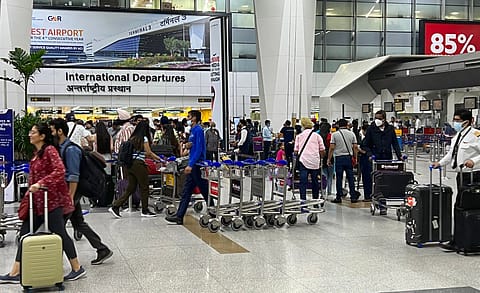
Representational Image | Credits: Getty Images
Alternate airports to add 40 million passenger capacity in 2026; India traffic seen at 580 million by FY30: Crisil
India's aviation sector is set for a major boost as alternate airports in key metro regions are expected to add 40 million passengers in capacity by 2026, according to Crisil. This expansion aims to alleviate congestion at older airports, with overall traffic projected to reach 580 million by FY30, driven by economic growth and easing capacity constraints.
This summary is AI-generated, and Fortune India is not responsible for its content or any associated copyright issues.
With metro hubs nearing saturation, India’s alternate airports are set to add 40 million passenger capacity this year, as overall air traffic targets 580 million by FY30 amid execution and ramp-up risks
Representational Image | Credits: Getty Images
India’s aviation infrastructure is entering a multi-airport phase, with alternate airports across key metro regions set to add nearly 40 million passengers in annual capacity this year, according to Crisil Ratings Limited.
These alternate facilities — coming up in regions such as the Delhi National Capital Region (NCR), the Mumbai Metropolitan Region (MMR) and Goa — are expected to scale up further and handle 45–50 million passengers annually by FY30. The expansion is aimed at easing congestion at older metro airports that are operating close to their design limits.
India’s overall airport traffic is projected to rise from about 415 million passengers this fiscal to nearly 580 million by FY30, implying a compound annual growth rate (CAGR) of 8–9%. The growth will be driven by strong economic activity, untapped demand and gradual easing of capacity constraints at crowded metro hubs.
However, the near term remains soft. Traffic growth is estimated at just 0–1% this fiscal due to weak demand following a major aircraft mishap, temporary airbase closures along India’s western border in the first half, and airline operational disruptions in the second half. With these disruptions easing, growth is expected to rebound to 6–7% next fiscal.
Capacity saturation at metro hubs
Older airports in the MMR and NCR are operating at 87% utilisation of design capacity, leaving limited room for expansion because of space constraints. By FY30, alternate airports in metro regions are expected to handle 20–25% of total regional traffic, improving slot availability and supporting long-term viability.
In contrast, airports in cities such as Bengaluru and Hyderabad still have headroom, with utilisation at around 65% last fiscal.
Globally, dual- or multi-airport systems — such as those serving New York/New Jersey and London — have demonstrated the ability to absorb high passenger growth by distributing traffic across facilities.
Recommended Stories
Credit impact and execution risks
Crisil expects the credit profiles of older metro airports to remain stable, supported by steady traffic growth, regulatory safeguards such as tariff true-ups, and strong sponsor backing. Alternate airports are expected to tap pent-up demand and expanded catchment areas.
That said, timely ramp-up is critical. Slower-than-expected connectivity infrastructure, competitive intensity between incumbent and new operators, or delays in aircraft deliveries could weigh on traffic at the new airports. In non-metro regions with volatile demand, underutilisation risks are higher if older airports retain advantages such as lower tariffs or proximity to city centres.
With India’s air traffic poised for structural expansion, infrastructure readiness — and execution discipline — will determine whether the next growth cycle translates into sustainable returns.
Frequently Asked Questions
Explore the world of business like never before with the Fortune India app. From breaking news to in-depth features, experience it all in one place. Download Now