Brent Crude up 11% in a month; Indian corporates turn high alert
/ 3 min read
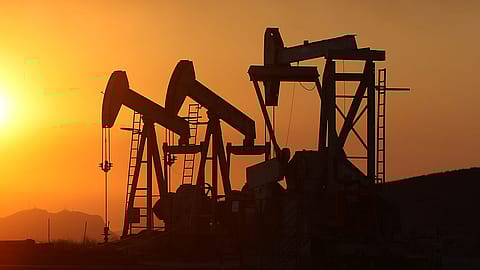
Traders fear that the US could launch military action over Tehran's nuclear programme. At the start of the Russia-Ukraine war in 2022, oil prices had touched $140 a barrel. | Credits: Getty Images
Brent Crude up 11% in a month; Indian corporates turn high alert
The recent 11.4% surge in Brent crude prices to $71.76 a barrel has alarmed Indian corporates, as geopolitical tensions involving Iran threaten further increases. This spike complicates planning for businesses already facing a weakening rupee and slowing capital flows, while oil marketing companies struggle with margin risks and expensive hedging amid volatile prices.
This summary is AI-generated, and Fortune India is not responsible for its content or any associated copyright issues.
The worry has doubled as the upward movement in prices came at a time when India has drastically cut down purchases of discounted Russian crude from the spot market following pressure from the US.
THIS STORY FEATURES
Traders fear that the US could launch military action over Tehran's nuclear programme. At the start of the Russia-Ukraine war in 2022, oil prices had touched $140 a barrel. | Credits: Getty Images
A fresh surge in global crude prices has spiralled concerns through India’s economy and corporate boardrooms. Brent crude has climbed 11.4% over the past month to $71.76 a barrel on Friday, with fears that an escalation of tensions involving Iran could push prices towards the $100 mark. The worry has doubled as the upward movement in prices came at a time when India has drastically cut down purchases of discounted Russian crude from the spot market following pressure from the US.
Current price spike follows intensifying war fears around Iran
The current price spike follows intensifying war fears around Iran. Traders fear that the US could launch military action over Tehran's nuclear programme. At the start of the Russia-Ukraine war in 2022, oil prices had touched $140 a barrel.
The instability, driven by geopolitical disruptions and supply realignments, is complicating planning for Indian businesses already grappling with weakening rupee and slowing capital flows. Besides, AI disruption is costing them high.
The equity market response has been sharply divided. Upstream producers have rallied on the back of firmer crude. Shares of Oil and Natural Gas Corporation jumped 14.8% in the past month, while Oil India gained more than 9%. Higher crude prices improve realisations for explorers and producers, lifting earnings expectations.
OMCs bore the brunt of investor anxiety
In contrast, oil marketing companies bore the brunt of investor anxiety. Refiners and fuel retailers face margin risks when crude rises sharply and unpredictably. For large refiners such as Reliance Industries, Indian Oil Corporation, Hindustan Petroleum, and Bharat Petroleum, volatility has made hedging both expensive and less reliable. RIL uses derivatives, futures, options and swap contracts to hedge crude and freight exposure. But sudden price spikes and reversals inflate premiums and reduce hedge effectiveness.
The cost of locking in crude futures prices increased sharply with the spike in prices, said sources from one of the trade desks. While steady high prices can be passed on to consumers, erratic swings squeeze margins and complicate pricing decisions. As hedging becomes costlier, refiners may reduce coverage and rely more on spot purchases, raising financial exposure.
Global trade flows are also shifting. China is now amplifying purchases from Russia despite US warnings. China’s crude imports from Russia have surged, averaging about 2.09 million barrels per day (bpd) in February so far, up from 1.72 million bpd in January and 1.39 million bpd in December, reports said. It gives an edge to Chinese manufacturers over Indian companies, which compete in the same markets. Chinese imports into India will also disrupt industrial equilibrium.
Beyond oil companies, the ripple effects are broad in nature. Cement producers, which rely on petcoke and furnace oil to fire kilns, face rising input costs. Paint makers such as Asian Paints, Birla Opus and Kansai Nerolac are squeezed as solvents and pigments linked to crude form a substantial portion of their raw material basket. With demand softening, their room to raise prices is limited. Chemical companies struggle to forecast margins amid feedstock volatility, while automobile sales can feel the strain as higher fuel costs weigh on consumer sentiment.
At the macro level, India’s vulnerability is stark. The country imports more than 85% of its crude requirements. Rising oil prices widen the trade and fiscal deficits and put pressure on the current account. The weakening rupee — which breached 92 against the U.S. dollar in January despite sporadic intervention by the Reserve Bank of India — compounds the problem by making imports costlier. Transportation, power and manufacturing sectors are already feeling the strain.
India’s consumer price inflation is projected to climb to 4.3% in FY27, compared with 2.5% estimated for FY26, according to research firm Crisil. Higher fuel bills can dampen consumption and investment, threatening growth momentum. The International Monetary Fund recently raised its forecast for India's economic growth in FY26 to 7.3% from 6.6%, but said growth is likely to slow to 6.4% in the following two fiscal years, thanks to fading cyclical factors.



NEXT STORY