Home-cooked thali costs rise in August as onion, oil and LPG prices climb: Crisil
/ 3 min read
Higher prices of onion, vegetable oil, rice, and LPG kept thali costs elevated despite a decline in potato and tomato prices.
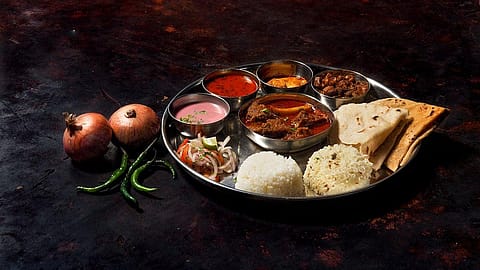
In the case of a non-vegetarian meal, a 10% jump in broiler prices pushed up the cost of a thali by 5% year-on-year to ₹57.5, the report by Crisil Intelligence said. | Credits: Shutterstock
The cost of a home-cooked vegetarian thali rose 1% year-on-year in August 2026, while the price of a non-vegetarian thali increased 5%, according to a report by Crisil.
Higher prices of onion, vegetable oil, rice, and liquefied petroleum gas (LPG) kept thali costs elevated despite a decline in potato and tomato prices.
Onion prices rose 43% year-on-year to ₹40 per kg in August 2026, from ₹28 per kg a year earlier, amid supply constraints. According to Crisil, unseasonal rainfall and hailstorms in Maharashtra during March-April damaged the late-season crop and stored inventories. A 5-6% decline in rabi production further tightened supplies.
Vegetable oil and LPG cylinder prices increased 11% and 10%, respectively, during the year, driven by supply disruptions and higher energy costs linked to the conflict in West Asia.
The rise in thali costs was partly offset by lower prices of potatoes and tomatoes. Potato prices declined 12% year-on-year, supported by an estimated 2-3% increase in rabi production following an expansion in acreage.
Tomato prices fell 28% year-on-year as a one-month delay in summer planting shifted supplies from May-June to July-August. Market arrivals were around 20% higher year-on-year during July-August, putting downward pressure on prices.
Non-veg thali costs rise on higher broiler prices
The increase in the cost of a non-vegetarian thali was driven primarily by higher broiler prices.
Broiler prices are estimated to have risen 10% year-on-year in August, with chicken accounting for around half of the total cost of a non-vegetarian thali. Higher feed costs contributed to the increase.
On a month-on-month basis, however, the trends were different. The cost of a vegetarian thali increased 1% in August, while the cost of a non-vegetarian thali declined 1%.
The increase in the vegetarian thali cost was primarily driven by a 17% month-on-month rise in onion prices. A 7% decline in tomato prices, along with relatively stable prices of other key ingredients, limited the overall increase.
The cost of a non-vegetarian thali declined as broiler prices fell an estimated 4% month-on-month. Crisil attributed the decline partly to softer demand during the Shravan month.
{{#most-powerful-women-snapshot-individual.slug}} {{/most-powerful-women-snapshot-individual.slug}} {{^most-powerful-women-snapshot-individual.slug}} {{/most-powerful-women-snapshot-individual.slug}} {{#showRanking}} {{current-rank}} {{/showRanking}} {{#photo.0.url}}
{{name}}
Onion prices likely to remain firm
Pushan Sharma, Director, Crisil Intelligence, said higher prices of onion, edible oil, rice, LPG and broiler meat offset the decline in potato and tomato prices in August.
“The cost of home-cooked vegetarian and non-vegetarian thalis rose 1% and 5% on-year, respectively, in August as higher prices of onion, edible oil, rice, liquefied petroleum gas (LPG) and broiler offset a decline in potato and tomato prices,” Sharma said.
Looking ahead, onion prices are expected to remain firm over the next two to three months due to tight rabi supplies and delayed kharif arrivals, according to Crisil.
Potato prices are likely to remain broadly stable, with a mild upward bias. High inventories and slow stock liquidation could limit any sharp increase in prices.
Tomato prices are expected to remain relatively benign, supported by fresh supplies from southern states. However, prices could firm later if kharif arrivals from major producing regions are delayed and festive demand strengthens.
Pulses, edible oil remain key risks
Prices of pulses are expected to remain range-bound, although tur faces upside risks because of weather-related uncertainties and limited imports. Urad prices could soften with fresh arrivals and adequate import cover.
Edible oil prices are also expected to remain firm. Elevated crude oil prices are putting pressure on freight and import costs, while higher polymer and resin prices are keeping packaging costs elevated.
The outlook suggests that while some vegetables could provide relief to household food budgets, higher costs of onions, edible oils, LPG, and other key inputs could continue to keep home-cooked meal expenses under pressure in the coming months.
Follow Fortune India
NEXT STORY