The FAQs are AI-generated, and Fortune India is not responsible for its content or any associated copyright issues.
US visa conundrum: New process to test Indian tech talent resilience
/ 4 min read
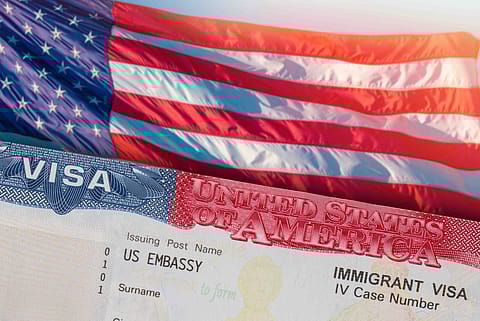
According to Nasscom, its members collectively support more than 1.6 million skilled jobs across the United States. | Credits: Shutterstock
US visa conundrum: New process to test Indian tech talent resilience
The recent changes in the H-1B visa policy, including a significant fee hike and a wage-weighted lottery system, are set to challenge Indian IT firms' US talent strategies. While aimed at promoting high-skill employment, these changes could disadvantage smaller enterprises and affect the talent pipeline. Indian IT companies, however, remain optimistic about adapting to these shifts.
This summary is AI-generated, and Fortune India is not responsible for its content or any associated copyright issues.
Come February 2026, Tech companies and STEM talent face a new US visa regime, both treading an uncharted selection process and an expensive visa fee, also testing the viability of talent-restrictive practices in an AI world.
According to Nasscom, its members collectively support more than 1.6 million skilled jobs across the United States. | Credits: Shutterstock
On September 19th, when US President Donald Trump signed a Presidential proclamation affecting changes to the visa policy, the stocks of Indian tech companies, which have been significant beneficiaries of the H-1B visa program over the years, took a beating. One, a steep hike for each H-1B visa from the earlier fees of around $2000-$5000 to $100,000 starting in 2026. The second, following the US government’s agenda to stop wage arbitrage as a reason for hiring, on September 24th, the Department of Homeland Security (DHS) published a proposed rule to change how U.S. Citizenship and Immigration Services (USCIS) operates the lottery process to select H-1B visa petitions.
Now both these changes are set to be implemented, given that the United States District Court of Columbia has dismissed a case filed by the largest US business lobby group, the US Chamber of Commerce & the Association of American Universities, challenging Trump’s authority to hike visa fees, and the DHS is bringing out the final rules on H-1B work visa selection process. The new process replaces the earlier lottery process through a weighted selection process based on the weightage given to those in higher paid jobs.
New selection process
The new selection process for H-1B visas starting February 27, 2026, will see the USCIS conduct a weighted selection that will depend on whether each of the visa petition job being applied for is equal to or exceeds the relevant Standard Occupational Classification in each of the regions where the job position is based. Under this process, registrations for petitions depending on the wage levels will be placed in selection pools, and each beneficiary will only be counted once toward the numerical allocation projections, regardless of how many registrations are submitted for that beneficiary or how many times the beneficiary is entered in the selection pool.
With concern largely directed towards US tech talent employment opportunities, in its responses, the DHS noted that, “This rule will incentivize employers to use the H-1B program to primarily fill relatively higher-paid, higher-skilled positions to supplement, rather than replace, U.S. workers. Prioritizing registrations or petitions, as applicable, based on equivalent wage levels will help restore the congressional intent for the program of helping U.S. employers fill labor shortages in positions requiring highly skilled and/or highly educated workers”.
On the new visa selection process, Indian technology industry body Nasscom said that while the intent behind the proposed changes is to promote high-skill employment, curb misuse, and protect U.S. wages, "By assigning multiple selection entries based on Occupational and Employment Wage Statistics levels, the framework risks moving beyond the statutory focus on “specialty occupation” and toward wage ranking, potentially introducing regional and occupational distortions. Wage levels vary significantly by geography and role, and a weighted model could inadvertently disadvantage small and mid-sized enterprises, startups, research institutions, and university-linked employers that operate with moderate but market-appropriate wage structures,” said in a statement.
The H-1B petitions at Level I and Level II wage bands, which would largely be used by US STEM graduates forming the talent pipeline for tech companies, they could also potentially get affected. Nasscom has batted for a phased implementation with sufficient lead time. “Delaying implementation until the FY 2028 lottery cycle would provide employers the necessary runway to adapt processes, ensure compliance, and maintain confidence in the stability of the U.S. talent and investment environment.”
IT firms geared up for changes
According to Nasscom, its members collectively support more than 1.6 million skilled jobs across the United States, employing over 264,500 people directly, with presence in more than 25 major American communities, and two-thirds of these jobs are located outside Silicon Valley and New York in regions such as Texas, North Carolina, Ohio, and Illinois. Ever since the Proclamation, Indian IT services companies have largely said the changes will have minimal impact. For instance, large companies such as Tata Consultancy Services finally said in October this year said that it has a significantly localized workforce in the US. “Just about 500 associates have travelled to the US this financial year on H-1B. We believe our business model will be able to adapt quickly to any changes in immigration policy,” said Krithivasan, CEO & MD of the company. Similarly, Bengaluru headquartered Infosys, during the Q2FY26 earnings, said the number of people who need company sponsorship is a minority. “We have built a large number of centers and hubs, which are focused on digital, on innovation, on technology, and AI in the U.S. We have relationships with universities. We have a training facility there. With all of that in mind, we are clear today that we will work with our clients without any disruption to their services and into the future,” said Salil Parekh, CEO & MD.
Recommended Stories
In the recent past, particularly the last 2-3 years, according to available visa data, American tech firms like Amazon, Microsoft, Meta, Apple, and Google have been at the forefront in the total number of H-1B issued compared to Indian headquartered companies. Analysts at Nomura estimate a worst-case impact of 10-100 basis points impact on the margins of IT companies, given that over the past few years, the new H1B visa approvals by Indian IT companies have fallen significantly due to the ongoing localisation and near-shoring of the workforce.
In a note following the proclamation, Nomura analysts said that they expect the number of H1B visas to come down materially in the next cycle. With increased offshoring, automation, and the increasing footprint of global captives in India, “H-1B visa use is likely to be restricted to extremely critical roles where localization of talent is not an option. Even here, the cost increase would be ~USD33k/yr or ~30% (assuming three-year amortization of additional visa fees),” the 21st of September note read. Similarly, Indian brokerage house Motilal Oswal noted that if new H-1Bs vanish, the on-site revenues will also decline, but so will the on-site costs. In a note dated 22nd September, MOSL analysts said, “This shift could improve operating margins, as offshore work tends to be structurally more profitable. The net effect on EPS could be neutral in the medium term, although top-line growth could be slower”.
Frequently Asked Questions
Explore the world of business like never before with the Fortune India app. From breaking news to in-depth features, experience it all in one place. Download Now