DoT's fraud risk indicator helps prevent over ₹5,000 crore in suspected cyber fraud losses
/ 3 min read
More than ₹2,000 crore of suspected losses were prevented in the four months from April 2026, indicating a key increase in the adoption of the system by banks and payment platforms.
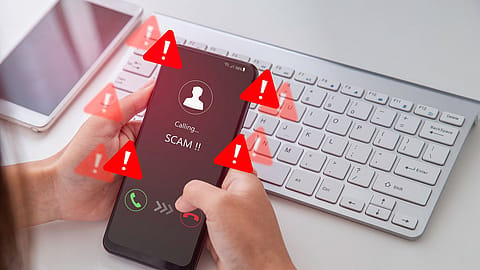
Banks and UPI service providers are already using FRI intelligence to identify or flag transactions involving mobile numbers classified as high or very high risk. | Credits: Shutterstock
The Department of Telecommunications (DoT) said its Financial Fraud Risk Indicator (FRI) has helped prevent suspected cyber fraud losses of more than ₹5,000 crore within 15 months of its launch in May 2025.
According to the department, the system helped prevent losses worth ₹5,043.73 crore by August 2026, up sharply from ₹139.16 crore in August 2025. More than ₹2,000 crore of suspected losses were prevented in the four months from April 2026, indicating a key increase in the adoption of the system by banks and payment platforms.
Unlike conventional fraud recovery mechanisms, the FRI is designed to identify and flag potentially fraudulent transactions before money leaves a customer's account.
How financial fraud risk indicator works
The FRI is a risk-assessment framework developed by the DoT under its Digital Intelligence Platform (DIP). It enables financial institutions to assess, in real time, the likelihood that a mobile number is linked to cybercrime or financial fraud.
The system classifies mobile numbers into three categories—medium, high, and very high risk—based on the likelihood of their involvement in financial fraud.
The assessment draws on multiple sources, including citizen reports submitted through the Sanchar Saathi platform, data from the Indian Cybercrime Coordination Centre's National Cybercrime Reporting Portal (NCRP), and intelligence shared by telecom operators, banks, and other financial institutions.
The resulting intelligence is securely shared through the DIP with banks, payment service providers, insurers, securities intermediaries, and entities in the pension sector.
Financial institutions can incorporate these risk signals into customer onboarding, transaction monitoring and fraud-detection systems. This allows potentially fraudulent transactions to be identified and flagged before losses occur.
Shift from recovery to prevention
The DoT said the FRI marks a shift from a reactive approach to cyber fraud, where authorities attempt to trace and recover funds after a transaction has taken place, towards preventive intervention.
In cases of successful digital fraud, funds can move through multiple mule accounts within minutes, making recovery difficult. An FRI check, by contrast, can be conducted when a transaction is initiated, allowing institutions to flag or stop suspicious payments before the money leaves the customer's account.
The department said the ₹5,000-crore figure represents only the financial losses that were prevented. It does not account for the subsequent costs associated with investigating fraud, freezing accounts, tracing funds and processing complaints.
{{#most-powerful-women-snapshot-individual.slug}} {{/most-powerful-women-snapshot-individual.slug}} {{^most-powerful-women-snapshot-individual.slug}} {{/most-powerful-women-snapshot-individual.slug}} {{#showRanking}} {{current-rank}} {{/showRanking}} {{#photo.0.url}}
{{name}}
Banks, UPI platforms among users
The initiative relies on coordination between the telecom and financial sectors. DoT has been working with financial regulators and institutions to integrate FRI signals into their fraud-detection systems.
Banks and UPI service providers are already using FRI intelligence to identify or flag transactions involving mobile numbers classified as high or very high risk.
The Reserve Bank of India, National Payments Corporation of India, Securities and Exchange Board of India, and other financial-sector institutions are among the stakeholders involved in the broader effort.
DoT conducts training for financial institutions
To support adoption, DoT has conducted more than 25 training sessions covering around 1,500 banks, financial institutions and regulators. The sessions have focused on the FRI methodology, integration with the Digital Intelligence Platform and the use of risk signals within institutional fraud-management systems.
The DoT said the effectiveness of the system also depends on citizen participation. Reports of suspicious calls and messages submitted through Sanchar Saathi and its Chakshu facility contribute to the intelligence used by the FRI.
What citizens should do
The DoT has advised citizens to take payment warnings issued by banking and UPI applications seriously and independently verify the recipient before completing a transaction. Citizens can report suspected fraudulent calls, SMS or WhatsApp messages through Chakshu on the Sanchar Saathi portal or mobile application.
In case of financial cyber fraud, citizens should immediately call 1930 or file a complaint on the National Cybercrime Reporting Portal, as early reporting can improve the chances of preventing further movement of funds.
Citizens can also use Sanchar Saathi to check mobile connections issued in their name, report unauthorised connections and report lost or stolen handsets for blocking and tracing.
Digital Intelligence Platform
The Digital Intelligence Platform, launched by DoT in 2024, is a nationwide intelligence-sharing platform aimed at combating telecom-enabled cyber fraud and misuse of telecom resources.
The platform facilitates real-time coordination among more than 1,600 stakeholders, including telecom service providers, banks, financial institutions, law-enforcement agencies and government departments.
It shares actionable intelligence on suspected fraudulent mobile numbers, the Mobile Number Revocation List (MNRL), and other digital identifiers. Through MNRL, numbers disconnected for reasons, including suspected cybercrime involvement, failed re-verification, telecom-service-provider analysis or violation of prescribed connection limits are shared with participating stakeholders.
Follow Fortune India
NEXT STORY