Effective US tariff rate on Indian exports may fall to 12–13%, says Bank of America
/ 2 min read
The report estimates that this further reduction in tariffs from 18% may be possible once exemptions and sectoral exclusions are factored in
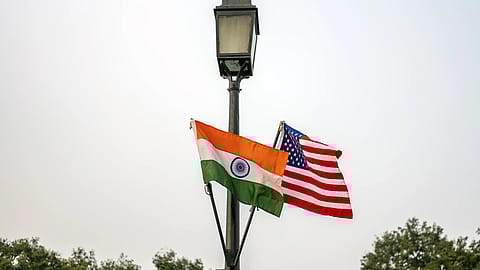
Labour-intensive sectors are expected to emerge as the biggest beneficiaries of lower US tariffs | Credits: Getty Images
The effective tariff rate on Indian exports to the US may come down to 12–13% in the wake of the India–US trade deal, said a research report by Bank of America (BofA).
The report estimates that this further reduction in tariffs from 18% could be possible once exemptions and sectoral exclusions are factored in.
“Based on our latest estimates, coupled with the rising share of India’s electronic exports to the US, we estimate the effective tariff rates on India to be between 12% and 13%, assuming the reciprocal tariffs are stacked on top of the prevailing MFN tariffs,” the report said.
Late on Monday night, Prime Minister Narendra Modi and US President Donald Trump formally confirmed the long-awaited India–US trade deal, triggering an immediate cut in American tariffs on Indian goods from 50% to 18%, including the 25% punitive tariffs imposed for purchasing Russian oil. Both leaders hailed the agreement as a major milestone and a turning point in relations between the world’s two largest democracies.
According to Bank of America, the move would place India on a more competitive footing compared with its Asian peers. “If these tariff rates sustain, it will give a boost to India’s export competitiveness,” BofA said, adding that the recent weakening of the rupee has further softened the impact of tariffs on exporters.
India’s commitment to purchase $500 bn worth of US goods
The India–US trade deal also includes New Delhi's commitment to purchase $500 billion worth of US goods over five years, or about $100 billion annually. BofA believes this will largely be achieved through substitution rather than an outright expansion of imports.
“We also do not believe moving exports from $50 billion in 2025 to $100 billion on average in five years will be very difficult, as India has an import bill of $750 billion, and products it usually imports from the US account for 6% of total imports, which India can scale up materially from the US,” the report noted.
Labour-intensive sectors to benefit
Labour-intensive sectors are expected to emerge as the biggest beneficiaries of lower US tariffs. BofA pointed to textiles, gems and jewellery as among the segments most adversely affected by earlier tariff hikes and now well positioned for a rebound in shipments to the US.
Beyond trade flows, the easing of tariff-related uncertainty could carry wider macroeconomic benefits. BofA sees scope for India’s GDP growth to rise meaningfully above 7% in FY27, with a potential upside of 20–50 basis points, depending on the final contours of the agreement.
Greater clarity for RBI
On the policy front, BofA believes the reduction in trade-related risks gives the Reserve Bank of India greater clarity on the growth outlook. While further rate cuts appear unlikely, the central bank is expected to focus on managing liquidity to ensure effective transmission of earlier easing measures.
NEXT STORY