Explained: What's changing under the proposed UPI MDR framework, and what's not
/ 3 min read
At present, the law bars banks and payment service providers from levying charges on notified payment modes, including UPI and RuPay debit cards.
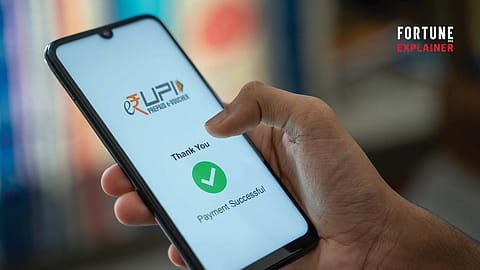
Merchant Discount Rate is the fee merchants pay to banks, payment aggregators and payment service providers for facilitating digital payments.
The Finance Ministry's proposal to amend the Payment and Settlement Systems (PSS) Act, 2007 has sparked concerns that UPI transactions could soon attract charges. However, the proposed amendment does not immediately reintroduce Merchant Discount Rate (MDR) on UPI payments or impose charges on consumers. Instead, it seeks to give the government greater flexibility to decide, through notifications, which digital payment modes should remain exempt from MDR and which could attract charges in the future. Here's what the proposed amendment means.
What is changing?
The government has proposed amending Section 10A of the Payment and Settlement Systems Act, 2007. At present, the law bars banks and payment service providers (PSPs) from levying charges on notified payment modes, including UPI and RuPay debit cards.
The amendment would remove this blanket statutory exemption. Instead, it would empower the Centre to notify, from time to time, which electronic payment modes will continue to enjoy zero MDR and which could attract merchant charges. In other words, the proposal shifts the decision from being permanently embedded in the law to one that can be modified through government notifications.
Does this mean UPI will become chargeable immediately?
No. Even if Parliament passes the amendment, nothing changes automatically. The government will still have to issue separate notifications specifying which payment modes will attract MDR; the types of transactions covered; the applicable rates; and the entities that will bear the charges.
Until such notifications are issued, the existing zero-MDR regime for UPI and RuPay debit cards will continue.
Will consumers have to pay for UPI transactions?
Not under the current proposal. MDR is not a fee charged to customers when they make a UPI payment. It is a fee paid by merchants to banks and payment service providers for processing digital transactions.
The proposed amendment does not introduce any transaction fee for UPI users. If MDR is reintroduced in the future, the immediate liability would rest with merchants, although businesses may choose to absorb the cost or pass it on through product pricing.
What is Merchant Discount Rate (MDR)?
Merchant Discount Rate (MDR) is the fee merchants pay to banks, payment aggregators and payment service providers for facilitating digital payments.
The Reserve Bank of India regulates the MDR framework.
Since January 2020, the government has mandated zero MDR on UPI and RuPay debit card transactions to accelerate digital payment adoption. To compensate banks and payment ecosystem participants, the Centre has been providing incentives under a reimbursement scheme. However, banks and payment companies have consistently argued that these incentives are significantly lower than the actual cost of processing transactions.
Why is the government considering the amendment?
India's digital payments ecosystem has expanded rapidly. According to a Parliamentary Standing Committee on Finance report released in March 2026 around 88% of all digital transactions in India are conducted through UPI and banks and payment service providers process over 23 billion UPI transactions every month, worth nearly ₹30 lakh crore.
{{#most-powerful-women-snapshot-individual.slug}} {{/most-powerful-women-snapshot-individual.slug}} {{^most-powerful-women-snapshot-individual.slug}} {{/most-powerful-women-snapshot-individual.slug}} {{#showRanking}} {{current-rank}} {{/showRanking}} {{#photo.0.url}}
{{name}}
As transaction volumes have surged, payment ecosystem participants have increasingly sought a sustainable revenue model to recover processing costs. The proposed amendment gives the government the flexibility to revisit the zero-MDR policy without requiring another amendment to the law.
Could MDR return in a limited form?
Industry experts believe the government could adopt a calibrated approach instead of reintroducing MDR across all transactions.
Vivek Iyer, Partner and Financial Services Risk Advisory Leader at Grant Thornton Bharat, said the zero-MDR regime could continue for smaller transactions while charges may be introduced for higher-value payments. According to Iyer, the government could consider increasing the UPI transaction limit from ₹1 lakh to ₹5 lakh while introducing tiered MDR for transactions above ₹50,000. Such a structure could preserve UPI's mass adoption while creating a revenue stream for payment ecosystem participants.
What happens next?
The Finance Ministry is expected to introduce the Taxation and Other Laws (Amendment) Bill, 2026 in Parliament this week. Alongside tax-related changes aimed at attracting foreign investment and boosting domestic manufacturing, the legislation includes the proposed amendment to the PSS Act.
If Parliament approves the amendment, the government will subsequently issue notifications detailing whether MDR will apply, the payment modes covered, applicable transaction thresholds and the rates, if any. Until then, UPI payments remain free for both consumers and merchants under the existing zero-MDR framework.
Harsh Vardhan Masta, CEO, PB PAY, said, "We believe that the proposal to introduce Merchant Discount Rate on UPI P2M transactions above ₹2,000 for large merchants will lay the foundation for a more sustainable and resilient digital payments ecosystem. MDR’s return is not a step backward - it is a pragmatic move forward. It balances sustainability with innovation, ensuring that India’s digital payments ecosystem remains secure, inclusive, and resilient in the face of growing demands. Reintroducing MDR is not just about revenue - it’s about creating a sustainable foundation for the next phase of India’s digital payments journey. A viable MDR framework provides the financial backbone that enables payment aggregators, banks, and fintechs to continue investing in infrastructure, cybersecurity, compliance, and innovation."
NEXT STORY