FMCG's next battle is not just inflation but winning fragmented consumers, say HUL, Kenvue and Wipro Consumer Care
/ 2 min read
The executives agreed that India's consumption landscape has become significantly more complex, with consumers shopping across quick commerce, e-commerce and other digital channels while expecting greater personalisation and authenticity from brands. Traditional advertising alone is no longer enough, they said.
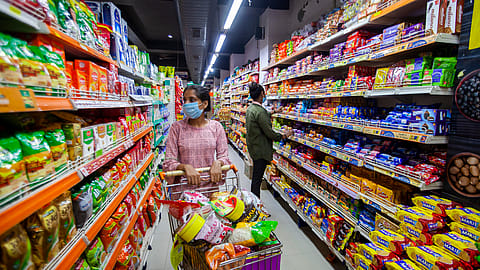
The panel also highlighted how legacy FMCG companies must rethink the pace at which they innovate. (Representational image) | Credits: Sanjay Rawat
India's fast-moving consumer goods (FMCG) companies may be grappling with inflationary pressures, rising competition and an increasingly fragmented consumer base, but the industry's next phase of growth will belong to companies that stay closest to consumers, embrace technology and move faster than ever before.
That was the central message from senior executives at Hindustan Unilever, Kenvue India and Wipro Consumer Care & Lighting during a panel discussion at FICCI Massmerize, where they said that while input costs and channel disruption are creating fresh challenges, India's FMCG growth story remains intact.
"We believe the golden age of the FMCG industry in India is yet to come," said Neeraj Khatri, chief executive, consumer care business (India & South Asia), Wipro Consumer Care & Lighting. He said profitable growth for legacy companies will increasingly depend on becoming omnichannel, identifying trends early and building a balanced portfolio across traditional and emerging categories.
Vipul Mathur, executive director, personal care at Hindustan Unilever, said consumer centricity remains the industry's strongest defence against cyclical headwinds.
"As long as we are consumer-obsessed and our brands continue solving consumer problems, all challenges can be overcome," Mathur said, adding that continuous innovation and staying close to evolving consumer needs are essential for driving both top-line and bottom-line growth.
The executives agreed that India's consumption landscape has become significantly more complex, with consumers shopping across quick commerce, e-commerce and other digital channels while expecting greater personalisation and authenticity from brands. Traditional advertising alone is no longer enough, they said.
Mathur noted that consumers increasingly want "many-to-many conversations" around brands rather than simply hearing from manufacturers. Authenticity, peer recommendations and the willingness of companies to adapt quickly will determine whether established brands continue to resonate, particularly with Gen Z consumers.
Faster execution becoming a competitive advantage
The panel also highlighted the need for legacy FMCG companies to rethink the pace of innovation.
Khatri said large companies cannot allow their scale to become a liability. "We need to innovate much faster. We need to be much more agile in everything we do," he said, noting that while companies once took six to 24 months to launch products and campaigns, startups today generate multiple ideas every day and rapidly test them in the market. Speed of execution, while maintaining differentiated innovation, will increasingly separate winners from the rest, he added.
For Kenvue India, the convergence of healthcare and FMCG is creating another avenue for growth. Managing director Manish Anandani said consumers are shifting from treating illness to managing wellness, pushing FMCG products to become more science-backed while healthcare products expand beyond pharmacy shelves into broader retail channels.
"The consumer is getting products that are far more scientific. Companies are trying to become extremely scientific on the back end while keeping things extremely simple for the consumer," Anandani said. He added that companies are increasingly building ecosystems around products through digital services and personalisation.
{{#most-powerful-women-snapshot-individual.slug}} {{/most-powerful-women-snapshot-individual.slug}} {{^most-powerful-women-snapshot-individual.slug}} {{/most-powerful-women-snapshot-individual.slug}} {{#showRanking}} {{current-rank}} {{/showRanking}} {{#photo.0.url}}
{{name}}
Despite persistent commodity inflation, Khatri said the industry's response remains disciplined. Companies are relying on calibrated price increases, structural cost reductions, formulation improvements and supply chain efficiencies, with passing on higher prices to consumers remaining "the last resort."
NEXT STORY