From BGMI to building an ecosystem: How KRAFTON is deepening its India bet
/ 4 min read
As India’s gaming market matures, KRAFTON is thinking beyond a single hit and towards building a broader gaming ecosystem in the country.
Credits: Shutterstock
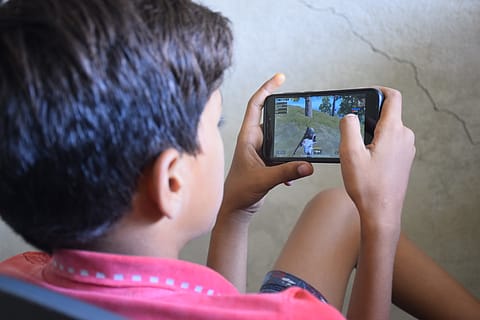
For many Indian gamers, the entry point into mobile gaming has been a simple process—a quick download, a squad invite, a few matches played between commutes or late at night. Battlegrounds Mobile India (BGMI) too became part of that routine, something played casually at first, then more seriously, as friends formed teams, tournaments appeared on screens, and the game’s ecosystem grew around them.
For KRAFTON, BGMI was not just a successful title, but a front-row view into how Indian players engage, compete and stay invested over time. As India’s gaming market matures, learning is now shaping for how KRAFTON is thinking beyond a single hit and towards building a broader gaming ecosystem in the country.
“If you look at BGMI, that’s the most popular game here in India. It’s growing year on year in terms of audience, in terms of revenue, in terms of engagement,” said Anuj Sahani, Head of KRAFTON India Gaming Incubator and Associate Director, India Publishing. “So from all perspectives, the game is growing year on year.”
At the same time, KRAFTON has been mindful of the risks associated with reliance on a single title. Internally, the company views BGMI less as an endpoint and more as a foundation to experiment with new genres and formats. “As a game developer, we like to have a lot more games which are successful in the market. Having one game is good. But obviously, we want more games,” Sahani said.
India’s mobile gaming market remains concentrated around shooters, casual games and board-based formats. Rather than attempting to disrupt this behaviour outright, KRAFTON has adopted a gradual diversification strategy—launching games across adjacent genres while betting that exposure will deepen engagement over time.
“Once they are exposed to new genres and different styles, probably they will experience that, and if they are continuously engaged with those kinds of games, they will become more core gamers inthe upcoming years,” Sahani said. He acknowledged that not every launch would scale. “Some experiments will work for us, some will not, but we are focused and dedicated to the Indian market, and we will continue to do that.”
A more structural shift in KRAFTON’s India strategy has been its growing emphasis on Indian-made intellectual property. This became visible with the company’s acquisition of Nautilus Mobile and its decision to take over publishing responsibilities for Real Cricket. Unlike BGMI, which was developed outside India and later localised, Real Cricket is built by an Indian studio and is now being positioned for global growth.
The move reflects what KRAFTON sees as a necessary evolution, from localisation to ownership. “At KRAFTON, our strong belief is that we want to support Indian game developers, Indian community. Obviously with KIGI we initiated doing that, but now with Real Cricket, we are actually doing it,” Sahani said.
The incubator programme
The same thinking underpins KRAFTON’s incubation efforts through the KRAFTON India Gaming Incubator (KIGI). Over the first two cohorts, the company gained a close view of the challenges Indian studios face when trying to scale beyond early builds.
“We identified gaps over there and then we also were not 100% sure whether the code base they are building is scalable, or when we played the game, we saw certain kind of bugs which should not be there,” Sahani said. “If the game is successful later on, you should not be in a situation that the code base is built in such a way manner that we cannot scale the game or we cannot have so-and-so features in it.”
User acquisition and live operations emerged as another weak point. “Post second cohort, we saw there are gaps when it comes to acquiring users,” Sahani said. While teams were able to build games with guidance, “the gap comes down to acquiring users and marketing the game.”
{{#most-powerful-women-snapshot-individual.slug}} {{/most-powerful-women-snapshot-individual.slug}} {{^most-powerful-women-snapshot-individual.slug}} {{/most-powerful-women-snapshot-individual.slug}} {{#showRanking}} {{current-rank}} {{/showRanking}} {{#photo.0.url}}
{{name}}
Those learnings have led to concrete changes in KIGI’s third cohort. KRAFTON has begun directly running performance marketing campaigns during soft launches, backed by a separate budget, and has introduced regular code reviews to ensure long-term scalability. “We will be taking care of performance marketing… and from the code side also we’ll do regular code checks from our side,” Sahani said.
Interest in the programme has increased sharply. Applications have risen from 345 in the first cohort in 2022 to over 900 in the third, suggesting growing confidence among Indian developers in structured, long-term support rather than short-term funding.
Beyond game development, KRAFTON has also positioned itself as a strategic investor in gaming-adjacent sectors such as content and technology platforms, looking to extend gaming IP beyond the core gameplay experience. Esports, meanwhile, remains another pillar of the company’s India strategy, with efforts spanning amateur participation, professional circuits and creator-focused programmes.
KRAFTON does not expect every bet to succeed. “We understand that not all games will be successful,” Sahani said. The longer-term objective, he added, is process and resilience. “Probably with the second game or the third game, they’re able to achieve success.”
Follow Fortune India
NEXT STORY