The FAQs are AI-generated, and Fortune India is not responsible for its content or any associated copyright issues.
Fueling stability in skies: How the ₹10,000-crore ATF price stabilisation fund will support Indian airlines - Explained
/ 3 min read
The government-backed mechanism seeks to shield airlines from soaring fuel costs amid the West Asia crisis while ensuring oil companies do not bear long-term losses.
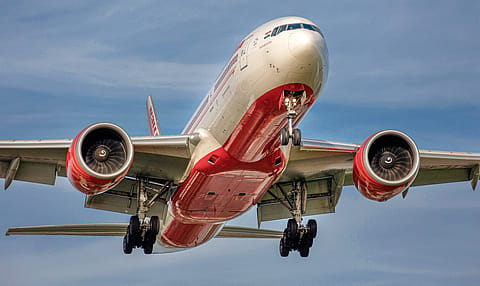
According to the government, international ATF prices have jumped nearly 2.5 times, from ₹60.50 per litre in March 2026 to ₹142 per litre in May 2026. | Credits: Alamy
India's aviation sector has received a major relief package as the Union Cabinet approved a one-time ₹10,000-crore Price Stabilisation Fund for aviation turbine fuel (ATF) on Wednesday, aiming to protect airlines from sharp fuel price fluctuations triggered by the ongoing West Asia crisis.
The scheme, announced on Wednesday comes at a time when global jet fuel prices have surged dramatically, squeezing airline margins and pushing up airfares.
Why has the government introduced this scheme?
According to the government, international ATF prices have jumped nearly 2.5 times, from ₹60.50 per litre in March 2026 to ₹142 per litre in May 2026.
"ATF accounts for nearly 40% of airline operating costs and during periods of extreme fuel volatility, can constitute up to 60% of total operating expenditure," the Cabinet note said.
Indian carriers are facing additional pressure due to the closure of Pakistan's airspace, which has forced longer flight routes to Europe, North America and Central Asia, increasing fuel consumption and operating costs.
The government noted that "long-haul passenger fares have increased substantially, international demand has declined and airlines have reduced or suspended services on several international routes."
What is the price stabilisation fund?
The Cabinet has approved a one-time budgetary support of up to ₹10,000 crore for oil marketing companies (OMCs) such as Indian Oil, Bharat Petroleum and Hindustan Petroleum.
The support will be provided as an interest-free advance through the Ministry of Petroleum and Natural Gas.
The government said the corpus will help OMCs absorb losses when international ATF prices rise above a benchmark level determined under the scheme.
In effect, airlines will get access to a more stable and predictable fuel price rather than being exposed to sudden spikes in global jet fuel prices.
"The mechanism provides greater predictability in fuel costs by adopting a fixed-price arrangement for domestic and international operations, thereby reducing airline's exposure to sudden fuel price spikes," the Cabinet note said.
{{#most-powerful-women-snapshot-individual.slug}} {{/most-powerful-women-snapshot-individual.slug}} {{^most-powerful-women-snapshot-individual.slug}} {{/most-powerful-women-snapshot-individual.slug}} {{#showRanking}} {{current-rank}} {{/showRanking}} {{#photo.0.url}}
{{name}}
How will the mechanism work?
Under the scheme, participating airlines will enter into agreements with OMCs and purchase ATF exclusively from them for up to three years.
When global fuel prices remain elevated, OMCs will be compensated from the stabilisation fund.
When prices fall, the excess support will be recovered from OMCs and returned to the Consolidated Fund of India through a "recovery and true-up mechanism."
This means the scheme is not designed as a permanent subsidy. Instead, it functions as a temporary liquidity support mechanism to smooth out extreme price volatility.
Who will benefit?
The scheme will be available to all willing scheduled Indian airlines for both domestic and international operations.
The government expects the measure to:
Improve financial and operational planning for airlines.
Reduce volatility in passenger airfares.
Protect domestic and international air connectivity.
Support flights to regional, Tier-II and Tier-III cities.
Sustain jobs across airlines, airports, maintenance services, travel agencies, hospitality and logistics sectors.
"It will reduce the pass-through of fuel price shocks to passengers, thereby helping to moderate fare volatility," the government said.
Why does it matter?
The aviation industry has long argued that fuel costs are among the biggest risks to airline profitability. With geopolitical tensions in West Asia driving sharp swings in energy markets, the government's intervention seeks to prevent disruptions to air services while ensuring OMCs are compensated for temporary losses.
The Cabinet believes the initiative will help preserve connectivity, support tourism and trade, and "strengthen India's integration with global markets and support long-term economic growth."
For airlines grappling with rising fuel bills and longer international flight routes, the scheme provides a much-needed cushion at a time of heightened uncertainty in global energy markets.
Follow Fortune India
Frequently Asked Questions
NEXT STORY