‘Give me the best tyre’: Indian consumers are moving beyond ‘sasta tyre’, says Yokohama India CEO Harinder Singh
/ 3 min read
Company eyes Japanese, Indian OEMs as premium tyre demand rises; plans to expand OEM footprint over next 4-5 years.
THIS STORY FEATURES
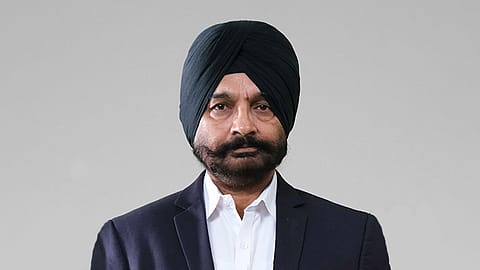
Harinder Singh, MD and CEO, Yokohama India Pvt. Ltd. | Credits: Yokohama India
Yokohama India plans to expand its original equipment manufacturer (OEM) business in India, with the company looking to work with both Japanese and Indian automakers over the next four to five years, Harinder Singh, managing director (MD) and chief executive officer (CEO), Yokohama India, said in an exclusive interview with Fortune India.
The tyre company currently supplies tyres to Maruti Suzuki in India. Globally, however, the company has a presence across almost all major OEMs, Singh said. “We have planned to cater to Japanese OEMs as well as Indian OEMs as we move ahead from here over the next four to five years,” Singh said.
The expansion comes as India’s passenger vehicle market sees a growing shift towards SUVs and crossovers, driving demand for larger wheel sizes and premium tyres.
Consumers increasingly willing to pay for safety and performance
Singh said Indian consumers are becoming more willing to spend on premium tyres, with safety emerging as a key consideration in the purchase decision. “Two or three years back, we used to hear, ‘give me a cheap tyre’ or ‘give me a sasta tyre’. Today, that has changed to ‘give me the best tyre’,” he said.
According to Singh, interactions with consumers and dealers indicate a clear shift towards higher-priced products, as buyers increasingly associate tyre quality with safety and overall driving performance. “The customer is willing to pay the price. Safety is one of the concerns which every consumer has when he is buying tyres for his car,” he claimed.
The company expects its new products to remain positioned in the premium segment, with pricing aligned to market benchmarks. Singh said the new product range is expected to be around 1-2% more expensive than comparable products.
Larger wheels, crossover SUVs reshape tyre demand
The shift towards crossover SUVs is also changing the wheel-size mix in India's passenger vehicle market.
Singh said crossover SUVs now account for around 68% of cars being sold, accelerating the move towards larger wheel sizes. Sizes such as 12 inches, which were once among the most popular in the market, are increasingly becoming less relevant while 15-, 16-, and 17-inch tyres are emerging as the new norm.
For Yokohama India, more than 40% of sales currently come from tyres measuring 16 inches and above, Singh said. “The customer shift is happening towards the higher ranges. They are increasingly going towards crossovers as their first preference,” he said.
Yokohama sees 7-8% growth in passenger vehicle tyre market
Singh expects India's passenger vehicle tyre industry to maintain its recent growth momentum over the next few years.
The industry had been growing at around 4-5% annually until last year, but growth has accelerated to approximately 7-8% this year, he said, supported by strong passenger vehicle sales in the recent past. “I do see that the same trend should continue for the next couple of years,” Singh said.
{{#most-powerful-women-snapshot-individual.slug}} {{/most-powerful-women-snapshot-individual.slug}} {{^most-powerful-women-snapshot-individual.slug}} {{/most-powerful-women-snapshot-individual.slug}} {{#showRanking}} {{current-rank}} {{/showRanking}} {{#photo.0.url}}
{{name}}
He noted that rising incomes and increasing vehicle usage are creating significant opportunities for tyre manufacturers in India.
“India is full of opportunity now. With income levels rising and the tendency to drive more and more on the road, the opportunity in front of the tyre industry is enormous,” Singh said.
GEOLANDAR X-CV expands premium SUV tyre portfolio
Singh's comments came at an event organised by Yokohama India for the launch of its GEOLANDAR X-CV range.
Originally developed for luxury SUVs with wheel sizes above 18 inches, the technology is now being introduced in 16-inch sizes onwards, allowing Yokohama to target a wider base of crossover and premium SUV owners in India.
The GEOLANDAR X-CV will be offered in 32 sizes spanning 16 to 20 inches, making it Yokohama India's most extensive dedicated tyre pattern for crossover and premium SUVs.
“The crossover SUV segment is growing rapidly and, with road infrastructure improving, motorists are seeking a balance of safety, comfort, quietness and long-lasting performance,” Singh said. “With the GEOLANDAR X-CV, we’re bringing flagship premium tyre technology to delight a wider base of crossover SUV owners.”
Yokohama focuses on premium retail experience
Beyond product expansion, Yokohama India is also looking to strengthen its retail and customer experience through its Yokohama Club network.
Singh said the company's strategy is to combine premium products with stronger channel engagement and ensure that customers receive a premium experience when they visit dealers. “Our plans are to capitalise on the opportunity by giving consumers the best products, keeping the channel involved and ensuring that when the customer walks into them, they get a premium experience,” he said.
With premium SUVs and crossovers gaining share, larger wheel sizes becoming mainstream, and consumers showing greater willingness to pay for safety and performance, Yokohama India sees the Indian market as a key growth opportunity over the next several years.

Follow Fortune India
NEXT STORY