
The FAQs are AI-generated, and Fortune India is not responsible for its content or any associated copyright issues.
Godrej Consumer takes calibrated price hikes, sees short-term margin pressure
/ 3 min read
Sudhir Sitapati, managing director and CEO, indicated that pricing will remain a calibrated lever rather than an aggressive one.
THIS STORY FEATURES
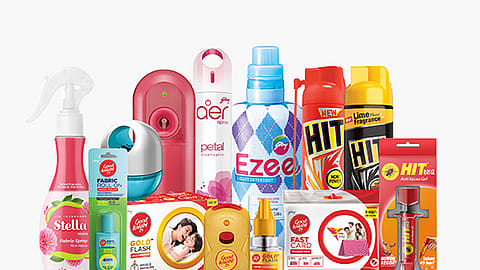
Credits: Godrej Consumer Products
Rising geopolitical tensions in West Asia and the resulting surge in crude-linked inputs are forcing Godrej Consumer Products to recalibrate pricing, tweak grammage, and lean harder on volume growth, even as it closes FY26 with steady double-digit expansion.
“In soaps, we have taken up prices by 5%. In detergents, we have taken up prices again by 6-7%, and in household insecticides, we have taken up prices by 4-5%,” said Sudhir Sitapati, managing director and CEO. “In fact, all of them just happened in April. So, they’re not reflected in the results of last quarter.”
The calibrated pricing actions come as the company reported a steady March quarter, with consolidated sales rising 11% year-on-year on the back of 6% underlying volume growth. Standalone volumes grew 8% with sales up 10%, while Africa, USA, and Middle East delivered 20% growth. Indonesia grew 3%. Consolidated EBITDA margins stood at 21.7% for the quarter, up 10% year-on-year, while net profit rose 10%.
In Q4 FY26, sales rose 10% year-on-year to ₹2,339 crore, driven by underlying volume growth of 8%, while EBITDA increased 18% to ₹578 crore. For FY26, revenue grew 9% with 6% volume growth, EBITDA margins expanded to 20.9%, and net profit rose 6%.
Sitapati, in the earnings call, indicated that pricing will remain a calibrated lever rather than an aggressive one. “This is not an alarming level of inflation. Between pricing, some cost actions, and portfolio mix, we should be able to recover most of it,” he said.
Margins under pressure as crude rises
Crude oil hovering in the $100–110 range has pushed up costs across categories, from detergents to household insecticides, creating what CEO Sitapati described as broad-based inflation.
“Unlike palm oil, where inflation hits one category sharply, crude impacts all categories. So the inflation is more spread out and easier to pass through over a few months,” Sitapati said, adding that margins could remain under pressure in the near term but are expected to recover faster.
“To be honest, this quarter and next quarter, I expect some pressure on EBITDA percentage margin. But we are seeing upsides in a variety of other areas,” he said.
Crude moving from about $70 to $100 per barrel has translated into a 40% to 50% increase, impacting multiple input costs. In comparison, palm oil inflation has been relatively moderate at 10% to 11%, moving from 4,000 MYR to around 4,500 MYR. However, middle distillates such as kerosene and linear alkyl benzene have seen costs more than double.
“We’re seeing pricing growth higher than what we thought we’d get. We are seeing in certain categories like laundry and household insecticide a lot of pressure on locals,” Sitapati said. “Overall, I’m expecting lower margins till this oil remains at $100-$110. But higher revenue and netting out at reasonably good levels as far as EBITDA goes.”
In soaps, he pointed out that the net impact on consumers may be limited due to earlier GST cuts. “GST went from 18% to 5%. Palm oil is up 10%. The chances are that the price increase we take will be less than the GST benefit that we passed on. So compared to pre-GST, consumers may still see slightly lower prices, though our realisation improves,” he said.
{{#most-powerful-women-snapshot-individual.slug}} {{/most-powerful-women-snapshot-individual.slug}} {{^most-powerful-women-snapshot-individual.slug}} {{/most-powerful-women-snapshot-individual.slug}} {{#showRanking}} {{current-rank}} {{/showRanking}} {{#photo.0.url}}
{{name}}
The company's approach also includes continued use of grammage adjustments, particularly in smaller packs, where earlier sharp cuts are still playing through the base. This has kept reported volume growth somewhat muted in categories like soaps, even as underlying demand stabilises.
At the same time, the company expects pricing-led growth to pick up in certain segments. “We are seeing pricing growth higher than what we thought, especially in categories like soaps and personal care,” Sitapati noted.
Operationally, performance remains mixed across categories. Home care delivered broad-based growth in Q4, led by household insecticides, air fresheners and fabric care. Personal care growth was more muted.
Despite pricing actions, the company remains focused on protecting volume growth, especially in India, where standalone volumes grew 8% in Q4 and 6% for the full year. Sitapati said he does not expect a meaningful demand shock from price hikes.
Margins under watch, but recovery in sight
The near-term outlook remains tied to crude trends. “There are positives and negatives playing out simultaneously. West Asia impact costs, but it also disrupts local competition in some categories,” Sitapati said.
Management expects EBITDA margins to dip below normative levels in the next couple of quarters if elevated oil prices persist, before normalising as pricing actions catch up.
Still, the company enters FY27 with what it calls a position of strength, backed by steady volume momentum, a stronger innovation pipeline, and improving demand trends.
Follow Fortune India
Frequently Asked Questions
NEXT STORY