Gold's appeal as a safe-haven asset and inflation hedge to continue'
/ 6 min read
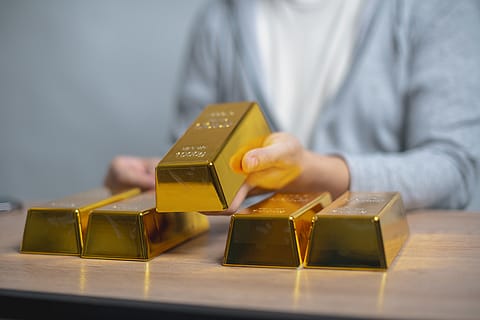
Bars and coins continue to anchor physical investment due to their purity and direct price linkage
Gold's appeal as a safe-haven asset and inflation hedge to continue'
Gold's status as a safe-haven asset and inflation hedge is expected to persist in 2026, driven by global macroeconomic factors and India's strong domestic demand. Despite record prices in 2025, investors continue to view gold as a crucial tool for portfolio diversification, with a growing interest in modern investment vehicles like Gold ETFs.
This summary is AI-generated, and Fortune India is not responsible for its content or any associated copyright issues.
Bars and coins continue to anchor physical investment due to their purity and direct price linkage, while gold-backed ETFs have gained meaningful traction as investors adopt more structured, portfolio-led approaches to gold
Bars and coins continue to anchor physical investment due to their purity and direct price linkage
Gold prices hit record prices in 2025, despite global macroeconomic factors and geopolitical developments. The trend is likely to continue in 2026, says Sachin Jain, Regional CEO, India of World Gold Council (WGC), which tracks gold trade at the wholesale level globally.
Edited excerpts from the exclusive interview on Fortune India:
How will gold prices behave in 2026, after record prices in 2025?
Looking ahead to 2026, gold prices will be shaped by a complex interplay of global macroeconomic factors, geopolitical developments, and India's robust domestic demand. Globally, the trajectory of interest rates from major central banks, alongside persistent geopolitical tensions, will continue to drive gold's appeal as a safe-haven asset and inflation hedge. Sustained strong central bank demand, a significant trend recently, is also expected to provide a floor for prices. From an Indian investment perspective, gold's deep cultural significance and proven role in wealth preservation will ensure continued strong interest. We anticipate investors will remain keen on "chasing rising prices," viewing gold as a crucial tool for portfolio diversification and protection against economic uncertainties. This proactive investment stance will maintain strength in bar and coin demand, complemented by a growing appetite for modern vehicles like Gold ETFs. Overall, 2026 is likely to see gold maintain its strategic importance in investment portfolios, with our view remaining that it offers long-term stability and value across diverse economic scenarios.
From an investor's point of view, what are the best options - is it jewellery, bars, coins or ETFs?
From an investment standpoint, each form of gold plays a different role, and investors increasingly choose based on clarity of purpose and liquidity needs. Bars and coins continue to anchor physical investment due to their purity and direct price linkage, while gold-backed ETFs have gained meaningful traction as investors adopt more structured, portfolio-led approaches to gold. Jewellery remains culturally significant, though it is generally viewed today as a consumption-oriented purchase rather than a dedicated investment vehicle. A key trend we are observing is the gradual financialisation of gold holdings, with more investors—especially younger cohorts—integrating gold into their long-term allocation frameworks. This shift reflects rising awareness, improved digital access and a broader recognition of gold’s role as a stabilising asset in diversified portfolios.
What are the changing trends you saw in consumer behaviour patterns in the last one year?
The past year has revealed significant and adaptive shifts in Indian consumer behaviour, largely driven by record high gold prices. We've observed a clear trend of affordability-driven adaptations in jewellery consumption, with consumers opting for lighter weight items or pieces that emphasise intricate design and perceived value over sheer gold volume. Retailers have responded by promoting unique craftsmanship rather than just gold weight. Even in weddings, share of wallet for gold jewellery has gone higher in comparison to other purchases, with consumers preferring for plain gold jewellery. Crucially, despite high prices, our analysis indicates that outright selling of gold as scrap is not intensifying. Instead, consumers are employing strategic methods to unlock their gold's value while retaining ownership. This includes a high rate of exchanging old jewellery for new and a surge in pledging gold jewellery for loans, allowing households to meet liquidity needs without permanently parting with this revered asset. Concurrently, the investment facet of gold has gained substantial prominence, with a strong pivot towards pure investment products like gold bars, coins, and Gold ETFs. This indicates a sharper distinction in consumer decision-making between gold for adornment and gold for strategic investment, reflecting the remarkable resilience and adaptability of the Indian consumer in navigating a high-price gold environment.
Demand for gold in India in Q3 2025 was 209.4 tonnes, down 16% from Q3 2024 (248.3 tonnes). Jewellery demand fell 31% to 117.7 tonnes. Have the high record prices affected gold sales at the retail level?
The unprecedented surge in gold prices has undeniably reshaped consumer engagement at the retail level, particularly within the jewellery segment, where affordability emerged as a paramount consideration. This direct price sensitivity is clearly reflected in the Q3 decline in jewellery demand. However, it is crucial to understand that Indian consumers, with their inherent resilience and deep-rooted cultural connection to gold, typically undergo a period of recalibration and gradual adjustment to new price thresholds. Such phases are a characteristic response to sharp market movements, rather than a fundamental shift in their long-term affinity. The jewellery consumer looks at value, and whilst there is a drop in volume, there is an increase in value - almost 20%, which is significant In response, the industry has demonstrated remarkable adaptability. Manufacturers have proactively accelerated efforts in design optimisation, focused on lighter-weight jewellery, and enhanced material efficiencies. Lightweight options are new options offered to the consumers; this could result in long-term trends of fitting into the lifestyles of new-age consumers.
Simultaneously, retailers are strategically emphasising differentiated craftsmanship and value-added offerings, catering to evolving consumer preferences in a high-price environment. These strategic shifts collectively underscore an innovative and responsive market, rather than one facing structural weakness. Ultimately, the observed moderation in Q3 jewellery demand is a transient response to elevated price points, not an erosion of long-term consumer sentiment. We firmly believe that as price trends stabilise, consumer participation will normalise, consistent with India's unwavering and enduring cultural affinity for gold.
{{#most-powerful-women-snapshot-individual.slug}} {{/most-powerful-women-snapshot-individual.slug}} {{^most-powerful-women-snapshot-individual.slug}} {{/most-powerful-women-snapshot-individual.slug}} {{#showRanking}} {{current-rank}} {{/showRanking}} {{#photo.0.url}}
{{name}}
Do you think this trend will continue in the short and long term?
Looking at both short-term and long-term trends, gold demand in India is likely to remain sensitive to price movements, especially given the record highs we have seen recently. In the short term, elevated prices are expected to continue acting as a restraint on jewellery demand, as affordability remains a key consideration for consumers. While occasional price corrections or seasonal buying opportunities may provide temporary boosts, a full-scale recovery will likely require sustained price stability and consumer confidence. However, India’s deep-rooted cultural affinity for gold, combined with its role as a wealth preservation asset, underpins enduring demand. Even after periods of sharp price increases, Indian households continue to invest in gold, either through jewellery or investment products, once the market stabilizes. Given the pace of investment and price rises, we have revised our FY 2025 investment outlook materially higher and our jewellery expectations lower. All other forecasts remain largely unchanged as we head into the final quarter.
Total Investment demand for Q3 2025 was at 91.6 tonnes, an increase of 20% in comparison to Q3 2024 (76.7 tonnes). So are people continuing to bet on gold as the most profitable long-term investment tool? What are their investment preferences? Is it bars, jewellery, or ETFs?
Indian investors are indeed viewing gold as a crucial tool for wealth preservation and growth, often actively "chasing rising prices" to capitalize on momentum and protect against market uncertainties. In terms of preferences, our reports confirm that bar and coin continue to be the dominant choice for Indian investors, with this segment driving the significant increase. For Q3 2025, India's bar and coin demand stood at 91.6 tonnes. We are also observing a strategic shift where investors are eschewing jewellery in favour of lower-margin investment products, although jewellery itself still plays a dual role for some. Furthermore, there's been notable growth in Indian gold-backed ETFs (+11 tonnes in Q3), highlighting a diversification in how individuals seek exposure to gold's value, indicating a more diverse gold investment landscape in India.
Do you see the trend of people selling their gold holdings to monetise the high prices? Is that visible in jewellery sales? Total gold recycled in India in Q3 2025 was 21.8 tonnes, down by 7% compared to 23.4 tonnes in Q3 2024?
Our analysis indicates that the outright selling of gold as scrap is not intensifying. Rather, recycling in our key consumer market remained weak year-on-year and quarter-on-quarter. This signals that consumers are employing alternative strategies to capitalise on the value of their gold without permanently parting with the asset. We are seeing that the rates for exchanging old jewellery for new remain very high, and consumers also continue to pledge their gold jewellery as collateral for loans, capitalising on the high price. This year alone, Indian consumers have pledged at least 220 tonnes of gold jewellery in this manner. Ultimately, these strategies allow individuals to monetise gold's high value while retaining ownership, directly contributing to the reduced volumes of gold sold outright for scrap despite record-high prices. This behaviour clearly reflects India's deep and enduring cultural and financial attachment to gold, where maintaining a connection to the asset is highly valued.
Follow Fortune India
NEXT STORY