India becomes world’s largest ship recycling nation in 2025, achieves MIV 2030 goal ahead of schedule
/ 2 min read
Ship recycling volumes in India rose sharply to 2.99 million gross tons (GT) in 2025, registering growth of nearly 60% from 1.86 million GT in the previous year.
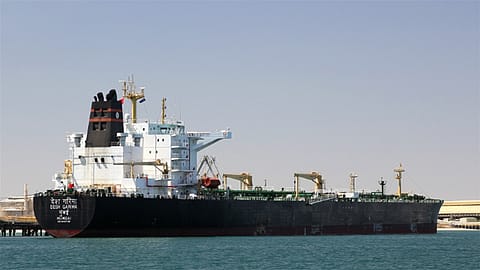
The government is also pursuing inclusion of Indian ship recycling facilities in the EU's approved list of recycling yards and is continuing engagement with relevant authorities to secure approvals. | Credits: Vessel Finder
India has emerged as the world’s leading ship recycling nation in 2025, achieving the top global ranking ahead of the target timeline set under Maritime India Vision (MIV) 2030.
According to the latest report by the United Nations Conference on Trade and Development (UNCTAD), India’s share of global ship recycling increased to 35.4% in 2025 from 30.1% in 2024.
Ship recycling volumes in India rose sharply to 2.99 million gross tons (GT) in 2025, registering growth of nearly 60% from 1.86 million GT in the previous year. The government said the achievement reflects the impact of maritime policy reforms and ease-of-doing-business initiatives implemented in recent years.
Union Minister of Ports, Shipping and Waterways Sarbananda Sonowal said India’s emergence as the global leader in ship recycling demonstrates the success of sustained reforms, industry participation and adherence to international environmental and safety standards. “India’s emergence as the world’s top ship recycling nation reflects the success of sustained policy reforms, industry efforts and adherence to international environmental and safety standards under the visionary leadership of Prime Minister Narendra Modi. It reinforces India’s position as a global hub for responsible and sustainable ship recycling,” Sonowal said.
To strengthen India’s ship recycling ecosystem and expand its share in the global market, the Ministry of Ports, Shipping and Waterways has introduced multiple policy measures.
The government enacted the Recycling of Ships Act, 2019, to align India’s ship recycling framework with the Hong Kong International Convention for the Safe and Environmentally Sound Recycling of Ships, which India ratified in 2019.
Financial assistance of ₹53.5 crore has been provided to modernise recycling yards, enabling 115 facilities to become compliant with the Hong Kong Convention standards. The ministry also introduced the Ship-breaking Credit Note Scheme under which ship owners receive credit notes equivalent to 40% of the scrap value of recycled vessels.
These credits can be used to offset up to 5% of the value of a new vessel built at an Indian shipyard, with the objective of supporting both ship recycling and domestic shipbuilding.
The ministry has also been engaging regularly with the Gujarat Maritime Board, the Ship Recycling Industries Association, global shipping firms, cash buyers, classification societies and international organisations to identify bottlenecks and implement targeted reforms.
The government is also pursuing inclusion of Indian ship recycling facilities in the European Union’s approved list of recycling yards and is continuing engagement with relevant authorities to secure approvals.
Looking ahead, India plans to nearly double its ship recycling capacity to around 9 million light displacement tons (LDT) through the planned expansion of the Alang Ship Recycling Yard.
{{#most-powerful-women-snapshot-individual.slug}} {{/most-powerful-women-snapshot-individual.slug}} {{^most-powerful-women-snapshot-individual.slug}} {{/most-powerful-women-snapshot-individual.slug}} {{#showRanking}} {{current-rank}} {{/showRanking}} {{#photo.0.url}}
{{name}}
The Gujarat government has prepared a master plan aimed at expanding infrastructure, meeting future demand and strengthening India’s competitiveness in the global market.
According to estimates by the Baltic and International Maritime Council, more than 16,000 vessels are expected to be recycled globally over the next decade. With a current market share of 35.4%, India is positioned to recycle an estimated 500–600 vessels annually while continuing to expand its capacity.
Follow Fortune India
NEXT STORY