India manufacturing PMI edges up to 55.4 in January, signalling continued expansion
/ 2 min read
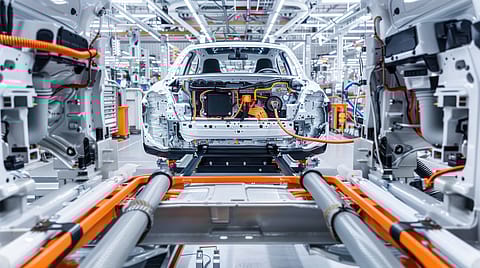
Domestic demand remained the primary driver of overall sales growth while new export orders increased at one of the weakest rates in the past 15 months. | Credits: Shutterstock
India manufacturing PMI edges up to 55.4 in January, signalling continued expansion
India's manufacturing sector showed continued expansion in January, with the PMI rising to 55.4 from December's 55.0, indicating improved operating conditions. Despite the PMI being below the flash estimate, it remained above the long-term average, driven by increased new orders, output, and employment, although business confidence and future output expectations have declined.
This summary is AI-generated, and Fortune India is not responsible for its content or any associated copyright issues.
The seasonally adjusted index, which tracks overall operating conditions based on new orders, output, employment, supplier delivery times, and inventories, rebounded from a two-year low hit in December, indicating a stronger improvement in the health of the sector.
Domestic demand remained the primary driver of overall sales growth while new export orders increased at one of the weakest rates in the past 15 months. | Credits: Shutterstock
India’s manufacturing sector remained in expansion mode in January, with the HSBC Manufacturing Purchasing Managers’ Index (PMI) inching up to 55.4 from 55.0 in December 2025, according to data compiled by S&P Global.
The seasonally adjusted index, which tracks overall operating conditions based on new orders, output, employment, supplier delivery times, and inventories, rebounded from a two-year low hit in December, indicating a stronger improvement in the health of the sector. However, the January reading came in below the flash estimate of 56.8 released earlier, though it stayed well above the long-run average.
The PMI continued to remain comfortably above the neutral 50-mark, which separates expansion from contraction, signalling sustained growth momentum in the manufacturing sector.
Pranjul Bhandari, Chief India Economist at HSBC, said Indian manufacturing firms saw a rebound in January, supported by higher new orders, output and employment. “Indian manufacturing firms saw a rebound in January, driven by increased new orders, output, and employment. Input costs rose moderately while the pace of growth in factory-gate prices eased, resulting in slight margin pressure for manufacturers. Despite faster growth in new orders, business confidence remains muted, and expectations for future output have declined to their lowest level since July 2022,” she said.
Key factors in production
Survey participants cited buoyant demand, growth in new business, and technology investments as key factors supporting production. Output rose sharply in January and at a faster pace than in December.
After easing in December, new orders also expanded at a quicker rate, driven by strong demand and marketing efforts that lifted sales across domestic and international markets. Domestic demand remained the primary driver of overall sales growth while new export orders increased at one of the weakest rates in the past 15 months.
Input costs
Input costs rose at the fastest pace in four months, although the increase was modest by historical standards. Firms reported higher prices for chemicals, copper, iron, jute, paper, steel and transportation.
January data also showed a strong upturn in input purchases, with the pace of expansion accelerating from December’s two-year low, reflecting higher production requirements and precautionary buying to guard against shortages.
Suppliers were able to meet the rise in demand efficiently, with delivery times improving compared to December, indicating easing supply-side pressures.
Follow Fortune India
NEXT STORY