India-UK FTA to expand consumer choice, deepen premiumisation in India's whisky market: Pernod Ricard CEO
/ 3 min read
Lower import duties would also allow Pernod Ricard to innovate further with Scotch used in locally produced brands, enabling the company to improve product quality while keeping prices more competitive.
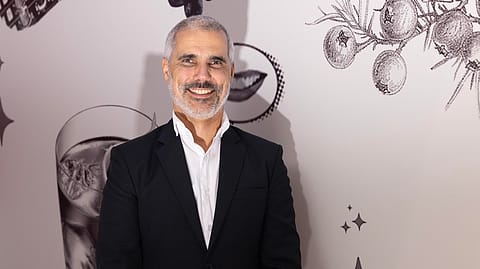
Jean Touboul, CEO, Pernod Ricard India | Credits: Sanjay Rawat
The India-UK Free Trade Agreement is set to expand consumer choice, make premium Scotch whisky more affordable and create fresh opportunities for innovation in India's whisky market, Jean Touboul, CEO of Pernod Ricard India told Fortune India, who added that the company sees the trade pact strengthening an already fast-growing premium spirits market in the country.
India is Pernod Ricard's largest market by volume and its second largest by value globally, making it one of the group's most strategic markets. Touboul said the country's favourable demographics, rising household incomes and increasing acceptance of responsible alcohol consumption continue to provide a long runway for growth.
"The opportunities are big," Touboul said, adding that India has been central to the company's global success.
The India-UK FTA, which reduces import duties on British whisky in phases, is expected to benefit both premium Scotch labels and locally produced whiskies that use imported Scotch content. It will reduce India's import duty on British whisky and gin from 150% to 75% initially, before bringing it down to 40% over the next decade.
"It is a fantastic opportunity," Touboul said. "It means better choice for consumers and more affordable prices because it will allow Scotch whisky for the higher end of the market to be priced at a lower level."
He added that lower import duties would also allow Pernod Ricard to innovate further with Scotch used in locally produced brands, enabling the company to improve product quality while keeping prices more competitive. However, pricing decisions will continue to depend on state regulations, since alcohol prices in India are determined by individual state governments rather than manufacturers alone.
Touboul also welcomed the prospect of heightened competition following the trade agreement. "Competition is positive. Competition pushes you to be better," he said, adding that stronger competition ultimately benefits consumers by expanding choice.
Eye on India
Beyond the FTA, Pernod Ricard continues to build its India strategy around premiumisation, innovation and its leadership position in the market. Unlike several mature markets where alcohol consumption has slowed, Touboul believes India remains in the early stages of structural growth.
He described India as "first and foremost a whisky market" and said the category's potential remains significant because of two long-term trends: a growing young population and sustained economic development.
"I see no limit in time to our growth," he said. "The thing is we will have to choose the right opportunities and stay relevant for consumers."
Touboul said the company is leveraging consumer insights to introduce new variants and brands across multiple price points, citing innovations such as Royal Stag Barrel Select, Royal Stag Double Dark and the recently launched Exclamation brand.
{{#most-powerful-women-snapshot-individual.slug}} {{/most-powerful-women-snapshot-individual.slug}} {{^most-powerful-women-snapshot-individual.slug}} {{/most-powerful-women-snapshot-individual.slug}} {{#showRanking}} {{current-rank}} {{/showRanking}} {{#photo.0.url}}
{{name}}
Calling India's whisky opportunity "quite unlimited", he said the country's young population, rising disposable incomes and growing social acceptance of responsible drinking differentiate it from many mature markets where consumption has slowed.
Pernod Ricard recently announced that Royal Stag became the world's largest selling whisky brand in 2025, selling 32.6 million nine-litre cases, according to global drinks research firm IWSR.
The CEO felt the milestone came slightly earlier than he had expected, despite believing it was inevitable. The achievement was the result of more than three decades of consistently building the brand.
"The timing surprised me a bit if I am honest. I knew it would happen," he said, attributing Royal Stag's 30 years success to continuous innovation, improved quality and strong consumer engagement through music and cricket.
"It is our hero in India and it is our largest brand and the one that is also fuelling our growth," he said, adding that while the brand has a presence overseas, "really succeeding in India and continuing to grow in India is the focus that we have."
He added that the company intends to sustain the brand's leadership through product innovation, packaging upgrades and maintaining its relevance with consumers.
According to him, premiumisation continues to reshape India's spirits industry as consumers increasingly trade up from lower-priced products to higher quality offerings. "It is a very solid trend that is happening in India," he said. "When households have an increased income, they also have a disproportionate increase of their discretionary income. That's where we sit."
Despite global uncertainties, including higher input costs, rupee depreciation and geopolitical tensions affecting supply chains, Touboul said India's opportunities continue to outweigh the challenges. Regulatory complexity remains another hurdle, although he said the company continues to work with state governments to improve ease of doing business.
Pernod Ricard reported first-half 2026 sales of €5.25 billion (an organic decline of 5.9%) and nine-month fiscal net revenue of €7.2 billion (a 4.4% organic decline). While major markets like the US and China faced volume declines, the India market showed an 11% revenue growth driven by premiumisation, strong consumer demand, and the divestment of its Imperial Blue business.
For full-year, the company generated ₹27,446 crore in FY25 and has maintained an 8% compound annual growth rate (CAGR) over the past five years.
Follow Fortune India
NEXT STORY