Indians to spend more on experiences than goods by 2030; hotels emerge as fastest-growing category: CBRE
/ 2 min read
The report projects that expenditure on recreational and cultural activities, restaurants, hotels, and travel will outpace spending on tangible goods over the next five years.
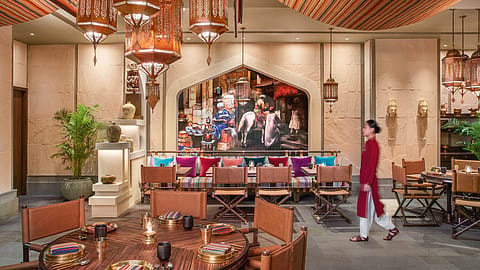
Lifestyle hotels combine distinctive design and local identity with the scale advantages of established hospitality brands, including distribution networks and loyalty ecosystems.
Indians are expected to spend more on experiences than physical goods between 2025 and 2030, with hotel accommodation emerging as one of the country’s fastest-growing consumer spending categories, according to a new report by CBRE.
The report, titled Gen Z Checks In: The Rise of the Lifestyle Hotel, projects that expenditure on recreational and cultural activities, restaurants, hotels, and travel will outpace spending on tangible goods over the next five years.
Based on an analysis of Oxford Economics data, CBRE Research estimates that household spending on physical goods will grow at a compound annual growth rate (CAGR) of 9.1% between 2025 and 2030. In comparison, experiential spending is expected to expand at a stronger 10.3% CAGR, while expenditure on hotel accommodation is projected to rise even faster at 10.6% annually.
According to the report, the shift toward experience-led consumption accelerated following the COVID-19 pandemic, as consumers increasingly prioritised travel, leisure, and lifestyle-oriented spending to compensate for years of restricted mobility.
Gen Z at the centre of the shift
CBRE identified Generation Z as the key force driving this transformation. Born between 1997 and 2012, Gen Z currently represents the largest demographic cohort across Asia Pacific and is expected to record the fastest growth in spending power among all living generations as financial independence rises.
The report noted that Gen Z travellers increasingly seek immersive and visually distinctive experiences, preferring curated design environments that double as social media-friendly spaces. Their expectations also include personalised service, communal areas hosting events such as cultural gatherings and live performances, integrated wellness offerings, and seamless technology ranging from self-check-in to smart-room automation.
Rise of lifestyle hotels
To cater to these evolving preferences, CBRE highlighted the emergence of the lifestyle hotel segment, a category positioned between boutique properties and traditional global chains.
Lifestyle hotels combine distinctive design and local identity with the scale advantages of established hospitality brands, including distribution networks and loyalty ecosystems.
Growth in this segment has significantly outpaced the broader hospitality market. Between 2015 and 2025, overall hotel supply across Asia Pacific expanded at a CAGR of 5% while lifestyle hotels recorded a much stronger 19% growth rate. Through 2030, lifestyle hotel supply is expected to continue growing at 10% annually, compared with 2% for the wider hotel market.
The report also pointed to stronger pricing power in the segment. In 2025, upper-upscale lifestyle hotels in Asia Pacific generated a 13% premium in revenue per available room (RevPAR) over traditional hotels in the same category. Upscale lifestyle brands delivered an additional 7% premium despite operating smaller room formats, supported by higher food and beverage revenues and more efficient operating models.
India seen as high-potential market
CBRE noted that lifestyle hotel penetration in India remains relatively low compared with mature markets such as Singapore and Hong Kong, creating a key opportunity for developers and investors.
{{#most-powerful-women-snapshot-individual.slug}} {{/most-powerful-women-snapshot-individual.slug}} {{^most-powerful-women-snapshot-individual.slug}} {{/most-powerful-women-snapshot-individual.slug}} {{#showRanking}} {{current-rank}} {{/showRanking}} {{#photo.0.url}}
{{name}}
“The contemporary consumer no longer just purchases lodging but seeks unique, culturally immersive and digitally shareable environments,” said Anshuman Magazine, Chairman and CEO – India, South-East Asia, Middle East and Africa, CBRE. He added that the shift toward experiential consumption represents a long-term structural trend, offering hotel owners and institutional investors both stronger room economics and a capital-efficient pathway to enhance asset value.
Ada Choi, Head of Research, Asia Pacific at CBRE, said the experience economy has moved beyond being a temporary trend and now represents a structural reset for hospitality across the region. She said India’s combination of rising incomes, an expanding Gen Z consumer base, and an undersupply of lifestyle hospitality assets is creating one of the region’s most attractive investment opportunities.
NEXT STORY