India’s consumer durables market set to hit ₹3.25 lakh crore by 2030; localisation can unlock ₹50,000 crore opportunity: BCG-CII report
/ 2 min read
The market is projected to grow 8–10% annually, but deeper localisation of critical components will be key to converting demand growth into domestic value creation
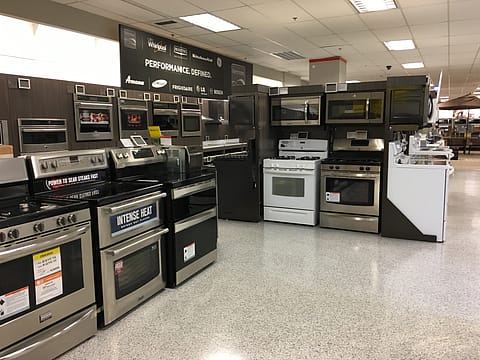
Representational Image | Credits: Ikon
India’s consumer durables market is on track to reach ₹3–3.25 lakh crore by 2030, expanding at an annual rate of 8–10%, as rising household incomes, easier financing, premiumisation and replacement demand fuel consumption, according to a joint report by Boston Consulting Group (BCG) and the Confederation of Indian Industry (CII).
The growth could create an additional ₹40,000–50,000 crore opportunity for domestic value addition over the next five years. However, the report cautions that at the current pace of localisation, a significant portion of this opportunity could still be met through imports by 2030.
Large appliances still have significant headroom
Despite the market’s expansion, household penetration of large appliances in India remains 20–90 percentage points below regional peers, pointing to considerable room for demand growth across categories, the report said.
The report also highlights the uneven nature of domestic manufacturing. Bill-of-materials (BOM) localisation ranges between 25% and 70% across major consumer durable categories. TVs and room air conditioners remain at the lower end, while refrigerators and washing machines have higher levels of localisation.
Critical components remain import-dependent
The next challenge for the industry will be building capabilities in critical components, including TV display panels, room air-conditioner compressors, refrigerator insulation and washing-machine motors. Technology access, manufacturing scale and cost competitiveness continue to constrain deeper localisation, BCG said.
“India’s consumer durables market is projected to grow at 8–10% annually to reach INR 300–325K crore by 2030. But the opportunity is much larger than domestic market growth alone,” Abheek Singhi, Managing Director & Senior Partner, BCG, said. He said the next phase would require deeper capabilities across components, technology, product design and manufacturing, with domestic scale serving as a springboard for global competitiveness.
AI, R&D and exports key to next phase
BCG said localisation will also have to remain commercially viable without pushing up prices in a price-sensitive Indian market, where entry-level prices have declined in real terms across key categories despite inflation. The report calls for technology partnerships, scaled component manufacturing, stronger R&D, product innovation, AI-led productivity improvements and a predictable regulatory environment.
Mehak Dhir, Managing Director and Partner at BCG, said the next five years could create a ₹40,000–50,000 crore domestic value-addition opportunity, but capturing it would require deeper component manufacturing, stronger R&D, AI-led productivity and sufficient scale to serve global markets.
Follow Fortune India
NEXT STORY