India's new entrants in alco-bev segment see global opportunity in India-EU, India-UK FTAs
/ 3 min read
New-age Indian liquor makers see the trade pact as a launchpad for exports, not a threat from European competition
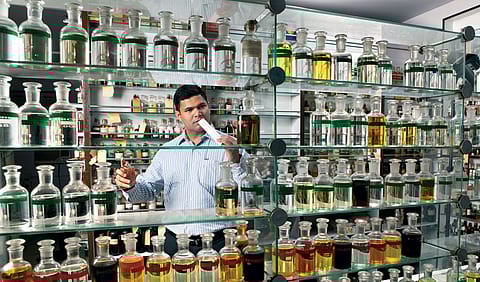
Indian whiskies and spirits are getting close to a quality barrier where the limiting issue is availability rather than aptitude.
India’s new generation players in the alcoholic beverage segment are seeing the just concluded India-European Union (EU) Free Trade Agreement (FTA) as an opportunity to capture the global markets and not as a threat arising out of intense competition from global players in the premium segment of domestic alco-bev business. Many of these players that had entered Indian alco-bev retail segment in recent years to ride on the ongoing premiumisation trend in the country’s alco-bev business consider their products to be good enough to be accepted in the European market due to the reciprocal access FTAs provide.
“The free trade agreements between the UK and the EU are causing a structural shift in the Indian alcohol industry. The Indian market will have easier access to international brands, which should boost demand and encourage category expansion. These agreements also provide a long-term export runway for Indian businesses that are developing with a product-first mentality”, says Mokksh Sani, founder and managing director of Living Liquidz and co-founder of Cartel Bros. While Living Liquidz is a 60+ outlet premium liquor retail chain across Mumbai, Pune, Bengaluru and Bhubaneswar, the Cartel Bros portfolio includes The GlenJourneys Whisky (partnering with Ajay Devgn), The Glenwalk Whisky (with Sanjay Dutt) and Shelter6 Vodka (with Badshah), all built with a product-first, long-term strategy. The Glenwalk became Maharashtra’s No.1 selling Scotch whisky in 2025, crossing 1.5 lakh cases sold by November and targeting 2.4 lakh cases by March 2026, while expanding nationally and across duty-free markets.
“Indian whiskies and spirits are getting close to a quality barrier where the limiting issue is availability rather than aptitude. These FTAs have the potential to boost the development of new Indian brands, draw in foreign partners, and turn India from a market focused solely on consumption into a major producer of high-end alcohol”, Sani said.
Uppal Brewers and Distillers (UBD), another new alco-bev venture with two premium whisky brands Soorahi, Madhvan, launched in 2025 is another company that looks at FTAs as an opportunity.
“The finalisation of negotiations of the India–EU Free Trade Agreement is a defining moment for our economy and the EU, and will establish new precedents in collaboration, consumption, and choice. With the deep cut in tariffs on wine and spirits, it also signals the end of an era of the ‘import mirage’, where high taxes make imported spirits seem inherently superior”, says Ankur Sachdeva, CEO and co-founder, UBD. “For us, this is an invitation to a level playing field, and on which we are advantaged by the consumer shift away from legacy labels to those that show consistency in 'liquid quality'. Equally, as European brands gain easier access to India, the barriers fall for Indian craft spirits to take the 'Proudly Indian' narrative to the global stage. We are looking at a future where 'Make in India' is no longer just a manufacturing goal, but a global luxury benchmark”, Sachdeva says.
South Seas Distilleries & Breweries Pvt. Ltd, a company that has been in the business of distillation and maturation for over four decades but entered Indian retail segment with its own brand Crazy Cock Single Malt, recently, is also looking global opportunities coming up through the FTAs.
“For Indian craft houses, these FTAs usher in a more competitive landscape and an equally compelling opportunity. Standing confidently alongside the world’s finest, Indian single malts are distinguished by the climate in which they are matured, bringing depth and complexity comparable to whiskies three to five times older from cooler climates”, says Hamavand Chinoy, Director, South Seas Distilleries and Breweries Pvt Ltd. “As markets open, crafted in alignment with stringent global spirits standards, we look forward to meaningful reciprocity—Indian spirits merit wider access to European shelves. With mutual openness, Indian spirits are elegantly positioned to emerge as global leaders in the luxury spirits space”, he adds.
In fact, in its comments on India-EU FTA, consultancy firm Deloitte India had noted that from an Indian trade policy perspective, tariff concessions in wines, spirits and automobiles under the India–EU FTA are best seen as a bid for reciprocal market access. “In alcohol, carefully phased liberalisation can help formalise imports. In automobiles, selective opening, particularly for components and EVs, can be leveraged to attract investment, embed technology transfer and strengthen domestic manufacturing ecosystems. Therefore, the strategic value of these concessions lies in anchoring India deeper into European value chains, not merely in expanding trade volume”, Gulzar Didwania, Partner, Deloitte India said.
Follow Fortune India
NEXT STORY