KP Group plans next phase of big growth in renewables by FY32
/ 2 min read
Founded in 1994, KP Group has three listed companies—KPI Green Energy, KP Energy and KP Green Engineering—and operates across renewable project development, power evacuation, manufacturing, EPC, operations and owned renewable assets.
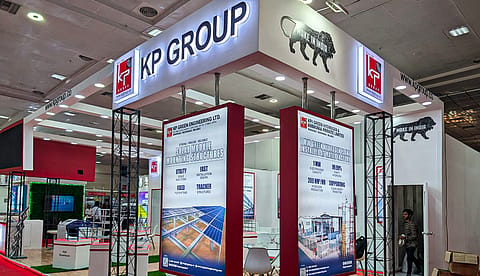
The portfolio is expected to cross 10 GW over the next few quarters. | Credits: Company website
Renewable energy major KP Group, which has three listed companies—KPI Green Energy, KP Energy and KP Green Engineering—has reset its growth ambitions, targeting 10 GW of owned power generation, 10 GW of third-party EPC execution and 10 GWh of integrated battery manufacturing capacity, besides diversifications into newer areas related to renewables by 2032.
KP Group targets 10 GW owned capacity by FY32
Rolling out its next phase of expansion under 'KP 3.0' on Thursday, KP Group said its renewable-energy portfolio has already reached 9.21 GW across operational and under-construction projects. The portfolio is expected to cross 10 GW over the next few quarters.
''The FY32 roadmap marks a sharper separation of the group’s three growth engines: owned renewable assets through KPI Green Energy, EPC projects for external customers, and battery manufacturing spanning cells and BESS assembly. The 10 GW EPC target excludes related-party projects'', said Dr Faruk G. Patel, founder & chairman, KP Group.
Founded in 1994, KP Group has three listed companies—KPI Green Energy, KP Energy and KP Green Engineering—and operates across renewable project development, power evacuation, manufacturing, EPC, operations and owned renewable assets.
As of Q1 FY27, the group had a 6.4 GW EPC portfolio and 2.8 GW IPP portfolio, along with 5.10 GW of power evacuation capacity, around 12,104 acres of land footprint and 400,500 MTPA of manufacturing capacity.
Battery storage, green hydrogen to drive next phase
KP Group is also stepping up investments in newer businesses, with Sundrops Energia positioned as its dedicated energy-storage platform. The business will cover BESS IPP, group-captive and C&I projects, besides battery assembly and cell manufacturing. The group is developing a floating-solar platform, including the 110 MW AC/142 MW DC Kadana Dam project in Gujarat, while its newly licensed power-trading business will operate across exchange and bilateral markets.
Green hydrogen is another emerging business. KP Group’s 1 MW electrolyser-based plant at Matar in Gujarat is operational and currently produces 432 kg of green hydrogen a day. The group is developing capabilities across hydrogen production, mobility, logistics and utilisation, including green ammonia.
The group is also widening its geographical footprint beyond its core Gujarat base, with renewable projects across Rajasthan, Maharashtra, Madhya Pradesh, Odisha, Karnataka and Andhra Pradesh. The group is exploring international opportunities in Botswana, Zambia, Tanzania, and Saudi Arabia. In Botswana, KP Group is pursuing a proposed 5 GW renewable power and associated infrastructure project, beginning with a 500 MW phase.
The KP 3.0 transition also comes with a broader leadership restructuring, with experienced professionals being inducted across renewable energy, international business, green hydrogen, investor relations, governance, engineering and manufacturing as the next generation takes on larger responsibilities, said Dr Faruk G. Patel.
Follow Fortune India
NEXT STORY