Lakshmi Mittal bets big on India, says steel market has 30-40 years of growth runway
/ 3 min read
Lakshmi Mittal also stressed the need for a level playing field as global steelmakers contend with rising competition, particularly from China.
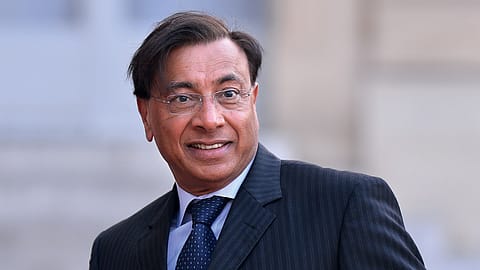
Lakshmi N. Mittal, Executive Chairman, ArcelorMittal.
India will be one of ArcelorMittal's biggest growth markets over the coming decades as the country's steel demand is at a stage similar to where China was around 25 years ago, Executive Chairman Lakshmi Mittal said during a podcast with Tim Bouquet, author of Cold Steel: Lakshmi Mittal and the Multi-Billion-Dollar Battle for a Global Empire, marking the 20th anniversary of the ArcelorMittal merger.
Mittal said India, which currently produces around 200 million tonnes of steel annually, has significant headroom for expansion over the next three to four decades, making it a strategic market for the world's largest steelmaker.
"India is obvious as our new target. India reminds me of China 25 years back... They have a lot to grow in the next 30 to 40 years. We will have a lot of opportunities to continue to grow in India," he said.
India expansion underway
Echoing the optimism, ArcelorMittal CEO Aditya Mittal highlighted the company's growing presence in India, particularly through its Gujarat operations. "When ArcelorMittal was created, we didn't have any assets in India. Over the last 20 years, we've entered India and acquired a world-class coastal facility in Gujarat. It is an 8-million-tonne plant, and we are in the process of doubling its capacity. It will become one of the largest and most advanced coastal steel facilities in the world," he said.
The company views India as one of its key long-term growth markets alongside Brazil and the US.
Level playing field critical
Lakshmi Mittal also stressed the need for a level playing field as global steelmakers contend with rising competition, particularly from China.
"China is in everyone's mind. We definitely need a level playing field, and that's what we are working with regulators and governments to achieve. If there is a level playing field, I believe we can outperform everyone," he said.
Aditya Mittal added that governments across the US, Europe, India and other major markets increasingly recognise steel as a strategic industry critical to national security and resilient domestic supply chains. "We are not a global company because we ship steel around the world. We are global because of our people, technology and knowledge. Operationally, we are regional suppliers serving customers close to where they operate," he said.
Innovation to drive future growth
On the company's long-term strategy, Aditya Mittal said innovation would remain more important than scale alone.
ArcelorMittal spends around $300 million annually on research and development, employs more than 2,300 researchers and scientists, and continues to develop advanced products for the automotive, renewable energy and electrical steel segments. "The value that innovation creates far exceeds what size alone can deliver. Our scale allows us to invest heavily in R&D and accelerate new technologies across our global operations," he said.
Lakshmi Mittal said technological leadership would remain central to the company's competitiveness, adding that customers increasingly value innovations in advanced steel products.
{{#most-powerful-women-snapshot-individual.slug}} {{/most-powerful-women-snapshot-individual.slug}} {{^most-powerful-women-snapshot-individual.slug}} {{/most-powerful-women-snapshot-individual.slug}} {{#showRanking}} {{current-rank}} {{/showRanking}} {{#photo.0.url}}
{{name}}
AI and digitalisation to reshape steelmaking
Looking ahead, Lakshmi Mittal said artificial intelligence, robotics and digitalisation will fundamentally transform steel manufacturing over the next two decades. "We have to digitalise our operations before we can fully leverage AI. Over the next 20 years, there will be much wider application of AI and robotics across steel plants," he said.
Aditya Mittal said AI, combined with ArcelorMittal's global manufacturing footprint and vast operational data, would enable the company to deploy innovations faster across markets.
Strong outlook for the next 20 years
Reflecting on ArcelorMittal's journey since its landmark merger in 2006, both executives said the company had emerged stronger through multiple global crises by focusing on innovation, operational excellence and talent development.
Aditya Mittal said the next phase of growth would be driven by India's industrial expansion, the global energy transition, increasing demand for resilient domestic supply chains, and rapid advances in AI-enabled manufacturing.
"We don't know what the defining story of the next 20 years will be, but we know we are well positioned for it because of our people, our innovation and our presence in the world's key growth markets," he added.
NEXT STORY