Putin's visit to boost Make in India defence production; discussions on to make air defence systems and next-gen fighter aircraft in India
/ 4 min read
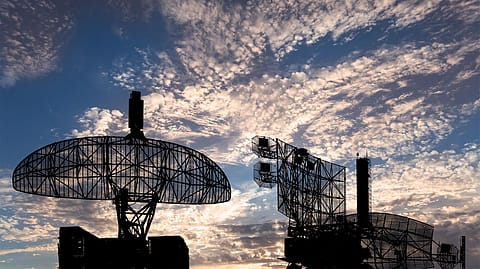
Indian manufacturing could involve building various components, such as launch vehicles, command posts, and engagement radars | Credits: Shutterstock
Putin's visit to boost Make in India defence production; discussions on to make air defence systems and next-gen fighter aircraft in India
Russian President Vladimir Putin’s visit to India is set to strengthen defence ties, with talks focusing on joint production of advanced systems like the S-400, S-500, and Su-57 fighters under the ‘Make in India’ initiative. Technology transfer, local manufacturing, and export potential are key, aiming to boost India’s air defence and bridge gaps until indigenous AMCA jets arrive.
This summary is AI-generated, and Fortune India is not responsible for its content or any associated copyright issues.
India and Russia agreed in 2018 to supply 5 units of the S-400 air defence system, valued at about $5 billion
Indian manufacturing could involve building various components, such as launch vehicles, command posts, and engagement radars | Credits: Shutterstock
Russian President Vladimir Putin's visit to India after four years will pave the way for strengthening India's defence sector capabilities, especially in boosting the manufacturing of 'Make in India' defence products.
Kremlin says discussions between Prime Minister Narendra Modi and Putin will include major defence platforms, such as the supply and manufacturing of fifth-generation Sukhoi Su-57 stealth fighters and additional S-400 air defence systems, which played a crucial role in protecting India's borders during Operation Sindoor.
S-400 & S-500
India and Russia agreed in 2018 to supply 5 units of the S-400 air defence system, valued at about $5 billion. So far, only three squadrons have been delivered, as supplies have been delayed after the start of the Russia-Ukraine conflict. Supply of the remaining units and orders for more S-400s are on the cards, say sources. They say India is considering buying five more S-400 squadrons and plans to acquire the next-generation S-500 systems. Russia's S-500 Prometheus air shield, an advanced version of the air-to-surface S-400 systems, can attack and neutralise targets in higher altitudes, longer distances, advanced ballistic missiles, hypersonic glide vehicles and cruise missiles, besides neutralising low-orbit satellites or space-launched threats.
Sources say a joint team from the Indian Air Force and Defence Research and Development Organisation (DRDO) visited Russia in recent months to examine the S-500 system, as Russia is willing to explore giving full technology transfer and joint production rights. Indian manufacturing could involve building various components, such as launch vehicles, command posts, and engagement radars. The S-500 air defence system is manufactured by Almaz-Antey, a Russian defence company. The joint production in India can also explore exports, as in the case of the highly successful Brahmos missiles. The BrahMos missile is made by BrahMos Aerospace, a joint venture between DRDO and Russia's NPO Mashinostroyenia (NPOM).
SU-57 stealth fighters
Sources say New Delhi is also going to accelerate high-level negotiations with Moscow for getting the Su-57 fifth-generation fighters, as reports say Moscow has agreed to offer technology transfer, including manufacturing and license to produce critical components like engines, optics, radars, AI components, low-end technologies, sensors, stealth materials, and other classified systems.
Sukhoi Su-57s are Russia's fifth-generation stealth multirole fighters with world-class stealth features, super cruise, advanced avionics, and high manoeuvrability. It is regarded as equal or superior to the US's Lockheed Martin-made F-35s. Many defence experts consider the top 5th generation fighter jets to be US's Lockheed Martin made F-22 Raptor, F-35 and Lightning II, China's Chengdu J-20 and Shenyang J-35, and Sukhoi Su-57, which are already in service.
India’s dream of developing the first 'Made in India' fifth-generation stealth fighter jets—the Advanced Medium Combat Aircraft (AMCA) project—is taking shape as public sector Hindustan Aeronautics Limited (HAL) and leading private sector defence companies such as Tata Advanced Systems, Kalyani Group and L&T are in the bidding stage for the future fighter jets. The AMCA is envisaged as a 5.5-generation Made in India fighter aircraft, with twin engines, medium-weight, advanced avionics, super‑cruise capability, internal weapons bays, and futuristic electronic warfare systems. The Aeronautical Development Agency (ADA) is leading the project under the DRDO. The plan is to build five prototypes, with the first expected by 2027. The project cost is about ₹15,000 crore. The Indian Air Force (IAF) is expected to induct the AMCAs by 2035.
Many experts see the acquisition and manufacturing of Sukhoi Su-57's will help in the development of India's AMCA plans and also will act as the bridge to fill the gap for fifth-generation fighters till India's AMCA's join IAF by 2035.
With the retirement of all the time-tested and mainstay MiG aircrafts, IAF's fighter strength has now declined to the lowest ever 30 squadrons (one squadron is 18-20 aircraft), well below the sanctioned 42.5. Eight more squadrons of MiG-21, Mirage 2000, and Jaguars are also scheduled for retirement within a decade. IAF wants to have seven AMCA squadrons or about 126 fighters, besides other indigenous next-generation fighters like Light Combat Aircraft (LCA) Tejas MK1A, MK2 and Russian Su-30MKIs, say sources.
{{#most-powerful-women-snapshot-individual.slug}} {{/most-powerful-women-snapshot-individual.slug}} {{^most-powerful-women-snapshot-individual.slug}} {{/most-powerful-women-snapshot-individual.slug}} {{#showRanking}} {{current-rank}} {{/showRanking}} {{#photo.0.url}}
{{name}}
Declining Russian defence imports
Russia is the prime defence equipment destination for India, the second largest arms importer in the world, about 36% of the requirements in 2020-24, according to data from the Stockholm International Peace Research Institute (SIPRI).
However, following the Make in India and 'Atmanirbhar' initiatives, in the defence sector, and increasing arms supply relations with countries like France, Israel and the US, imports from Russia has been gradually decreasing. In the 2015–19 period, Russian supplies were about 55 per cent and in the 2010–14 period, imports from Russia were about 72 per cent.
India exports about US$5 billion to Russia annually, compared with imports of about US$64 billion, mainly crude oil, fertilisers and defence equipment, says a report by the Global Trade Research Initiative.
Follow Fortune India
NEXT STORY