RBI Governor cautions against risky lending by banks; says financial system stable as of now
RBI Governor warns banks against excessive lending, highlights need for vigilance amid financial stability.
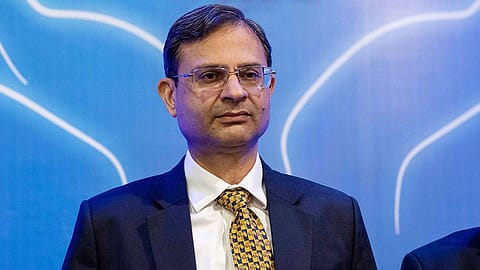
Maintaining that India's financial system is stable as of now, Reserve Bank of India Governor Sanjay Malhotra today cautioned against excessive lending and urged against risk-taking and leveraging. He, however, pointed out that there are no signs of stress as of now.
Malhotra said a prolonged period of financial stability, which the Indian economy has been witnessing, leads to risk-taking and must be avoided.
"Globally, the world has had repeated shocks starting from Covid and had been resilient. Even India has faced shocks. Even in India we have had a very prolonged period of financial stability. Banks, government, and households are having a strong balance sheet," Malhotra said at the fifth Kautilya Economic Conclave in Delhi.
"I would like to point out that it is these prolonged periods of stability that can encourage risk-taking and leveraging fading memories of past crises can weaken appetite for prudence," he added. "It is not that I see any imminent signs of stress. But there is a need to remind ourselves that we need to remain vigilant," said Malhotra.To drive home his point, Malhotra referred to the reckless lending globally and domestically in the past, and the havoc they created in the economy. "Our experience of the last two decades has told us that banking and financial sector risks can come up overnight but take years to resolve and that can be very painful," he said. "It took more than a decade to clean up the excessive lending of the early 2000s. We cannot afford to become complacent. The economic and financial cost of allowing vulnerabilities to build up are too high," he said.
International order under strain
Malhotra pointed out that the international order is under considerable strain. "The international order which developed after the Washington Consensus is under considerable strain. That order gave decades of globalisation, economic integration and relative stability," he said.
"Geopolitical and geo-economic fragmentation, strategic realignment, trade restrictions, repeated supply shocks, technological disruption and climate change. These factors are interacting in ways that are hard to predict and even harder to model using historical relationships," he added.
It may be noted that the finance ministry too has recently warned of rising inflation in the economy.
The Union finance ministry said on Thursday that inflation pressure in the Indian economy is building up even as the growth momentum witnessed in the April-June quarter (7.8% GDP growth) is extending into the second quarter as well.
“Domestic price pressures intensified across the retail, wholesale, and producer levels due to renewed global oil market pressures and weather-related volatility. Despite these pressures, the overall inflation landscape remains predominantly anchored, with a majority of the basket (69% of items) continuing to record inflation well below the 4% target,” the ministry said in the monthly economic review for September.