SATTE 2026: Powering India's $125 billion tourism ambition
/ 5 min read
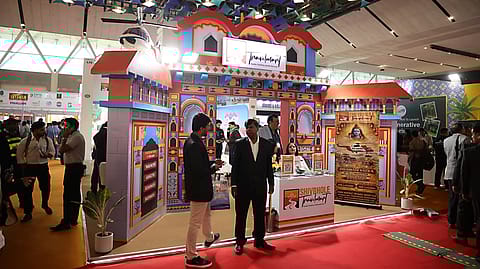
International delegations —including those from Thailand, Malaysia, Maldives, Jordan, Egypt, Hong Kong, Nepal, Jamaica, and Vietnam—are actively courting Indian outbound travelers while also exploring inbound partnerships
SATTE 2026: Powering India's $125 billion tourism ambition
SATTE 2026, held at the India International Convention and Expo Centre, is a pivotal event for India's tourism sector, aiming to boost its GDP contribution from 6% to 10%. With over 2,000 exhibitors from 60+ countries, the expo serves as a strategic platform for aligning tourism policy, infrastructure, and sustainability, driving India's $125 billion tourism ambition.
This summary is AI-generated, and Fortune India is not responsible for its content or any associated copyright issues.
With over 2,000 exhibitors from over 60 countries, participation from 28 Indian state tourism boards, and upwards of 1,400 exhibitors on the floor, the show has evolved into a powerful alignment platform where tourism policy, infrastructure ambitions, sustainability commitments, and hard business negotiations converge
International delegations —including those from Thailand, Malaysia, Maldives, Jordan, Egypt, Hong Kong, Nepal, Jamaica, and Vietnam—are actively courting Indian outbound travelers while also exploring inbound partnerships
In the cavernous halls of Yashobhoomi—officially the India International Convention and Expo Centre (IICC) -- in west Delhi, the mood is unmistakably bullish. Delegates stream past towering pavilions, state tourism boards unveil immersive displays, and airline executives huddle over deal sheets. From 25 to 27 February 2026, the venue is hosting SATTE 2026—the South Asian Travel and Tourism Exchange—where the business of travel is not just being discussed; it is being recalibrated.
Now in its 33rd year, SATTE has cemented its position as South Asia’s largest and most influential B2B travel and tourism exhibition. With over 2,000 exhibitors from over 60 countries, participation from 28 Indian state tourism boards, and upwards of 1,400 exhibitors on the floor, the show has evolved into a powerful alignment platform where tourism policy, infrastructure ambitions, sustainability commitments, and hard business negotiations converge.
A $125 billion opportunity
India’s tourism market is projected to reach USD 125 billion, and the sector’s long-term ambition is even more audacious: contributing nearly $3 trillion to GDP by 2047. Against this backdrop, SATTE 2026 is not merely an exhibition—it is a strategic lever in India’s economic blueprint.
Union tourism minister Gajendra Singh Shekhawat underscored the stakes, reiterating the government’s goal of raising tourism’s GDP contribution from 6 percent to 10 percent. “The tourism sector should become a vital component of India’s economy,” he said, framing the industry as central to national development.
Yogesh Mudras, managing director of Informa Markets in India, the organiser behind SATTE, described the moment as pivotal. “India is today one of the most compelling travel stories globally, with tourism emerging as a powerful driver of economic growth and employment,” he noted. “SATTE 2026, with 2,000+ exhibitors from 60+ countries, is our way of enabling this opportunity in a meaningful, outcome-driven manner. This is truly where all of India meets the world of tourism.”
That sentiment is visible on the show floor. International delegations —including those from Thailand, Malaysia, Maldives, Jordan, Egypt, Hong Kong, Nepal, Jamaica, and Vietnam—are actively courting Indian outbound travelers while also exploring inbound partnerships. India’s expanding middle class and rising digital literacy have made it one of the world’s most attractive source markets.
Policy meets practice
Held under the theme “An Opportunity Called India,” SATTE 2026 features robust participation from the Ministry of Tourism and leading state boards such as Rajasthan, Kerala, Assam, Telangana, and Punjab. Tourism Vision 2047 anchors several high-level discussions, positioning the sector within India’s broader five-trillion-dollar economy roadmap.
Conference highlights range from “Travel Titans: Inside the Winners’ Mind” to “India: The Next Travel Goldmine” and “Reimagining Incredible India!” Fireside chats and panels unpack everything from aviation reforms to experiential travel trends.
A special address by Anita Mendiratta—globally respected advisor and Special Advisor to the Secretary-General of UN Tourism—reinforced India’s rising strategic relevance. She emphasised the country’s growing leadership in shaping global travel narratives and called for stronger cross-border collaborations rooted in sustainability and resilience.
Infrastructure and connectivity on display
India’s tourism surge is underpinned by unprecedented infrastructure expansion: new airports under regional connectivity schemes, modernized railway stations, and upgraded highways linking remote heritage sites. SATTE has become the showcase for this transformation.
Airlines, in particular, are using the platform to signal a new era. The pavilion of Air India draws crowds with displays of its upgraded Business Class seats from the Airbus A320neo and Premium Economy seats from the Airbus A350-900. Visitors explore a VR zone offering a virtual glimpse of the airline’s flagship aircraft, part of its broader fleet and brand transformation. Sister carrier Air India Express spotlights its refreshed onboard experience and curated ‘Gourmair’ hot meals, underscoring how aviation is aligning product innovation with India’s global ambitions.
{{#most-powerful-women-snapshot-individual.slug}} {{/most-powerful-women-snapshot-individual.slug}} {{^most-powerful-women-snapshot-individual.slug}} {{/most-powerful-women-snapshot-individual.slug}} {{#showRanking}} {{current-rank}} {{/showRanking}} {{#photo.0.url}}
{{name}}
The synergy between airlines, tour operators, and hospitality brands is a recurring theme. Seamless connectivity—particularly last-mile access to rural and heritage destinations—is framed as critical to unlocking tourism’s full economic potential.
Technology takes centre stage
If infrastructure provides the skeleton, technology is fast becoming the nervous system of India’s travel ecosystem. AI-enabled itinerary planning, contactless check-ins, predictive pricing, and mobile-first booking platforms dominate exhibitor conversations.
Leading travel platforms such as EaseMyTrip, Cleartrip, TBO, and TRIPJACK are showcasing data-driven tools designed to enhance traveller personalisation and operational efficiency.
Mudras describes India’s current growth as “triple-engine”—powered by domestic, outbound, and inbound segments. With over 303 crore domestic tourist visits annually, the domestic market remains the anchor, while outbound demand is reshaping global travel flows.
Sustainability and responsible growth
Growth is being tempered by a conscious pivot toward sustainability. Responsible tourism, carbon reduction in aviation, zero-waste hospitality practices, and the promotion of wildlife sanctuaries and rural tourism circuits are central to discussions.
Neeti Sharma, director of Intrepid Marketing and Communications, emphasized SATTE’s broader impact: “SATTE holds immense value for the travel trade fraternity as it brings the global tourism ecosystem together on one platform, creating a vibrant space for connections, collaboration and business growth.” She added that the show is especially empowering for small and medium tourism enterprises that cannot afford overseas exhibitions, offering them global exposure at home.
High-growth segments: MICE, weddings, cruise
Beyond leisure travel, high-spending segments are commanding attention. India’s MICE (Meetings, Incentives, Conferences and Exhibitions) sector is being positioned as a global contender. Wedding tourism, meanwhile, is booming. India’s wedding market generates over $72 billion annually, with destination weddings accounting for nearly a quarter of that segment. Luxury palaces in Rajasthan, beach resorts in Goa, and backwater retreats in Kerala are being marketed aggressively to both domestic and international clientele.
Cruise tourism and experiential travel—culinary trails, spiritual circuits, inland waterways—also feature prominently, reflecting a shift from mass tourism to curated, immersive journeys.
A marketplace with measurable impact
What distinguishes SATTE is its measurable business impact, said stakeholders. With over 200 business announcements annually and structured buyer-seller meetings across three days, the expo is designed for outcomes, not optics.
As delegates navigate packed aisles at Yashobhoomi from 25–27 February 2026, the sense of momentum is palpable. SATTE 2026 is more than a trade show—it is a barometer of India’s tourism trajectory and a catalyst for the partnerships that will define it. In the
process, it reaffirms its role as the definitive platform where all of India meets the world of tourism—and where the future of travel in South Asia is being written in real time.
Follow Fortune India
NEXT STORY