Strait of Hormuz vessel crossings plunge nearly 50% amid escalating US-Iran conflict: S&P Global
/ 3 min read
A total of 40 vessels transited the strategic waterway during the three-day period, averaging just 13 crossings a day.
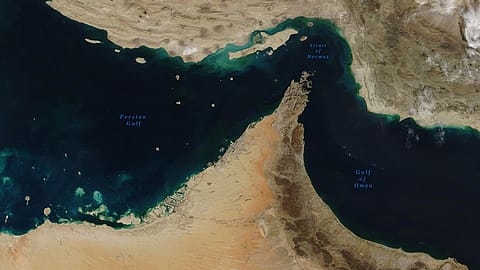
S&P Global attributed the sharp decline to heightened security risks and stricter maritime enforcement measures in the region. | Credits: Shutterstock
Vessel traffic through the Strait of Hormuz remained well below normal levels between July 17 and July 19 as escalating hostilities between the US and Iran continued to disrupt shipping activity, according to S&P Global MINT and S&P Global Commodities at Sea.
A total of 40 vessels transited the strategic waterway during the three-day period, averaging just 13 crossings a day. The subdued activity comes amid continued US strikes on Iranian targets, Iranian attacks on Gulf states, and multiple security incidents involving commercial vessels.
The UK Maritime Trade Operations (UKMTO) centre reported on July 20 that a vessel was struck by an unidentified projectile about eight nautical miles northwest of Kumzar, Oman. The crew abandoned the ship, which was subsequently reported to be on fire.
The incident followed another attack on July 17, when a tanker operating about 19 nautical miles off Khasab, Oman, was hit by an unidentified projectile, causing minor structural damage to its port side. The International Maritime Organization identified the vessel as the Marshall Islands-flagged MR tanker IDI, which had loaded cargo at Jubail, Saudi Arabia, on July 12. The tanker later exited the Strait of Hormuz on July 19 and was last observed anchored off Fujairah on July 20.
Daily vessel crossings stood at eight on July 17, recovered to 19 on July 18, and eased to 13 on July 19, compared with 14 crossings on July 16. While traffic showed a modest rebound after the July 17 low, overall activity remained significantly below levels seen earlier this month.
For the week ended July 19, total transits fell to 127, averaging 18 crossings a day, down nearly 50% from 248 crossings recorded during the previous week ended July 12. S&P Global attributed the sharp decline to heightened security risks and stricter maritime enforcement measures in the region.
Commercial vessels accounted for more than 70% of total traffic during the July 17-19 period, although only about one-third of the crossings were assessed as compliant. The continued dominance of Iran-linked and sanctioned vessels indicates that mainstream shipowners remain cautious about using the route despite the slight recovery in traffic, the report said.
Traffic during the three-day period included 12 oil product tankers, seven bulk carriers, six cargo vessels, two very large crude carriers (VLCCs), two container ships, and 11 miscellaneous vessels.
Of the total, 21 vessels were outbound towards the Gulf of Oman, including five bulk carriers, five product tankers, two VLCCs, and three cargo ships.
Among the notable movements, the VLCC KIARA M, carrying Basrah Heavy crude, transited outbound on July 18, while the LR1 tanker LEADER, believed to have loaded refined products at Ras Tanura, exited the strait on July 17. The Iranian-linked VLCC MADESTAR also moved outbound on July 18 and is currently in the Gulf of Oman.
On the inbound side, ADNOC-owned LR2 tanker JARNAIN, which had not been visible since early July, reappeared off Jebel Ali on July 18 after transporting naphtha in recent months. The Chinese-owned LR1 tanker ADVANTAGE PARADISE also crossed inbound on July 17 without publicly visible signals and is currently anchored off Jubail, likely awaiting cargo.
{{#most-powerful-women-snapshot-individual.slug}} {{/most-powerful-women-snapshot-individual.slug}} {{^most-powerful-women-snapshot-individual.slug}} {{/most-powerful-women-snapshot-individual.slug}} {{#showRanking}} {{current-rank}} {{/showRanking}} {{#photo.0.url}}
{{name}}
S&P Global said 14 vessels transited the Strait of Hormuz without publicly visible Automatic Identification System (AIS) signals, while another 15 sailed close to Iranian territorial waters or through the Iranian Traffic Separation Scheme (TSS). Only one vessel—the bulk carrier CHRISTINA V—was observed using the southern Omani route during the three-day period, underscoring operators' continued reluctance to utilise that passage.
Separately, 36 vessels crossed the US naval blockade line on July 19, with 15 entering the Gulf of Oman and the remainder transiting outbound. All were assessed as compliant, except for the product tanker CHARMINAR, which appeared to have been turned back after attempting an outbound crossing, the report said.
NEXT STORY