Strait of Hormuz vessel traffic drops to lowest level as security concerns persist: Report
/ 2 min read
The decline follows heightened regional security concerns after the Panama-flagged crude tanker KIKU was struck by an Iranian drone in late June.
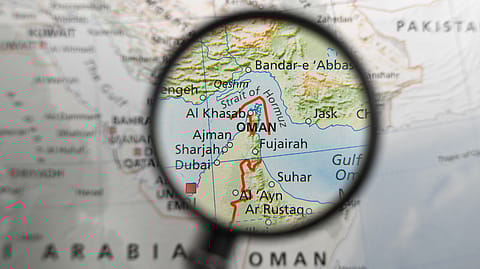
Despite the broader slowdown in shipping activity, LNG carrier traffic remained resilient. | Credits: Shutterstock
Vessel traffic through the Strait of Hormuz gradually declined, with just 34 transits recorded, marking the lowest daily traffic since June 28, according to data from S&P Global MINT and S&P Global Commodities at Sea.
The decline follows heightened regional security concerns after the Panama-flagged crude tanker KIKU was struck by an Iranian drone in late June. While overall activity remained below normal levels, inbound traffic recovered slightly from 15 vessels on July 8, indicating that some operators continue to navigate the strategic waterway despite ongoing security risks and navigation disruptions.
Inbound vessels accounted for 68% of total crossings, led by five LNG carriers, one VLCC, one Panamax oil tanker, two bulk carriers, and a mix of container, cargo and support vessels.
Iran-linked and sanctioned vessels continued to represent a significant share of traffic, accounting for roughly one-third of all crossings. These included the sanctioned Iranian crude tanker BERG 1, product tanker WELL SAIL, container ships ALOR 2 and BENITA, along with several smaller vessels operating between Iran and neighbouring Gulf states.
BERG 1 was among only 11 outbound departures recorded during the day. More broadly, S&P Global said at least nine tankers carrying nearly 13 million barrels of Iranian crude were observed transiting the Arabian Sea and Gulf of Oman over the past 24 hours. The movement comes amid warnings by US President Donald Trump that Washington could reinstate a naval blockade on Iranian ports and vessels.
Despite the broader slowdown in shipping activity, LNG carrier traffic remained resilient. Five LNG vessels—QatarEnergy's AL RAYYAN, AL DAFNA, AL GATTARA, AL SAMRIYA, and Chinese-owned GASLOG SHANGHAI—made inbound crossings, marking the highest single-day LNG transit count through the Strait since the end of February.
However, all five LNG carriers transited without visible Automatic Identification System (AIS) signals, along with the compliant VLCC NISSOS KEA. Subsequent positioning data indicates the vessels likely sailed closer to the Omani coast, potentially under naval escort or enhanced security arrangements.
Except for AL RAYYAN, which is currently en route to Ras Laffan, the remaining LNG carriers are anchored outside the Ras Laffan anchorage. As of 07:38 UTC on July 10, around 14 LNG tankers were anchored off Ras Laffan, according to S&P Global MINT. Two additional LNG carriers—AL MARROUNA and AL GHARRAFA—are currently loading cargo at the Ras Laffan Industrial City LNG Terminal after entering the Strait in late June and early July, respectively.
In contrast, LPG traffic remained subdued, with only one LPG tanker—the OFAC-sanctioned and Iran-linked GAS STRENGTH—crossing the Strait. No outbound LPG movements were recorded, mirroring the weak activity seen on July 8.
S&P Global noted that the vessel's loading and departure from the Gulf will be closely watched as an indicator of whether Iranian LPG exports can continue uninterrupted amid heightened geopolitical tensions and the possibility of renewed US enforcement measures.
Overall, one-third of all vessel transits on July 9 were conducted without AIS transmissions, commonly referred to as "dark" transits. The only compliant vessel visibly crossing the Strait via the Omani route was the Indian-flagged container ship DP WORLD GODAVARI, which was headed to Jebel Ali.
NEXT STORY